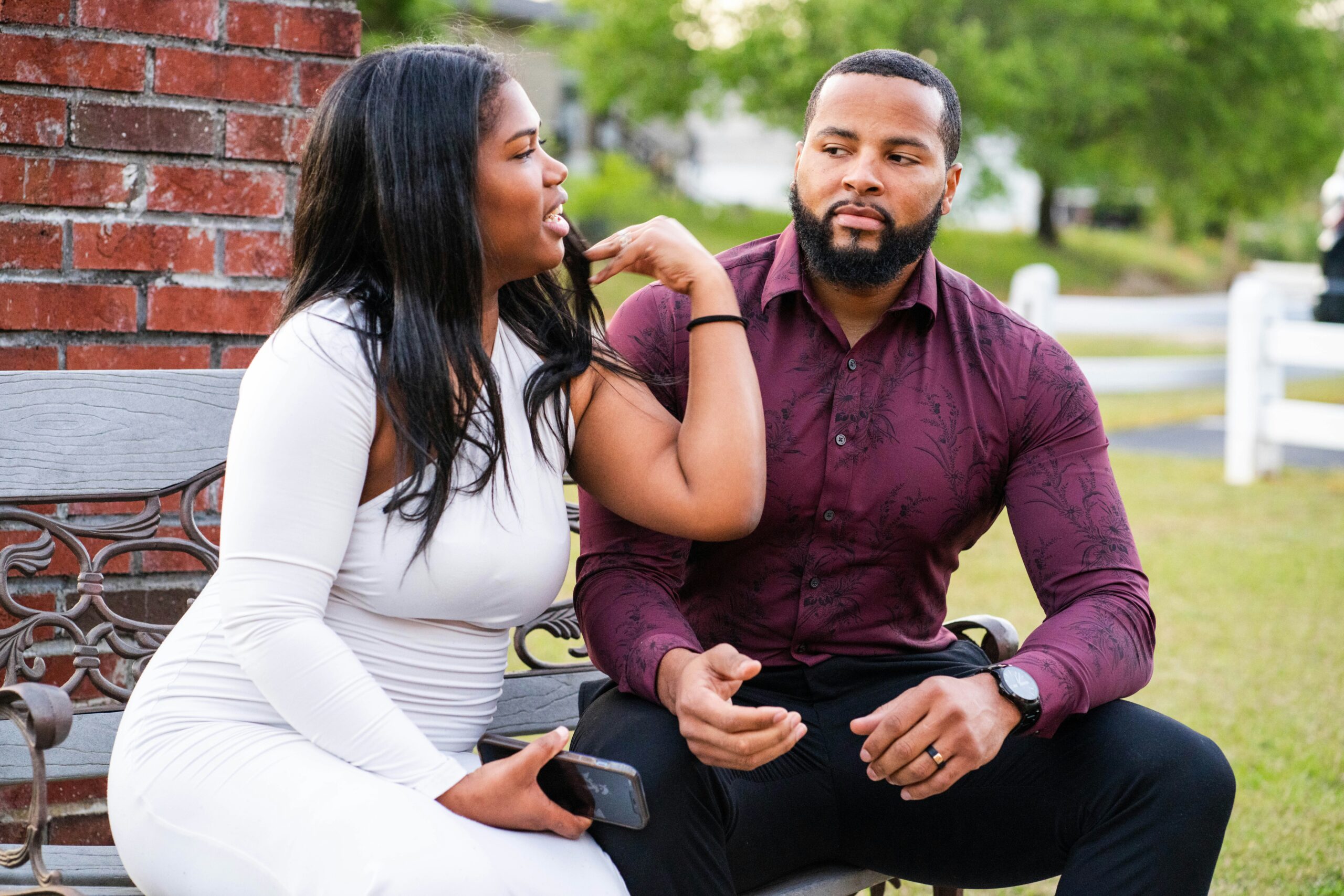
Photo by Imani Manyara on Unsplash
Spotting the signs of a cheater before marriage can save years of heartache down the road. Most infidelity doesn’t appear out of nowhere. Instead, it often follows a pattern that shows up long before an engagement ring does.
Recognizing these patterns early gives couples a real chance to address issues honestly, or walk away before committing further.
He gets defensive over small questions
A simple question like “who was that text from?” shouldn’t trigger anger or accusations. However, people hiding something often respond to normal curiosity with disproportionate defensiveness. This reaction, known as deflection, shifts the conversation away from the original question entirely.
Over time, this pattern trains partners to stop asking questions altogether, which creates space for secrecy to grow unchecked.
His stories don’t quite add up
Small inconsistencies in stories, like conflicting timelines or details that shift between tellings, often signal deeper dishonesty. One inconsistency might mean nothing. Multiple inconsistencies across different situations, though, suggest a pattern worth paying attention to.
Trusting your memory of what someone actually said matters here, especially when their version of events keeps changing to fit the moment.
Phone habits change suddenly
A partner who once left their phone face-up on the table but now guards it closely may be hiding something. Sudden password changes, turning the phone away during conversations, or taking calls in another room all represent shifts worth noticing.
Context matters, since privacy alone isn’t a red flag. However, a sudden and unexplained shift toward secrecy often signals something has changed.
He avoids future-focused conversations
Genuine partners typically engage with conversations about the future, even when those conversations feel uncomfortable. Someone unwilling to commit, however, may consistently deflect discussions about moving in together, meeting family, or long-term plans.
This avoidance often stems from keeping options open elsewhere, whether consciously or not. Consequently, watching how someone responds to future-oriented conversations reveals more than words alone.
His social circle keeps changing
Frequent unexplained changes in friend groups, sudden new “work friends,” or reluctance to introduce you to people in his life can indicate compartmentalization. People who cheat often keep different parts of their life separate to avoid overlap.
Meeting his friends and family early in a relationship offers valuable insight, since their reactions and comments often reveal patterns he might not admit himself.
He mirrors your interests too perfectly
While shared interests matter in relationships, someone who instantly adopts every hobby, opinion, and preference you have may be more focused on winning approval than building genuine connection. This pattern, sometimes called love bombing, often shows up early with people who struggle with authenticity.
Genuine compatibility develops naturally over time. Therefore, instant and complete alignment on everything can actually be a warning sign rather than a good one.
He has a history of infidelity
Past behavior remains one of the strongest predictors of future behavior. Someone who cheated in previous relationships carries a meaningfully higher risk of repeating that pattern, according to relationship researchers.
This doesn’t mean people can’t change. However, real change requires acknowledgment and accountability, not simply a promise that “it’ll be different this time.”
Trust your gut, then verify
Intuition often picks up on inconsistencies before the conscious mind can articulate them. If something feels off, that feeling deserves attention rather than dismissal.
At the same time, gut feelings work best paired with actual evidence and direct conversation. Addressing concerns openly, rather than through snooping or accusations, gives both partners a chance to build trust rather than erode it further.
About the Author