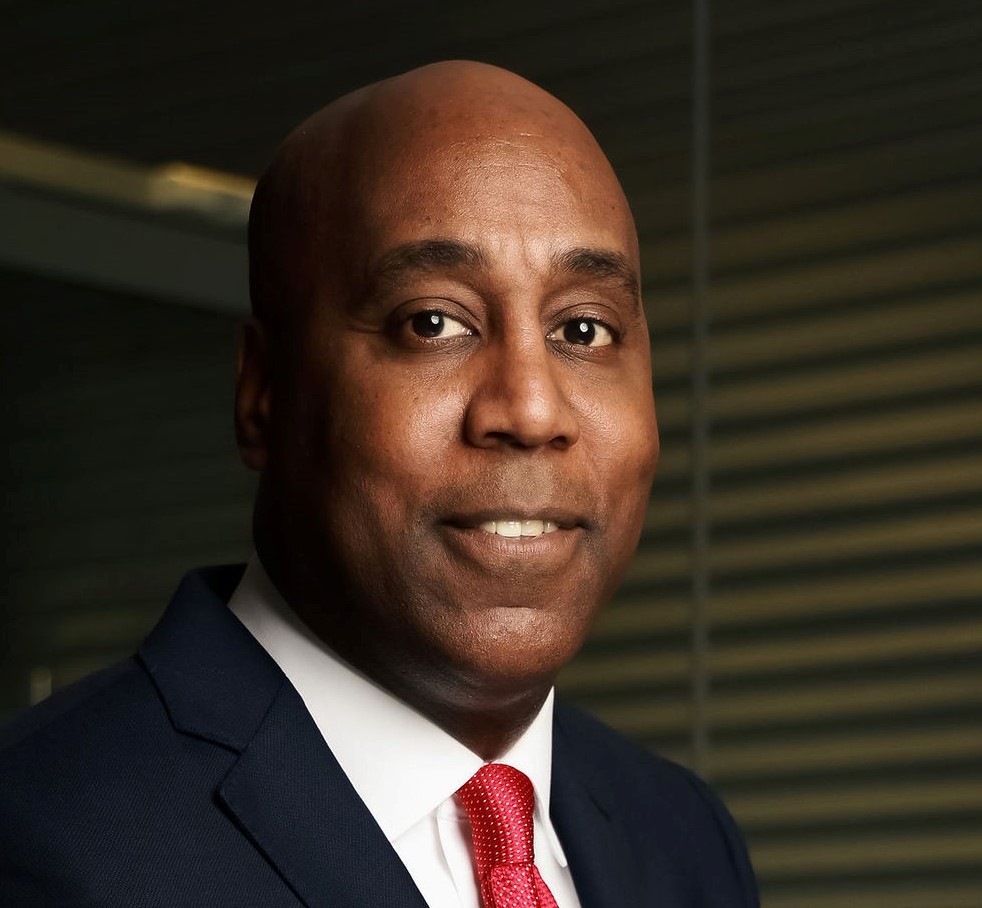
Photo credit: Eddie Harrell Jr.
Eddie Harrell Jr. has built a career on service long before he ever stepped into a radio boardroom. His start came in management with The Kroger Company. From there, he moved into the nonprofit world as executive director of the college access program I Know I Can. He later became president and CEO of the Columbus Urban League from 2006 to 2011.
During that stretch, he also served as a commissioner on the Ohio Civil Rights Commission through a gubernatorial appointment. He chaired the commission from 2009 to 2011. That foundation carried him into Radio One, where he led the Columbus market, then the Cleveland market. A promotion to regional vice president over Urban One’s Ohio markets followed. In 2024, he rose to co president of the company’s Audio Division.
Today he oversees nine of Urban One’s 14 radio markets along with its engineering and traffic operations. He also chairs the Otterbein University Board of Trustees and sits on the National Association of Broadcasters Board of Directors. That same commitment to community shapes Urban One’s partnership with St. Jude Children’s Research Hospital. The relationship is now nearing two decades and has raised more than $24 million for children and families facing cancer. Harrell shared how that bond began, why it has endured and what continues to drive Urban One’s commitment to the mission.
Tell us about your journey. How did you become Co-President of Urban One’s Audio Division?
It really goes back to my days in the grocery business with Kroger in Columbus, Ohio. I ventured into the nonprofit space after that, so I was CEO of the Columbus Urban League for five years. While I was there, I struck a great relationship with the general manager of the Radio One cluster in Columbus. He said I needed to come work for them one day. He felt I had the people side of it and understood business. He also thought I loved who they were as a company and their commitment to community service.
One conversation led to another, and I came on with Radio One in 2011 as vice president and general manager of our Columbus market. In 2014, I moved to Cleveland to run that market. About a year and a half later, I became regional vice president for our Ohio market, which included Cleveland, Columbus and Cincinnati. In 2024, our radio division’s CEO, David Cantor, retired. My colleague Dion Lemoniston and I were both promoted to co presidents of the audio division. I moved to the DMV in March of last year. Working with Ms. Kathy Hughes and her son, CEO Alfred Liggins, over the past 15 years has been nothing short of incredible.
Give us an overview of what you actually do as Co-President.
I oversee nine of our 14 radio markets. Our engineering department reports to me, along with our traffic department, which places all the commercials and all of our logs. I’m based in the DC market overseeing that market specifically, and the general managers in the other eight markets report to me too.
A lot of it comes down to how we’re fulfilling our sales mission. Generating revenue is a big part of what I do, along with building partnerships and collaborations that fit our business. When you have partnerships like St. Jude, it’s a natural fit to everything we do on a daily basis here at Radio One or Urban One.
Radio One began its partnership with St. Jude in 2008. What brought these two organizations together, and what has sustained that commitment for nearly two decades?
Serving the community is part of the fabric of who we are. If you spend two minutes with Kathy Hughes, you know that she’s all about serving the Black community. St. Jude is inclusive of everything it does, serving many families and children, including African American children.
We saw a fit there. There was a need in our community, and here was an organization passionate about serving families without charging them. That was easy. This partnership started in 2008, before I joined the company, with one show, the Yolanda Adams Morning Show on our gospel stations. It expanded from there across our other Radio One offerings. It was a natural fit because of that shared tie to the communities we serve.
What began as a Radiothon across eight markets has now grown into the Nationwide Urban Cares for St. Jude Kids Initiative. What inspired that expansion?
It’s about expanding our ability to make that clarion call across all of our assets. That means not only our radio properties but our digital assets too, and we looked at it from a format standpoint. Going beyond the gospel space allowed us into the R&B space, or our urban AC station, bringing in the Rickey Smiley Morning Show and the D.L. Hughley Show.
On the gospel side, the Willie Moore Jr. Show gave us footprints in our 14 radio markets. It also reached us across all the affiliates nationwide, since those shows are syndicated. That was part of our effort to expand who was hearing the message about St. Jude, ultimately raising more money and awareness for the hospital.
When you hear that the partnership has raised more than $24 million, what does that number represent to you beyond the dollars raised?
To us, it’s not just the money, it’s the awareness. When we do the calls on that day and hear the stories of the families served by St. Jude, it hits close to home. Most of us have an immediate family member affected by cancer, or know somebody who has been. The mission of St. Jude is to eradicate cancer, treat those with cancer and provide world class research, and we know how important that is.
Why is it important to create culturally relevant conversations around childhood cancer, health equity and support for families through this partnership?
Because of the history of our company, we are a trusted source of information. We don’t take lightly folks who want to partner with us to reach the African American audience. St. Jude is authentic. It has demonstrated a commitment to diversity and to treating people no matter their ethnic or religious background. That aligns with who we are as a company, and we find it easy to align with St. Jude.
What can a trusted voice on the radio accomplish that traditional fundraising campaigns may not?
We’re using a means of communication that people have trusted for years. There’s an automatic authenticity, a stamp of certification, that comes with the airwaves, particularly when we’re showing our support. We hold ourselves accountable to being stewards of the airwaves, and this goes back to when Ms. Hughes started WOL AM 46 years ago. When she came on the air and gave someone her stamp of approval, it meant something.
St. Jude doesn’t need us to authenticate the efficacy of its work. It allows us to communicate that they’re there, they’re available and they’re committed to communities across the country, all provided to us free of charge.
The partnership now spans national and local programming, digital platforms, live events and community engagement. How do you keep the message personal across so many touchpoints?
Our digital platforms go hand in hand with our radio assets now. You can’t speak about one without the other. Everything you hear on the radio streams to people’s personal devices and tablets, so if you have it, we reach you.
When we partner with St. Jude, they get access to our on air terrestrial assets as well as our digital assets, which extends our reach. We can follow you from the car to the kitchen, from work to a sports event. That’s how we make sure the message gets across about the wonderful work happening at St. Jude.
Some of the most powerful moments during these fundraising efforts come from hearing St. Jude patients and their families directly. How do you share those stories while protecting each family’s dignity?
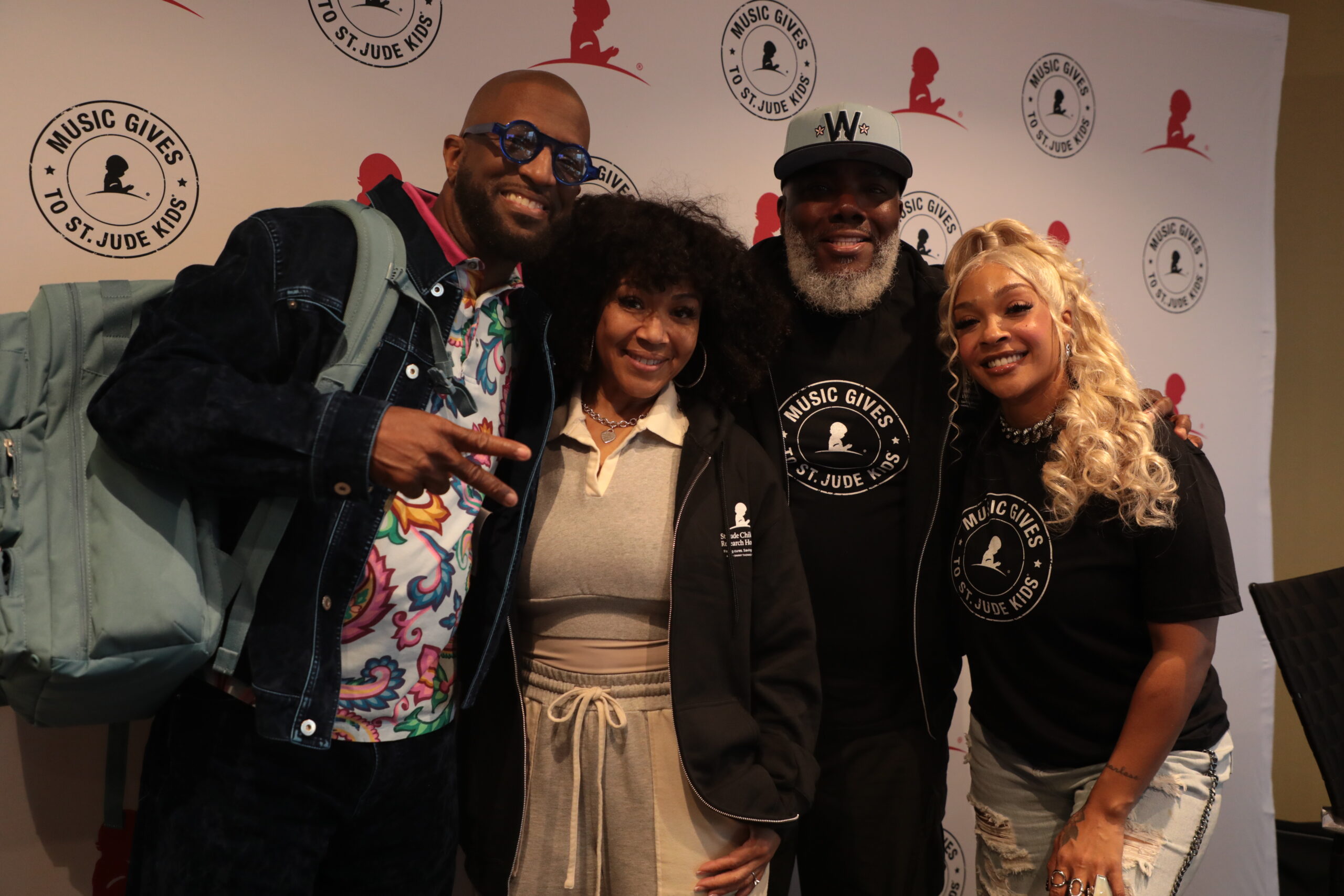
One of the things we do is send our local and syndicated talent to St. Jude. I’ve personally done it myself at the executive level. They’ve seen the work that happens there and sat with the children getting St. Jude’s care. So when they come back and talk about it on the radio, they’re not describing something they saw in a video. They’re describing something they witnessed with their own eyes, something they can speak about intelligently and with compassion. That really engages our listeners.
Asking for support becomes easier because it’s wired into the DNA of who we are. We care about the communities we serve. Combine that with the personal experience of actually going to St. Jude and relaying that message, and you get the real phone calls. People give testimonials about the support, the service and the hospitality they received at St. Jude. It resonates across the communities where we operate.
How has Urban One adapted its strategy to reach a younger, more digitally connected audience?
Reaching young people starts with reaching them on their phones. Sites need to be mobile compatible, and talent like Willie Moore Jr. helps because he has that following. Social media matters too, whether it’s Instagram or TikTok, and some of our younger talent are certainly active there.
Meeting people where they are means committing to reach them in bite sized pieces, since attention spans run short. Compelling content is the key, and St. Jude qualifies, because young people do care. They just need it delivered in short form. We have mini series out there where an episode runs about a minute.
What responsibility do you feel a company like Urban One has to address critical issues affecting the communities it serves?
It’s part of the pillar of who we are. Ms. Hughes would not have it any other way. What we do isn’t just about dollars and cents or increasing shareholder value. Embedded in that is our commitment to community service.
Every station in our company does something on a weekly basis to help the communities we serve. That’s part of our DNA, and it always has been. It’s what drew me there in the first place, knowing this is a business that cares about the communities. At the same time, we figure out how to run a viable, sustainable operation. We also commit resources to strong partnerships like the one with St. Jude.
What does an authentic, purpose driven corporate partnership look like behind the scenes?
It starts with a commitment from leadership, giving our folks the green light to pursue partnerships with like minded organizations. From our founder on down through the organization, we’re aligned. We hold meetings that focus on health disparities, voter education, uplifting our communities and crime.
It’s no secret that in some communities, when something happens, we’ve helped things avoid turning into moments of violence. When police issues arose in certain markets, we allowed police chiefs to come on our stations. They would break into programming to talk about what was going on. That’s a commitment. That’s who we are, and that’s what we do.
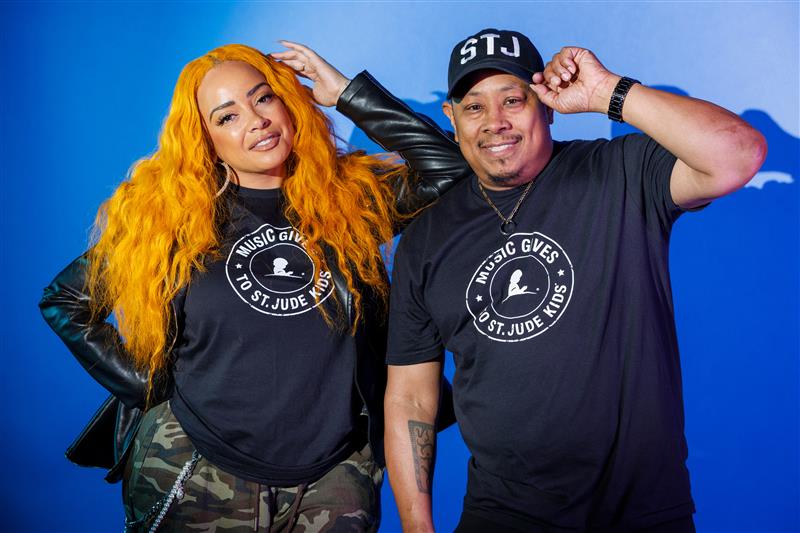
After nearly two decades and more than $24 million raised, what is the next chapter for Urban Cares for St. Jude’s Kids?
Continuation and growth. The research and the care require ongoing funding, and we never lose sight of that. Our talent genuinely looks forward to the Radiothon each year. This past year, our Washington and Atlanta markets were going head to head competing for who could raise the most. Washington pulled ahead by a small margin, and Atlanta immediately called for a recount. That kind of energy is exactly what you want in a partnership.
As we explore new platforms and expand our reach, St. Jude will remain top of mind. We will keep sending our talent and executives to Memphis, keep bringing those firsthand stories back to the airwaves, and keep doing the work.
How can people follow Urban One, and how can they support St. Jude?
For Radio One, go to UrbanOne.com to find our listings of markets and where we have radio stations. If you’re driving around in one of our markets, listen to our stations and give us feedback. We’re local and live in many day parts, so we love hearing from listeners. You can also follow us on our apps or stream us, and there are plenty of other ways to follow along, including YouTube and Facebook.
For St. Jude specifically, go to stjude.org. That’s where you can give and learn more about what’s going on with the hospital. If we’ve brought them on as a partner, you can rest assured it’s something viable and needed for our communities.
If every person listening could understand just one thing about St. Jude, what would you want them to know?
St. Jude delivers world class care to families and children in need, not low tier, not mid tier. World class. The difference that care makes in the lives of those families is immeasurable. I have seen it with my own eyes. The work they do is God’s work, and we are blessed to be a part of it.
To learn more about Urban One and its radio markets, visit urbanone.com. To donate to St. Jude Children’s Research Hospital or learn more about its mission, visit stjude.org.
Source: According to Porsha, featuring Porsha Monique and Eddie Harrell Jr.
About the Author