Photo credit: theGrio/Instagram
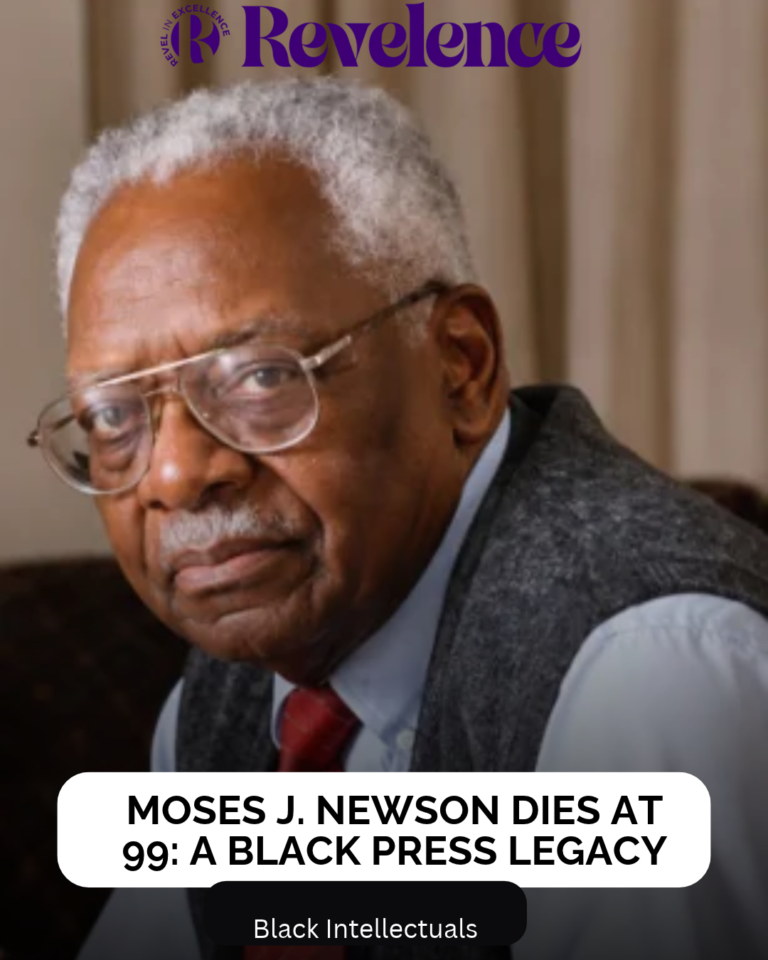
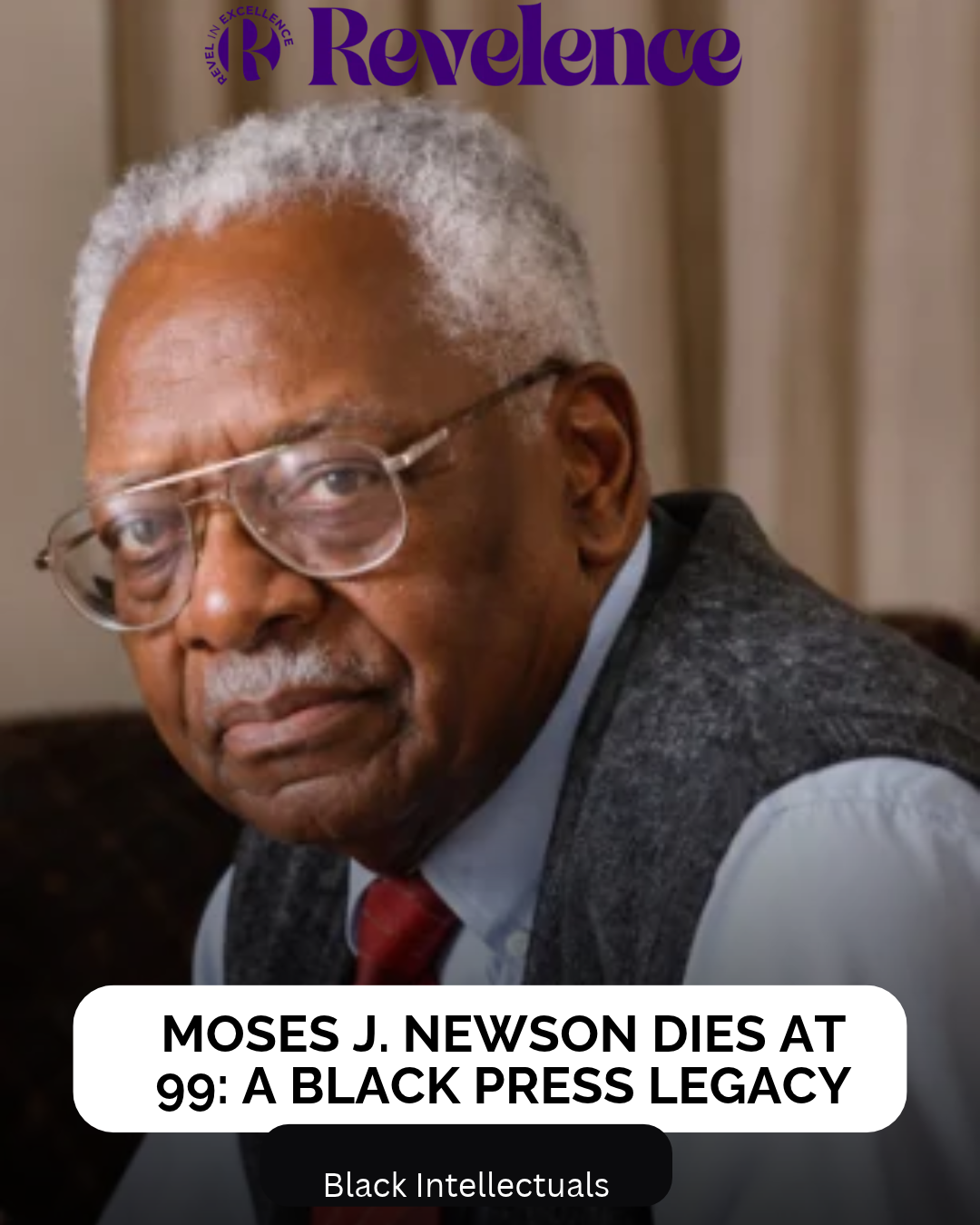
Moses J. Newson, a pioneering Black journalist who documented some of the most dangerous and consequential moments of the Civil Rights Movement, has died at 99.
Newson died on November 17, 2026, at his home in Baltimore, Maryland. His daughter, Shawn Newson, confirmed to Journal-isms that he died of natural causes, according to the Chicago Defender.
For decades, Newson used his reporting to document racial injustice, segregation and the fight for equality. His work placed him inside events that shaped American history, including the murder of Emmett Till, the Freedom Rides and the integration of Little Rock Central High School.
His career also reflected the importance of Black newspapers in recording stories that mainstream news organizations frequently overlooked.
Moses J. Newson documented the Emmett Till case
Born on February 5, 1927, in Fruitland Park, Florida, Newson developed an interest in journalism while growing up around Black newspapers.
After serving in the U.S. Navy from 1945 to 1947, he attended Lincoln University in Missouri. He earned a journalism degree before beginning his newspaper career at the Memphis-based Tri-State Defender in 1952.
One of his early major assignments involved the 1955 murder of 14-year-old Emmett Till in Mississippi. Newson covered the case and the trial of Till’s killers.
His reporting helped document the events surrounding the case for Black readers. The coverage also placed him among journalists recording a pivotal moment in the growing Civil Rights Movement.
Newson later joined the Baltimore Afro-American in 1957. His first assignment involved covering the integration of Central High School in Little Rock, Arkansas.
During that assignment, he and other Black journalists faced an attack from a racist crowd. The experience showed the personal risks Black reporters encountered while documenting segregation and resistance to integration.
He survived the 1961 Freedom Riders bus attack
Newson’s reporting career included one of the most dangerous episodes of the Freedom Rides.
In 1961, he joined the Freedom Riders traveling from the Baltimore area toward New Orleans. The activists challenged segregation in interstate transportation across the South.
During the journey, a mob attacked their bus in Anniston, Alabama, and set it on fire. Newson was among those aboard.
In a 2022 interview with the Afro-American Newspapers, he recalled a firebomb landing behind the seats where he was sitting. Passengers scrambled to escape as the bus burned.
He later described the incident as one of the most challenging stories of his career. His firsthand account preserved details of the attack and the danger faced by journalists covering the movement.
Newson continued reporting after the incident. His assignments included the University of Mississippi’s integration in 1962 and the 1963 March on Washington.
His career extended beyond the Civil Rights Movement
Newson spent 21 years with the Baltimore Afro-American, progressing from reporter to city editor and eventually executive editor.
His work also took him beyond the United States. He reported from several African countries, including South Africa during apartheid, and covered events in the Bahamas, Cuba, Panama and Jamaica.
In 1968, he interviewed the Rev. Dr. Martin Luther King Jr. during preparations for the Poor People’s Campaign. The conversation took place about a month before King’s assassination.
Newson eventually moved into federal public affairs work. In 1978, he joined the U.S. Department of Health, Education and Welfare, where he served as a public affairs specialist.
His contributions continued to receive recognition. The Maryland-Delaware-District of Columbia Press Association inducted him into its Hall of Fame in 2008. The National Association of Black Journalists inducted him into its Hall of Fame in 2014 for his Civil Rights Movement coverage.
He also remained connected to journalism after retirement, contributing commentary to the Afro-American through 2015 and sending letters to the newspaper in later years.
Moses J. Newson leaves a lasting record of Black history
Newson’s reporting remains part of the historical record through newspaper archives, interviews and oral history collections.
The Library of Congress preserves a 2011 Civil Rights History Project interview featuring Newson and fellow journalist Simeon Booker. The interview documents their experiences covering desegregation, the Freedom Rides and the March on Washington.
His life also demonstrates why the Black press mattered during the struggle for racial equality. Black journalists recorded events, preserved firsthand accounts and helped communities understand the experiences of people whose stories often received limited attention elsewhere.
Newson’s family plans to honor his life with a private ceremony in February 2027, when he would have celebrated his 100th birthday.
His death marks the loss of a journalist whose work connected generations of readers to the people, risks and events behind the Civil Rights Movement. His reporting remains an important part of the story of Black journalism in America.
View this post on Instagram
About the Author