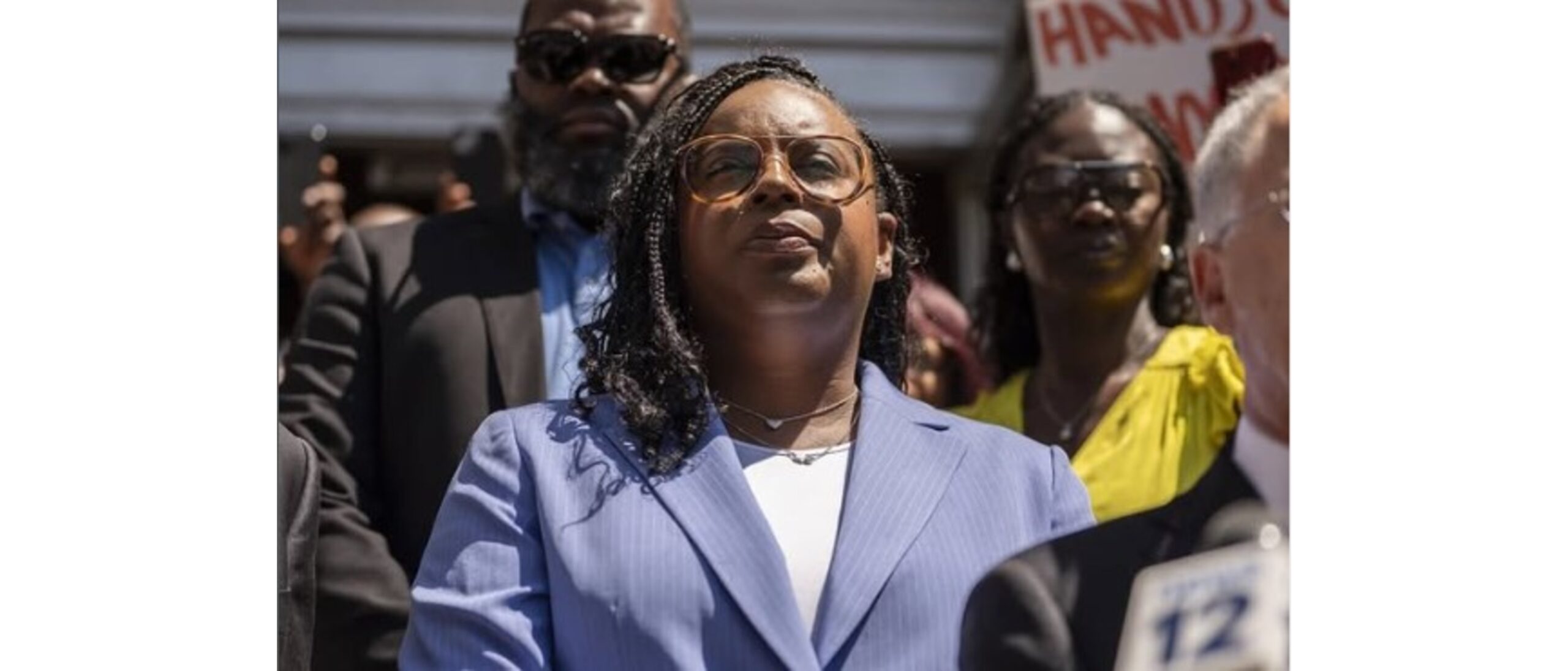
Photo credit: LaMonica (Instagram)
LaMonica McIver faces federal charges after inspecting an ICE detention facility in Newark, New Jersey. Her office says she was carrying out official congressional oversight duties.
If convicted, the Black congresswoman could face up to 17 years in federal prison.
The case has drawn national attention. As a result, civil rights groups, fellow lawmakers and community leaders have criticized the prosecution. They also argue the charges threaten Congress’ oversight authority.
Meanwhile, McIver’s legal team has appealed the case in federal court. They argue prosecutors lack the legal authority to charge a member of Congress for performing legislative oversight.
Consequently, the case has become one of the most significant legal battles over congressional oversight in recent years.
Why LaMonica McIver was charged
The charges stem from McIver’s visit to an ICE detention facility in Newark.
According to her office, she was performing routine congressional oversight. In fact, members of Congress regularly inspect federal detention centers to monitor conditions.
Lawmakers use these visits to determine whether facilities comply with federal law and human rights standards.
Supporters say McIver’s visit followed a long-standing bipartisan practice. However, critics argue charging a sitting member of Congress for such a visit has no recent precedent.
As a result, the prosecution has raised concerns about congressional independence. Legal experts say the outcome could reshape how lawmakers oversee executive agencies.
What the charges could mean
McIver faces a potential prison sentence of up to 17 years.
That level of punishment is unusually severe for a case involving congressional oversight. Because of that, supporters say the charges appear designed to discourage lawmakers from conducting future inspections.
In addition, legal scholars have expressed concern. They argue criminal prosecution should not interfere with Congress‘ constitutional oversight role.
The case could set an important legal precedent. Ultimately, its outcome may affect every member of Congress who conducts similar inspections.
McIver is challenging the case
McIver has said she will continue fighting the charges.
Instead of negotiating a resolution, she has chosen to challenge the prosecution in federal appeals court.
Meanwhile, her attorneys argue that members of Congress have constitutional authority to oversee executive agencies. They also contend lawmakers should receive legal protections while carrying out those duties.
If successful, the appeal could strengthen oversight powers for future members of Congress.
View this post on Instagram
Congressional oversight and ICE
Congress has long claimed the authority to inspect immigration detention facilities.
For that reason, many lawmakers prefer unannounced visits. They believe surprise inspections provide a more accurate picture of daily conditions.
Over the years, immigration advocates have raised concerns about conditions inside ICE detention centers.
The Newark facility has received particular attention because of its location and the area’s active immigrant rights community.
Therefore, supporters argue McIver’s visit fit within the normal responsibilities of a member of Congress.
Constitutional questions remain
The prosecution has reignited debate over congressional authority.
Meanwhile, McIver’s legal team is expected to rely on the Constitution’s Speech or Debate Clause. That provision protects lawmakers while performing legislative duties.
Now, the courts must decide whether those protections extend to physical inspections of federal facilities.
Ultimately, the decision could establish an important legal precedent for future oversight investigations.
At the same time, civil rights groups have questioned whether the prosecution reflects selective enforcement against a Black lawmaker.
Civil rights groups rally behind McIver
Civil rights organizations quickly voiced support for McIver.
Many activists describe the prosecution as an attempt to silence Black elected officials who challenge immigration policies.
Additionally, others say the case raises broader concerns about racial justice and civil liberties.
Supporters have also used social media to keep public attention on the case as it moves through the courts.
Members of Congress respond
Several members of Congress have also criticized the charges.
According to those lawmakers, elected officials must be able to inspect federal facilities without fear of criminal prosecution.
Furthermore, supporters say congressional oversight protects government accountability.
Legal advocacy groups have also filed briefs supporting McIver’s appeal.
As the case moves forward, it continues to draw support from civil rights organizations, constitutional scholars and lawmakers across the country. They believe the outcome could shape the future of congressional oversight.
Source: theGrio
About the Author