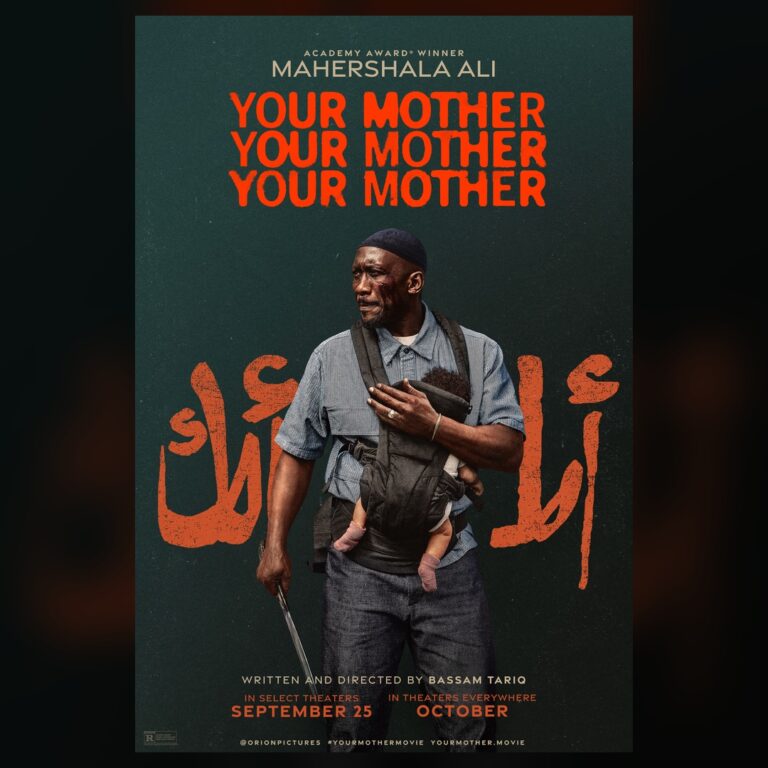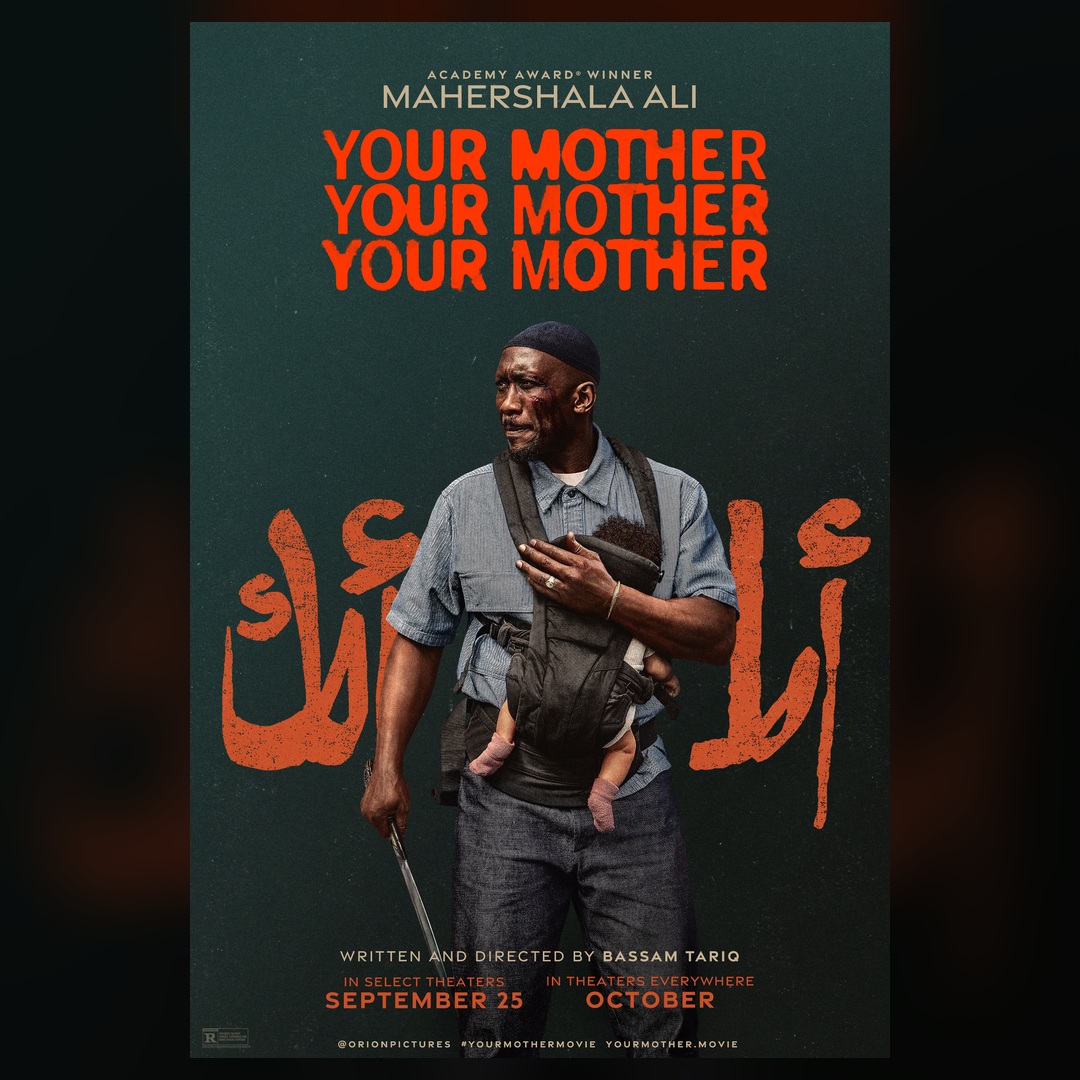
Mahershala Ali anchors Bassam Tariq’s compelling thriller about a bereaved father whose deepest convictions are unsettled by the loss of his wife.
Faith has long helped Latif make sense of his life. But when his wife dies, he must care for their three children, including an infant daughter who is still breastfeeding, while struggling to make sense of his own grief.
That is the emotional center of Your Mother Your Mother Your Mother, Bassam Tariq’s action thriller starring Mahershala Ali as a devoutly religious hitman. Latif knows how to confront danger. Learning how to comfort his children and carry on without their mother is another story.
As he moves across Houston with his children, the threats surrounding them give the film its urgency. But Tariq gives the action emotional consequence. Latif’s decisions carry the weight of a family’s survival, and his ability to handle violence offers no assurance that he can handle what awaits him as a grieving father.
A protector who cannot fix everything
Latif’s instinct is to protect. His wife’s death confronts him with something he cannot fight, negotiate or reverse. The man accustomed to responding to threats must now face helplessness, even as circumstances demand that he remain decisive.
Ali makes that tension compelling. His performance holds together qualities that do not sit comfortably beside one another: tenderness and violence, devotion and doubt. Latif’s love for his children gives us a reason to care about him without resolving the moral questions surrounding his “work.”
The children also give the story a necessary immediacy. Their needs leave little room for him to retreat into sorrow. An infant cannot wait for her father to understand his grief before she needs feeding or soothing. Parenting becomes a series of demands he must meet while emotionally unprepared to meet them.
This is where the film’s treatment of fatherhood has its greatest force. Providing protection is only part of Latif’s responsibility. He must offer patience, attention and reassurance at a time when he needs those things himself. Tariq grounds that challenge in the family’s circumstances, allowing the questions about parental roles to emerge through the story.
And because Latif understands responsibility through his faith, those demands become part of a deeper reckoning.
When grief tests belief
Latif’s faith intensifies his struggle to reconcile his wife’s death with the life he thought he understood. The convictions that once gave him direction must now accommodate a loss that leaves him angry, uncertain and searching for meaning.
That spiritual conflict matters because belief shapes how he sees his obligations. He must reckon with suffering while continuing to act as a father. His children need him to make choices, even when he no longer feels sure of the principles guiding those choices.
His occupation adds another layer. Latif’s religious devotion exists alongside his willingness to commit violence. Grief brings that contradiction into sharper focus, inviting us to consider how he reconciles what he believes with what he does. Ali gives the character enough emotional depth to keep that question open without making his pain an excuse.
The film’s parallels between religions extend this inquiry. Different traditions offer ways to understand suffering, duty and compassion, but Latif’s predicament gives those ideas a concrete human setting. What does faith ask of someone who feels abandoned? How does a person practice compassion while living by violence? What remains of conviction when certainty falls away?
Tariq’s strongest choice is to keep these questions connected to the family. Latif’s spiritual crisis has consequences beyond himself. Whatever he believes about his loss, he must decide how to live with it and what kind of father he will be afterward.
A film that stays with you
Revelence Media hosted Detroit-area screening with Picture Motion on September 24, 2026. Watching the film with others underscored how much its story offers for discussion, particularly the relationship between faith, grief, and parental responsibility.
Revelence Recommendation
Your Mother Your Mother Your Mother earns Revelence’s Certified Haute verdict. Its action creates momentum, while Ali’s performance gives that momentum purpose. We follow Latif because the danger is immediate, but we remain invested because his hardest task has no clean resolution.
He cannot restore the life his family had. He can only decide how to meet the life ahead of them. Tariq makes that uncertain effort the film’s most compelling story.
About the Author