Photo credit: Dr. LaToya Lewis/Instagram
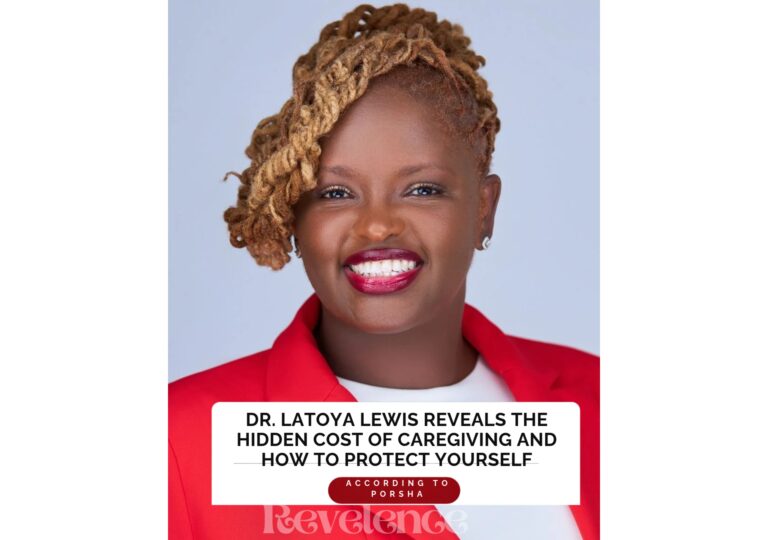
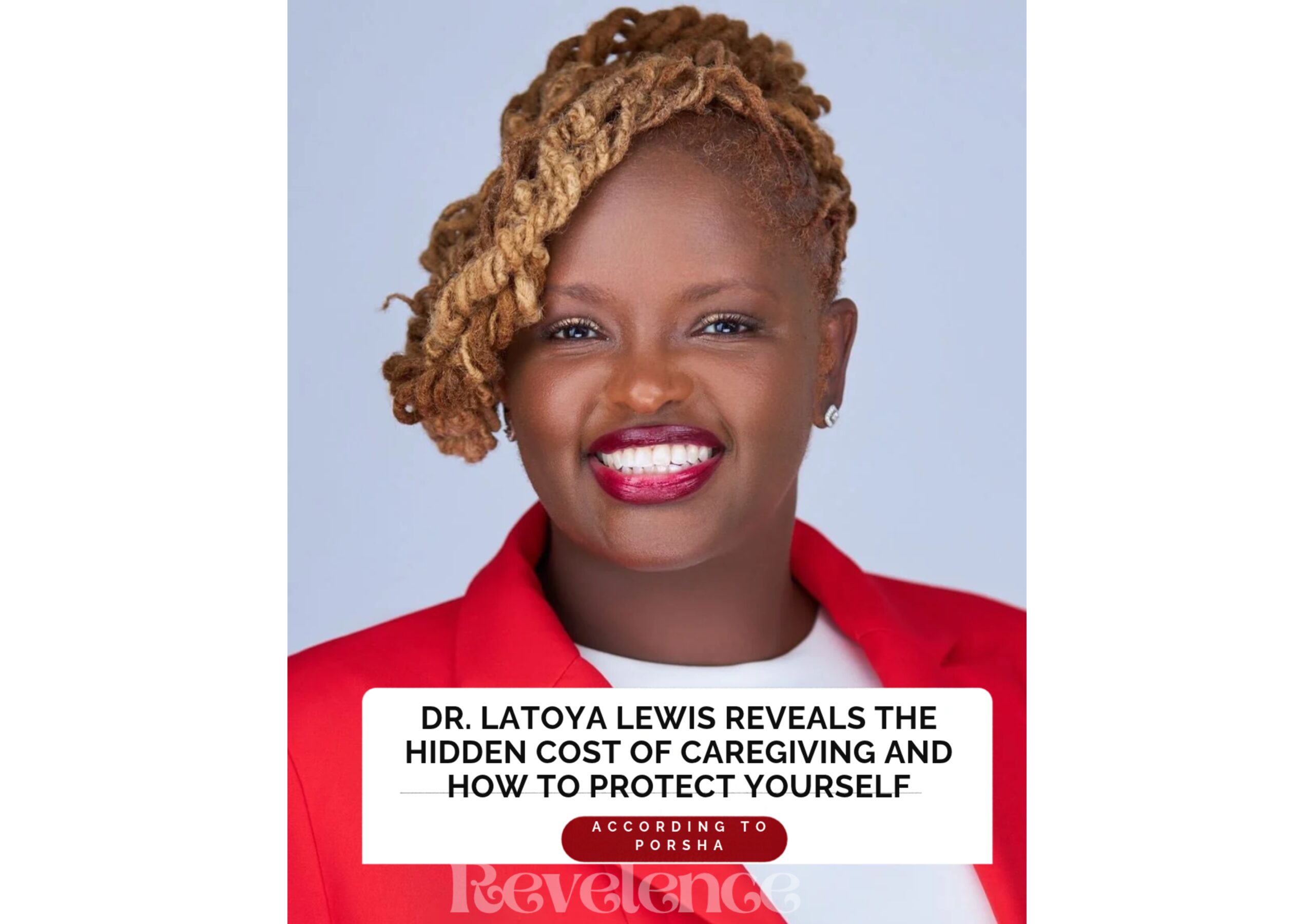
Dr. LaToya Lewis wants to make caregiving without losing yourself possible for every family. The Trinidad-born nurse scientist began her career in intensive care. Today she is an associate professor of clinical nursing at the University of Miami.
Lewis rose from bedside nurse to nurse leader, managing up to about 100 staff members. Her research now spans brain health, dementia, end-of-life care and palliative care. She has collaborated with colleagues in Uganda, Spain, Jamaica and other countries.
Lewis is also an educator, an entrepreneur and a mother of three. As founder of Senoia, she connects with organizations, hospitals, communities and caregivers to bridge the gap in support.
In this interview, Lewis explains why so many women become default caregivers, especially in Black families. She also shares how to make invisible work visible, set boundaries without guilt and start hard conversations about dementia.
How did you get on the path to becoming a doctor? Where do you come from, and how did you know this was the route for you?
Well, I would say it found me. I was born in Trinidad, and I came to the U.S. with an immigrant story. Parents send you up to start a life while they fix everything. I had the pleasure, when I came to the U.S., to live in California and New York. I then transitioned to Florida to pursue my nursing degree, and I’ve stayed here ever since.
I always knew I wanted to care for people. I just didn’t know how. Other people were talking to me about nursing, and I have nurses in my family. I said, you know what? That can bring me the closest way to caring for people. I love the intensive care area, so I started there. I moved my way up from a nurse all the way to a nurse leader, and my max was about 100 staff.
But what I realized was, even though I was in a leadership role, I still wanted to make sure I checked in with families and with patients. Sometimes, if nobody asks them how they’re being treated, they won’t say anything. That really pivoted me through my bachelor’s degree, my master’s and my doctorate in education. I wanted to connect with the people who are future providers, whether they’re doing their nursing degree for the first time or advancing their nursing degree. I also wanted to connect with patients, families and caregivers. Education is universal to me, and that’s why I pursued a doctorate in education.
What has your work as a nurse scientist taught you about caregiving that families often discover only after they are overwhelmed?
My work has expanded from brain health to dementia, end-of-life care, palliative care and serious illnesses. I’ve had the opportunity to collaborate with a lot of people internationally. I’ve worked with individuals in Uganda, Spain, Jamaica and other countries.
One universal factor that I’ve seen through the research, case studies and various collaborations is that everyone wants the best for their family. Everyone wants the best for their patients. Somehow it gets confused in all of the other responsibilities that caregivers have to do. Nurses and other health care providers sometimes don’t get the opportunity to have a one-to-one conversation and ask, what do you need from us to feel comfortable when you go home?
One common thread that I continue to see is that, whether it’s a brain health issue, cancer or another chronic condition, people end up being caregivers by default. That’s the one line. You could match it to so many things. It’s not one topic of having children, being a caregiver. It’s not one topic of being in the middle and caring for your older parent. Spouses are caregivers because, unfortunately, of different diagnoses, car accidents, different things.
Why don’t families talk about caregiving before a crisis hits?
We don’t talk about it. We talk about legacy building for financial health. We focus on generational wealth. But I want to make sure people know you can be cared for, and you can be a caregiver without planning it. Let’s bring it to the forefront. Talk about it.
We talk about breast cancer awareness, and it’s Health Literacy Month. Okay, great, but we shouldn’t talk about certain things in certain months. My work really focuses on exploring what’s available. I talk to communities, and I talk to aspects of culture, religion and spirituality. I don’t view a person as an illness. I don’t view a family as, you’re caring for your parent with dementia. No. What does it mean to you? Is it the oldest daughter?
How does one woman become the default caregiver, particularly in Black families, and what should a family discuss before assuming she will take that responsibility?
A lot of things you said were correct, including assuming that she will take that responsibility. Many women become caregivers without anyone ever asking whether they can take it on. What are their goals in life, and can they manage the deep responsibility?
Culture and spiritual traditions are deeply embedded in that. Too often, women become responsible for everything because they’re expected to be strong, especially in our community. They’re expected to be dependable. They’re expected to be available. This generation, I would say, is saying it more, but we’re not really taught boundaries. We’re just taught, okay, no problem.
We need to switch up that expectation that the girl is responsible for caregiving. I have a daughter, and I have two boys. I tell them, any of you will become caregivers. It’s not only gonna be my daughter. It could be the boys, in different situations. Caregiving should be shared across the family, not automatically assigned to the daughters, the mothers, the sisters, the female cousins. So many people are skipped.
How do families make the invisible work of appointments, paperwork and constant coordination visible enough to share among family members?
That’s a good question, because unfortunately, people think it’s all the physical labor of bathing and helping somebody out of bed to use the bathroom. The invisible part is making appointments. The invisible part is asking, is my loved one able to make their financial decisions, or do we need to appoint somebody in the family to manage those financial decisions? Another invisible part is picking up medications. Some people are still unaware that medication can be delivered to reduce that burden of waiting in line.
Some insurances already have money allocated for caregivers, which can help alleviate stress and give you a little bit of a break. There are also companies that are available for transportation, so when we think of caregiving, we need to include transportation and doctor visits. We also need to include updating other family members. I don’t know about you, but when things change in my family, everybody wants to know, and why did I find out late? Why did you tell that person first? It wasn’t intentional. It was just the mental load of making sure you got everything done.
Who asks the caregiver how she is doing?
Everybody calls the caregiver to ask how their loved one is doing, but nobody asks, you’re taking care of this person, how are you doing? How are you managing all of this? We have to recognize that the work is really unpaid work that nobody sees. We think about all that physical stuff, but what about the emotional and psychological aspect?
When siblings say, “Let me know if you need help,” how can a caregiver turn that offer into specific, dependable help?
Before a caregiver can ask for help, they first have to understand they need the help. That’s one segment, because a lot of people, especially in our community and other cultures, don’t want to feel like, I can’t handle it. That’s the first step, understanding within yourself.
Number two, instead of your siblings or other family members saying, let me know if you need anything, you need to start appointing and delegating tasks to them.
What specific tasks can siblings take on?
Let’s say mom has a heart condition and arthritis, and she needs to go to that doctor. I need help because mom also has a breathing problem, so she needs to go to a pulmonologist. We have technology, so we can use Zoom, FaceTime or just a group chat text. I need one person to take on the role of calling and making appointments. Another person can take on the role of calling the pharmacy to refill her prescriptions. I also need one person to help make meals.
If you’re able to, you can call some different services for meal planning. There are also churches and communities that do the soul kitchen, where on certain days of the week they cook for people that are shut in. It doesn’t always have to depend on money. We can go back into our communities, and there are things that are happening.
We need to tell our siblings and family members the actual task. Otherwise, you’ll be like, yeah, I need help, don’t you see I need help? They’re not gonna see you need help. They’re gonna say, oh, you’re snapping a little too much lately. And it’s like, don’t you see everything I have to do?
What does a compassionate boundary sound like from a sibling who has a job, children and her own health concerns and can’t keep absorbing the demands of caregiving?
When you set a boundary, it doesn’t mean that your love for that family member is any less, because caregiving is the ultimate expression of love. But you can love someone deeply and still need help. You can love someone deeply and still need rest and time for yourself. Based on the evidence, that caregiver has missed their own doctor’s appointment, and she has deadlines at work. She also has her own children. Everything else that she’s managing, this is an added component. We celebrate strong Black women, but strength shouldn’t mean being exhausted and overwhelmed all of the time.
We really need to come together. We need to say, for example, I love our father. I am here to support our father. But Monday, Wednesdays and Fridays from 7 to 9 a.m., I need help, because I would like to go to the gym. I would like to pray or meditate. Or I would just like to go for a walk.
What does caregiving without losing yourself look like when siblings live far away?
Some siblings don’t always live close to each other, but you can say, I know you’re not here, but maybe we can look into getting some additional help. Unfortunately, the conversation may progress with your siblings to something like, I can’t have Dad live with me right now, because now Dad’s safety is a concern, and when I’m at work, I’m worrying about his safety. Or Dad got hospitalized, and now we have to add on something else. We might have to start looking into a long-term care facility, because now the condition has gotten so much that I can’t handle it on my own anymore.
That’s what it means by setting boundaries. Boundaries are not rejection. That’s how you continue to show up for your loved ones without losing yourself.
How should families raise concerns about Alzheimer’s or other dementia respectfully and prepare for medical evaluations?
With the holidays approaching, I’m going to give one strategy. If we’re gathering together for the holidays, we can pull our family member aside. It doesn’t have to be in public, and it doesn’t have to be a big issue. We can say, Mom, I’ve realized that you’re forgetting some things lately. I don’t know if something’s going on, but I want us to go together to your doctor. There are also gerontologists that focus on aging, but I want us to go to the doctor to do a memory check. Sometimes, when you go to providers, the memory check might not be the first priority, because we’re focusing on your other things.
How can families start a legacy conversation about a loved one’s wishes?
When somebody is experiencing changes in their memory or has been diagnosed with dementia, families should begin a conversation about what matters most to that person. We can say, who do you trust to make health care decisions? What are your preferences? What are your wishes that you want us to respect? We’re not saying you’re dying. We’re just saying, what are your wishes? This is a way of having a legacy conversation.
We can also say, I noticed that when you’re doing certain things, you’re forgetting, and you’re asking me the same question multiple times. I’m not saying you have dementia. I’m noticing this is happening. So let’s go get some medical evaluation, instead of automatically assuming that it’s a natural part of aging. Have the conversations while that loved one can still tell you what matters to them. That’s why I worked on creating conversation decks and communication kits to help with different difficult conversations. Some people have their funeral plots already done for generations.
Why have secrets replaced storytelling in so many families?
We talk about generational wealth. We talk about saving to build a house. But have we sat together as a community, as a family, as siblings to say, if something were to happen to us, I could tell you my brother knows what I want? We need to sit there and say, Dad or Mom or Auntie is getting older, so let’s start to talk a little more in our family and open it up. We keep too many secrets, but in our culture, secrets have not always been the tradition. The tradition used to be storytelling. It used to be bringing the elders around and talking about how they were when they were young.
Our legacy of gatekeeping has not always been part of it. When I travel to Uganda, I see the tradition of respecting the elders and keeping them involved. In many of the homes I visited, the elders were not mentally capable of understanding things, and they were repeating things. Our legacy is storytelling. Our legacy is bringing everybody together. Now we’re starting to say, okay, don’t tell that person you have cancer. Don’t tell them you’re forgetting things, because then they might want to put me in a home. I don’t want them to see. Let’s open the gates back up.
How can families get access to the conversation decks and toolkits to start talking about dementia and caregiving?
That’s available on my website, as well as the Senoia website. It’s really part of a connection where you don’t have to have strict conversations as a family. You can pull out one of the cards and say, tell me what recipe you want us to remember. Tell me what recipe you want to pass on. I know, Auntie, that you traveled a lot. Is there a place that you want me to see?
It has other conversations, of course, about your health and who you trust with money, because in our families, we know who we want to manage our money. It doesn’t have to be a 40-minute conversation. It can be one question. If I wanted to buy a house right now, who would you trust with the money to save it? It doesn’t have to be about their death or any of that.
We’re relaunching the kit, but they’re available online so that people can have these conversations without it being formal and stuffy, and only in one place. Honestly, if we start having the conversations, people who are caregivers will realize they need more help. I say community, meaning siblings, family and loved ones. Caregiving really is more than just physical. There’s a background story.
For families who can’t afford a nursing home or private care, where should they start looking for practical support?
I would say a couple of benefits right now. First, insurance. I’ll give an example with an older person first, and then I’ll give an example with a younger person, because a caregivee could be any age. With our older parents, when they have access to Medicare, Medicare has funds available for caregivers. There’s training that you can get additional money to be a caregiver. I have resources on my site, and we also have resources through AARP. There are resources available, so not all of it has to come from you as the caregiver. I just want to set that point straight right now.
With the caregivee, my grandmother was experiencing dementia, and we took her with us. My aunt, the primary person responsible, took her to different facilities to see what she would like. She wasn’t excluded from the conversation. It’s not us doing this to you. This is what we want for you. Let’s include you.
If we reach a point where we’re planning for end-of-life care, there are resources available. Caregiving is soon going to become a diagnosis, so there’s gonna be additional support available. Respite care, we don’t talk about it enough. It means somebody can come once a week or a couple of hours a week to relieve you. There are resources out there, but my goal is always opening the doors and letting people know.
How do families include the person receiving care?
Sometimes, in a 10-minute or 15-minute doctor’s appointment, you’re not able to explore everything. The caregivee is feeling vulnerable, so we include them. How do we include them? I know someone who is 13 years old, caring for his grandmother. His mother passed, unfortunately. He’s worrying about school, and he’s worrying about grandma forgetting things. There are multiple generations here, and a caregiver could be any age.
What are three steps a woman caregiver can take this week to protect her well-being and build a shared care plan?
Number one, just because you’re a woman who can do everything, it doesn’t mean you have to. Number two, rest is a new resistance. Real help shouldn’t create another job for you. Number three, and if I could put it in capital letters and bold it, you deserve support. Not just praise on how much you can carry. You deserve to be seen, to get rest at night, to get sleep. And rest is not always sleep. Rest is just resting your mind.
If you’re doing this on a day-to-day basis, thank you for showing love to your loved one. But I need you to reach out for help. I need you to think about one thing that you can trust somebody else to do for you today. Make a phone call. Ask that one person, can you pick up something to eat for us today? Because I don’t think I’m able to cook today. Or, can you make a call for me? If you can’t drive and do something, can you call the pharmacy and refill a prescription?
Why must caregivers protect their own health?
I need you to include yourself as part of the care. It’s not only the one you’re caring for, it’s also you. If your health fails right now, tell me who’s gonna care for your loved one. We say this in jobs, we’re like, if you’re not there, they’re gonna replace you. But you’re a caregiver. God forbid, right now, you’re not taking care of your blood pressure. God forbid, you don’t take that time. Who’s gonna care for your loved one?
Where can people follow you on social media and keep up with your work?
I’m available on all social media platforms. On Instagram, YouTube and X, I’m Dr. LaToya Lewis. My website is also Dr. LaToya Lewis, and Senoia is the company where I get the pleasure of connecting with organizations, hospitals, communities and people who are caregivers. We really do a deep dive in that. On LinkedIn, YouTube and Facebook, I’m LaToya Lewis.
Senoia is really something that I view as bridging the gap. That’s what the organization is focused on, bridging that gap. I don’t want anybody to feel alone anymore.
Source: According to Porsha, featuring Porsha Monique and Dr. LaToya Lewis
About the Author