Photo credit: HBO Max
Ten years after one of the most watched criminal trials in American history, OJ Simpson was desperate. A civil court had found him liable for the murders of Nicole Brown Simpson and Ron Goldman. The public had largely turned on him, sponsors had walked away, and the man who had once stood as one of the most beloved figures in sports and entertainment now needed money and needed people to believe in him again.
His solution was a hidden camera prank show called Juiced, where he would shock unsuspecting members of the public with stunts. Some of those stunts drew directly from the details of his own true crime case. The show filmed between 2004 and 2006, then a mystery leaker exposed it to the press and pulled it from circulation almost immediately. For nearly two decades, it stayed buried.
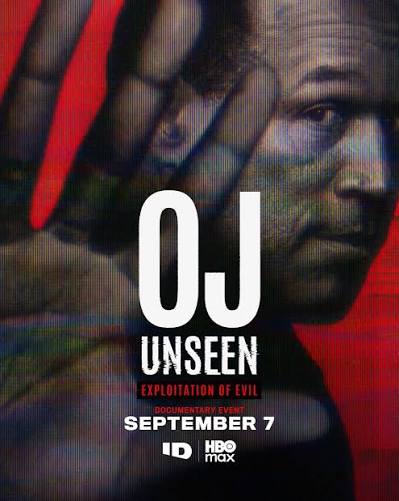
Now, Investigation Discovery executive producer Rebecca Halpern has brought it back to light in a four-part docuseries called OJ Unseen: Exploitation of Evil, premiering September 7 and 8 on ID and streaming on Max. She sat down to talk about the crew that spent two weeks looking for tells, the moments that bordered on confessions, and why this is the one project that actually lets you inside OJ Simpson’s head.
Rebecca, take us behind the scenes of OJ Unseen: Exploitation of Evil. What was Juiced, and why did it exist?
Ten years after OJ was acquitted of a double homicide in the trial of the century, he had hit rock bottom. A civil court had found him liable for the murders of Nicole Brown Simpson and Ron Goldman. People wanted nothing to do with him. Desperately, he needed money and wanted to reclaim the fame and love he once felt as one of the biggest celebrities in sports, movies, and entertainment.
So he starred in a hidden camera prank show called Juiced, where he would shock innocent people with stunts. Some of those pranks drew inspiration directly from details of his own true crime case. To him, Juiced was a way to prove to the world that he was still a beloved pop culture figure and not the pariah the media had made him out to be.
Who actually created Juiced, and who thought this was a good idea beyond OJ himself?
Juiced was the brainchild of Rick Marr, one of the founding fathers of the ruckus film genre. He built an empire catering to a niche audience through pay-per-view, direct-to-DVD releases, and late-night infomercials. Rick is a genius marketer who understood exactly how to get eyeballs. To him, OJ Simpson was the most likely vehicle for that kind of attention. So he hired OJ and made the show.
The show could not have existed without people who saw OJ as profitable. Was OJ exploiting his notoriety, or was he the one being exploited?
It was a little of both. OJ’s motivation was to prove that in the court of public opinion, people still loved him, still revered him, still wanted to be around him. What you see in the footage is genuinely mind-blowing how many people rushed up to him, wanted selfies, seemed thrilled just to be in his presence. That clearly fed something in him.
At the same time, you cannot entirely blame someone like Rick for creating a show like Juiced, because we are all doing exactly the same thing now. The attention economy we live in, with social media and YouTube and TikTok, is the same race for eyeballs that Rick was running in 2004. In many ways, Juiced was ahead of its time. It mirrors where pop culture has ended up, and we are all complicit in that.
OJ Unseen follows the making of Juiced through the crew’s perspective. What drove those crew members to get involved?
The crew was a mix of legitimate filmmakers and people from Rick Marr’s world. All of them, however, signed on for the same reason. They wanted to get a glimpse of this mythological figure in pop culture and answer the question everyone was still asking: did he do it? Spending two weeks with OJ, day and night, seemed like the surest way to see tells. They believed the truth would reveal itself when it came directly from the horse’s mouth.
As the documentary’s director and showrunner, I found myself doing the same thing. Watching the behind-the-scenes footage, I kept looking for those tells too. What I found was fascinating. There were moments when the crew genuinely fell for him. He could be funny, warm, and magnetic. Then, without warning, flashes of anger would appear. Statements that bordered on confessions would slip out. Those moments left the crew feeling genuinely frightened about who they were really with. OJ Simpson was a volatile person, and spending that length of time around him made that unmistakably clear.
The project was reportedly brought down by a mystery leaker. What happened, and what motivated that person?
Between 2004 and 2006, the production filmed Juiced, and then someone pulled it from circulation in 2006 before almost anyone ever saw it. A crew member leaked the project to the press because they felt it was so deeply inappropriate and such an affront to the victims and their families that anyone would even consider making a show like this.
What makes this complicated is the era in which it happened. Celebrities with extreme public downfalls were beginning to find new fame in reality television. YouTube launched in 2007. Social media opened up content creation in a way no one had seen before. Nobody was serving as an arbiter of taste anymore. The leaker felt strongly enough to act, but he also had his own motivations — he was chasing his own moment of attention. That conflict runs through the series as one of its more interesting threads, and it also spelled the end of Juiced until now, when audiences can finally see it in full.
What initially drew you to this forgotten chapter of OJ’s life, and what should viewers expect from the four-part series?
Throughout my career, I have explored some of the most compelling and controversial figures in the world, including Charles Manson. Having the opportunity to unpack OJ Simpson through a lens no one has ever used before was something I could not pass up. Everyone asks why we need another OJ Simpson documentary. This is not another OJ Simpson documentary. No other project will ever give viewers this kind of access to his actual psychology.
What viewers will see is a stranger-than-fiction look at one of the most notorious figures ever to appear on American television. The behind-the-scenes footage shows him joking about the murders and talking casually about his dead ex-wife, the mother of his two children. When people ran up to him on the street, they did so not because they loved him but because they could not believe they were seeing this mythological figure in real life. He mistook that shock and novelty for adoration and was delusional enough to believe it fully.
Viewers will come away asking the same question the crew came away asking. The series raises it honestly and lets audiences decide for themselves.
OJ Unseen: Exploitation of Evil premieres September 7 and 8 on Investigation Discovery and streams on Max.
Source: According to Porsha, featuring Porsha Monique and Rebecca Halpern
About the Author