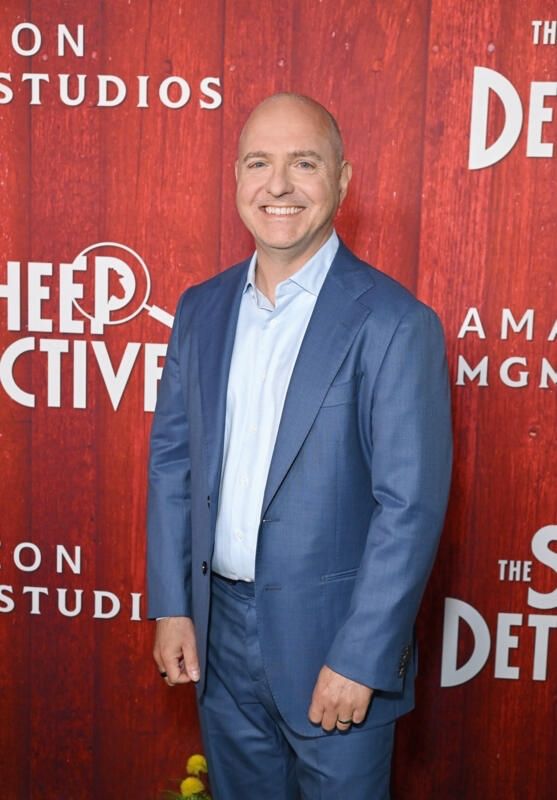
Photo by Bryan Bedder/Getty Images for Amazon MGM
Kyle Balda has spent his career turning underdogs into icons. The acclaimed animation director behind global franchises including Minions and Despicable Me 3 has long known that the best comedy lives right next to something deeply human. His latest project, Sheep detectives, is now in theaters. It is a mystery-comedy that marks a bold creative leap into live-action hybrid filmmaking. The film follows a flock of sheep who lose the farmer who loved them. Using everything he unknowingly taught them, they set out to solve his murder.
The all-star voice cast includes Hugh Jackman, Julia Louis-Dreyfus, Regina Hall, Hong Chau, and Nick Braun. Sheep detectives is equal parts funny and quietly moving. It is the rare family film that gives adults and children something real to hold onto long after the credits roll. Balda sat down to talk about grief, layered comedy, and why optimism sits at the heart of everything he makes.
What immediately pulled you into ‘Sheep detectives’ as a director?
My experience when I first read the script was this whole concept of sheep thinking that they could solve a murder mystery. The fun that would come with that was already obvious on the page. It felt like the kind of stories I love to tell misfits dealing with big challenges they have no business trying to deal with. But they work it out. They come together. They fail forward.
All that underdog energy is something I love in storytelling. But as I got deeper into the script and saw how much emotional heart was there, that resonated with me on a personal level. The idea of grief, losing somebody you love, how to keep their memory alive it just felt like such an important story to tell.
Where does ‘Sheep detectives’ fit within your creative evolution as a storyteller?
I love the heart that comes forward in a story, and bringing that to the surface felt really important here. I believe storytelling can be entertaining which matters but it can also model something for you. It can mirror something back that works like equipment for living. Bringing hope and optimism into the world is what drives me. That’s what I found so beautiful on the page, and something I’m really proud of now that the film is done.
How intentional were you about creating layered humor that different generations could connect with?
That is the whole game for me. Comedy can work on so many levels. As an adult with kids, you want an experience the whole family can share. Murder mysteries already carry a built-in complication. You have to tell them simply without dumbing them down. Then you layer in the emotion, the comedy, the mystery and you try to hold all of it at once. That puzzle is the fun part of being a storyteller.
The relationship between George and the sheep is central to the film. What themes were you hoping audiences would take away from that dynamic?
What Hugh Jackman does so beautifully is show how deeply he cares for the sheep. The love they carry for him after he’s gone and their desire to honor him by solving his murder is the emotional engine of the film. They felt like he accidentally gave them the tools to do it, just by reading them stories. So Lily says, “We can do this,” and she believes it.
But character development always lives in the gap between what a character wants and what they need. Lily wants to solve George’s mystery. What she really needs is to learn how to carry grief. That is the unexpected journey she goes on and Mopple and Sebastian help her find her way.
The film has a witty sense of humor beneath its family-friendly surface. How did you balance cleverness with accessibility?
A lot of it lives naturally in the sheep’s point of view. It is a fresh take on the murder mystery genre. The sheep are childlike, naive, and innocent they have never even crossed a street. They ask who God is. They wrestle with big philosophical questions. There is real comedy in that.
But that lightness has to sit alongside the fact that death is in this story. The sheep will face it. You are constantly adjusting the tone bringing levity into dark moments while making sure the stakes feel real. The darkness has to be there for the light to come through.
Talk about the casting process and how those performances shaped the film.
Nick Braun was instantly the voice I heard when I read Officer Tim. That felt like an obvious match. Julia Louis-Dreyfus brings intelligence to everything she does, but there is also real vulnerability there. Lily has to go to emotional places she has never allowed herself to visit. Those qualities lined up naturally with where the character needed to go. You look for that the thing an actor carries that mirrors what the character needs.
How has your directing style changed since the Minions era, and what was the biggest shift on this film?
The biggest change was this film itself. Moving from pure animation to live action is a shift in medium. Animation is a controlled environment you do not even have to work in order. In live action, you are waiting for rain to stop. Things happen that you cannot plan for. I leaned on what animation taught me: preparation, storyboarding, cutting animatics before we ever got on set.
That foundation gave me confidence to pivot when actors wanted to try something different or when I had to work around the sheep. My favorite way to describe it is this: animation is a studio band. Live action is a rock band playing live on tour. You need a plan, but you have to be ready to play.
What is the one thing you hope audiences are talking about as they walk out of the theater?
I want them to leave with hope. A sense of being uplifted. The film explores some heavy questions about grief and loss, but it does not leave you powerless. It gives you something to hold. It gives families a way into those harder conversations if and when those questions come up with the kids.
‘Sheep detectives’ is in theaters now.
Source: This article is based on an interview with Sheep detectives director Kyle Balda, conducted as part of the According to Porsha segment.
About the Author