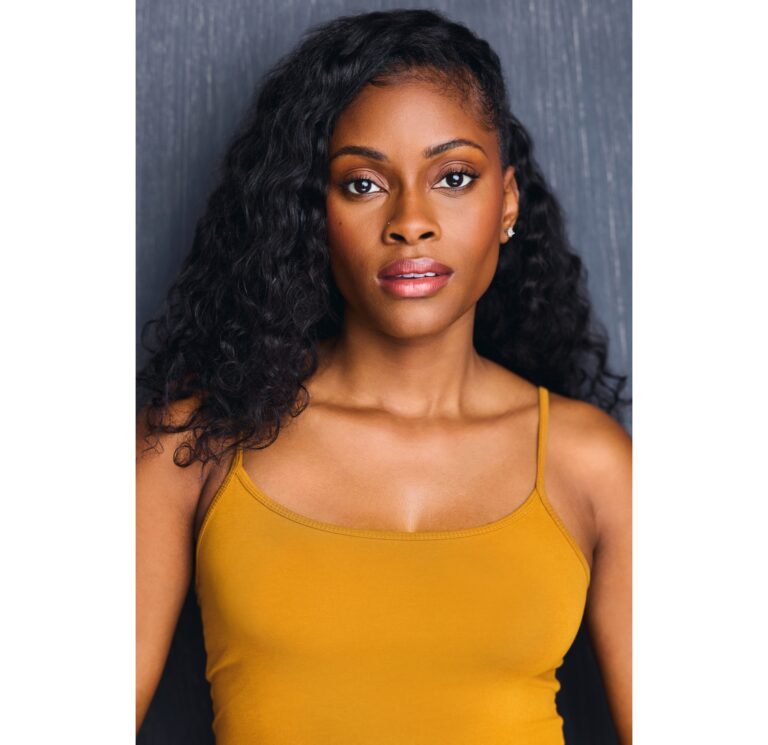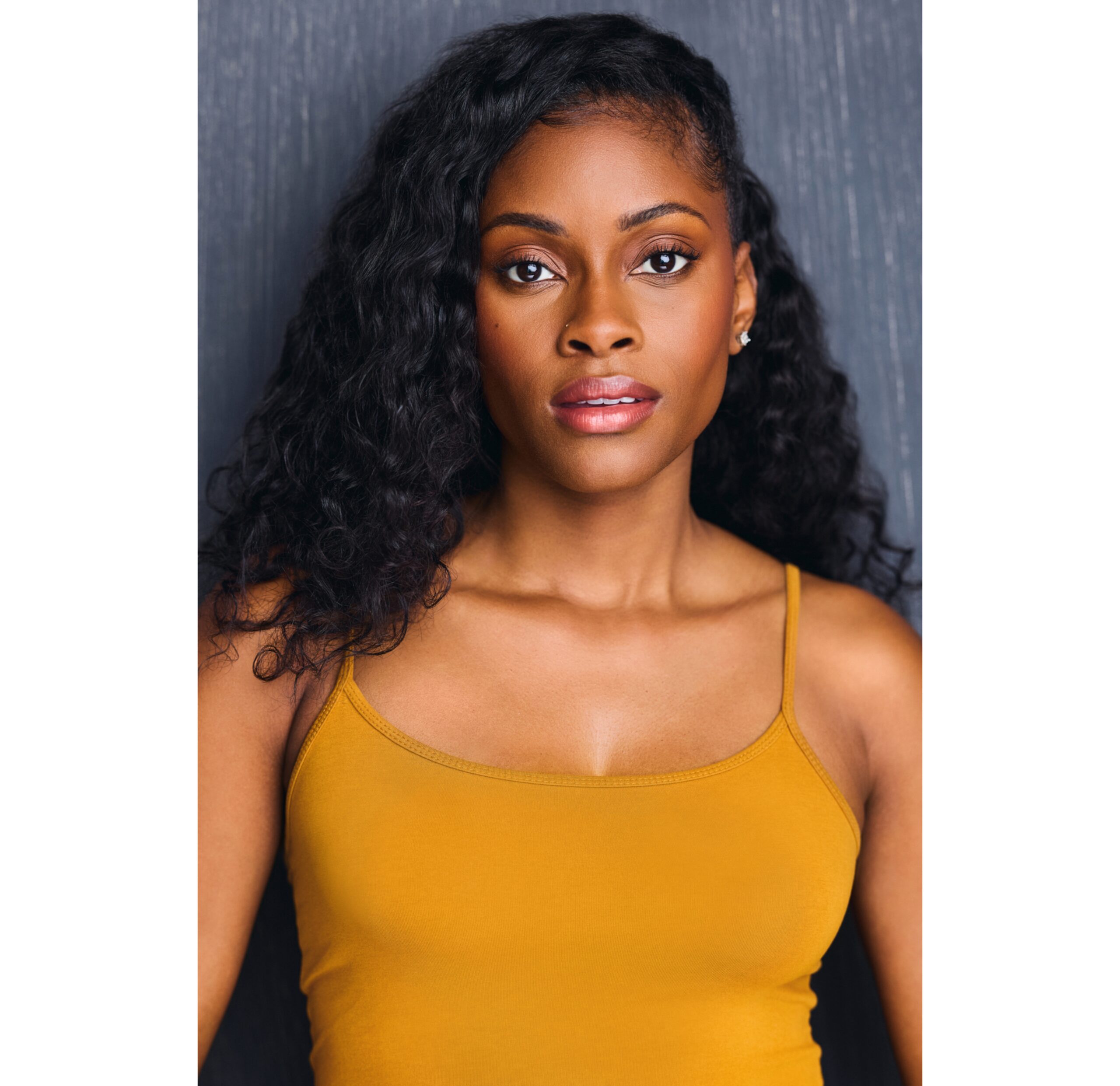
Photo credit: Jasmine Sargent
Jasmine Sargent did not audition for Lisa. She auditioned for Trina.
When she found out she had booked the role of the empathetic older sister instead of the one who is, in her own words, completely out of control, something unexpected happened. She read the character breakdown for Lisa and recognized herself immediately. Protective, understanding, and quietly exhausted by everything she has been holding.
That personal connection to a character is exactly the kind of thing that shows up on screen, and in Tyler Perry’s Doing Life, now streaming on Netflix, it absolutely does. The film follows three sisters, Anika, Lisa, and Trina, navigating love, trauma, and the complicated weight of watching someone you love make choices you cannot control. Sargent plays Lisa, the middle ground between chaos and grace, and the one who finally, in a moment audiences will not forget, stands up.
She sat down to talk about the beauty salon scene, what it means to tell a love story rooted in incarceration with honesty, and what Tyler Perry pulled out of her on set that she did not know was there.
Tell us about your character Lisa in Doing Life.
Lisa plays the older sister to the main character Anika, and she is overprotective but also very loving. She can be a bit overbearing, but not nearly as overbearing as the other sister Trina. Trina is out of control. Lisa is the more empathetic one. She takes the softer approach when it comes to dealing with Anika.
When you received the script, what made you say yes to this role?
What excited me most was that I initially auditioned for Trina. So when I found out I had booked it and discovered I had actually booked Lisa, I got to read her character breakdown and thought, oh my gosh, this one is so much like me. I am not as harsh, but I am very empathetic, very understanding, and overprotective about the people I love. I got to play a lot of myself in this role, and that is the part that excited me the most.
Where does Lisa enter the story, and how does she shape the film?
Three sisters Anika, Lisa, and Trina all grew up from humble beginnings with trauma, and none of them had an active father in their lives. Because of that, Lisa and Trina dump a lot of their own unprocessed experiences onto their younger sister Anika. As Lisa, I am projecting onto her, not wanting her to end up like me. I expect her to move the same way I do, even though part of me knows she is different. The love is real, but so is the weight of it.
Doing Life explores what happens when two people see possibility in each other during difficult circumstances. What drew you to that story?
Being able to tell an authentic story is what drew me in. I have heard so many stories about people finding love with those who are incarcerated, and more often than not, people are so quick to dismiss those love stories. You may be blocking your blessing. There are great people in places we would never imagine looking.
We also know in the Black community that we are not usually given second chances. We are punished more harshly than other races. Just because someone has done a bad thing does not necessarily make them a bad person. This film shines a light on something so often seen as negative in a genuinely positive way, and the ending is beautiful. That is what made me most excited to be a part of it.
What did doing life come to mean to you through this character?
Doing life meant doing your own life. We are so quick to think that our experiences will be someone else’s experiences. The way I do life is not going to be the way my mom did life, or the way my sister will do life. At the end of the day, you have to follow your heart, trust your instincts, and do life the way you see fit for yourself.
What was your character fighting for beneath what she says out loud, and how did you bring that inner life into your performance?
What Lisa was fighting for was finally putting Trina in her place. Lisa is also overprotective, but she has more heart, and she often lets Trina get away with too much. Honestly, Lisa is just as tired as Anika is. However, because they are closer in age and in business together, she has not been able to go against her. That moment at the end of the film is Lisa stepping into something she has always felt but never acted on.
For me personally, it was easy to channel. It connects to something real about being the underdog, about people not fully seeing what you have to offer, and about finally getting your moment and realizing it came naturally. I am tired, but I am not as weak as you think I am. That feeling lives in me, and it lived in Lisa.
Stories about incarceration can reduce people to the worst moment of their lives. What do you hope audiences reconsider after watching this film?
I hope they become more hopeful about situations they might have dismissed in the past. Counting out people who have been incarcerated, especially when someone was tried as an adult at such a young age, means counting out someone who was still developing, still a kid. A lot of us have done things we simply did not get caught for. Sometimes a second chance is all you need to give someone. I am hoping audiences walk away holding that truth.
What is one scene you are especially eager for audiences to experience?
The beauty salon scene. I have watched it over and over. The performances from all the main characters at that moment represent a turning point for everyone, and it gives each character an opportunity to show real range. When you watch, you will know exactly which scene I am talking about because there are several beauty salon scenes in the film. But you will know which one.
What have Tyler Perry’s sets taught you about trusting your own instincts?
Being on Tyler Perry Studios in general has taught me to follow your dream. Just being on that campus is inspiring. Knowing that all of it was built by a Black man who also came from humble beginnings every time I step onto that property, whether it is for a fitting or an event, I am moved. There is even a building called the Dream Building. You cannot walk onto that campus and not feel something shift inside you.
Did this project add something different compared to Beauty in Black or House of Pain?
Absolutely. Both of my characters in Beauty in Black and House of Pain were comedic. Doing Life was pure drama. Being able to showcase my range across all three projects in the same universe means everything to me. Beyond the range, this project also showed me that I am more capable of working under pressure than I thought. Tyler Perry shoots very fast, and we had a lot of pages. That alone proved to me that I am more equipped than I gave myself credit for.
What has Tyler Perry recognized in you as a performer that you have since learned to recognize in yourself?
Working with him on set, he pulls something out of you that has to already be inside you. There is no time to ponder. He is throwing things at you and you just have to go, and in that moment it becomes a true test of whether it is really in you. He was pushing me on set, telling me to try things different ways, feeding direction to me in real time during the scene rather than waiting for a cut. That is a completely different structure of working, and it is a powerful way to diversify yourself as an actor. I came out of it feeling like a stronger performer. I really did.
As your career grows, what kinds of women are you determined to portray that audiences still do not see often enough?
Black superheroes. We do not see that often enough, and we need to, because Black women are literal superheroes. Seeing that depicted on a broader and more visible scale is a huge goal of mine.
Tyler Perry’s Doing Life is now streaming on Netflix. Follow Jasmine Sargent on social media for updates on upcoming projects.
About the Author