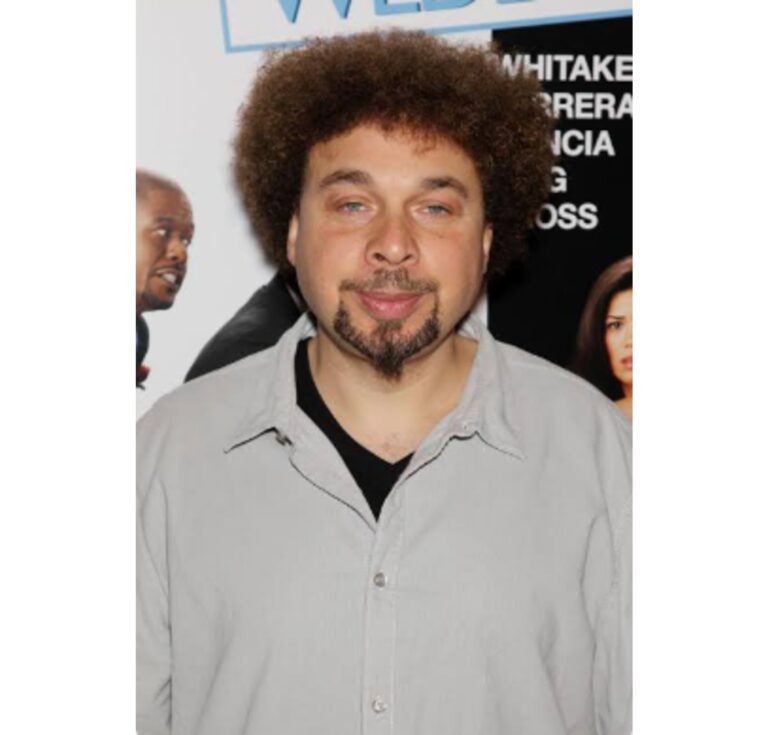
Photo credit: Malcolm Spellman
Malcolm Spellman knows where he comes from. He grew up in Berkeley, found his way to Los Angeles in the 90s, and watched the West Coast rap movement unfold with his own eyes. Some of the most famous stories from that era belong to people he actually knows.
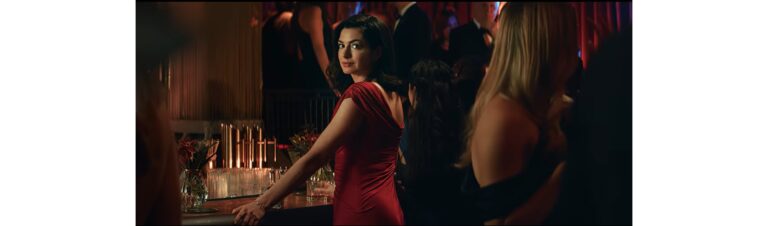
That proximity to real history is exactly what makes The Drop, the Snowfall spinoff now airing Tuesdays on FX and streaming on Hulu, feel so lived in. The series centers on Wanda, a character who barely got a chance in Snowfall to pursue her own ambitions, now stepping into the world of music at a time when hip-hop was exploding out of Los Angeles. It is a show about reinvention, discarded genius, and what it costs a woman to fight for her dreams in a world that was not built to receive them.
Spellman, who also created Hip Hop Uncovered for FX, brought the actual architects of the West Coast sound into the writers room every single day. The result is a series that does not look back at the 90s with nostalgia. It looks back with precision.
He sat down to talk about why Wanda was always the right person to carry this story, what Gail Bean brought to the role, and why the debate about that meeting scene was exactly the point.
Why was Wanda selected to lead the next chapter of the Snowfall story, and what made her the right character to carry a story about reinvention?
It started with the people involved with Snowfall. For them, if you are looking at who would pursue the next big opportunity, it would be her, because she did not really get a chance in the first show to go after her dreams. They began laying the groundwork in season one for Wanda’s interest in music, so by the time the conversation got to me, a lot of that was already in place.
When I am doing narrative stories, I want as much conflict as possible. Being there in the 90s, I understood how men and women were viewing each other back then, and it was very different from now. Centering the show around Wanda gives you maximum conflict not only because of her past but because she is a woman operating in a man’s world at a time when there was no reckoning around that. You are going to see that throughout the series.
Snowfall explored what happens when an economy takes hold of a neighborhood. In The Drop, music offers another route to power. Where do those worlds intersect, and where did you want them to feel fundamentally different?
This show is, in my opinion, the right flip side to the same coin as Snowfall. Snowfall dealt with what was probably the most destructive force to hit the Black community since our arrival in this country. It was an overtly devastating thing that dropped on our community, and we still feel the effects today. Everything about that sounds harsh and gritty and grimy, and as someone who was in those streets, that is what that life is.
You cannot really do a crime story that is truly aspirational because audiences struggle with the morality of it. Music is the antithetical energy to that. When hip-hop came to Los Angeles, we were deep in the effects of crack and gang culture, so there was no way our music was going to be separate from all of that. Snowfall literally sets up the handoff. Music and crime become the two sides of the coin.
Gail Bean plays Wanda with tremendous depth. What does Wanda recognize in the artists around her that she is still learning to recognize in herself?
Wanda feels held back by how people see her. Without giving too much away, she lands on her feet, but she has not fully gotten over that feeling. What Wanda has to discover is that the only thing that is going to free her is seeing herself differently.
Growing up, the first girl I ever kissed ended up on drugs. I got to watch that woman eventually live a great life. Wanda has to believe that kind of future is available for her before she can rise to where we will see her in the final seasons. That is her real journey, and it is a powerful one.
Give us some insight into where Wanda is headed.
Wanda is not playing around. We are going to see that she is not just a hustler. She is brilliant. One of the things I return to in almost everything I write is the idea of discarded Black genius. Growing up, I was placed in slow classes. I was labeled all kinds of things. I never went to college. That happened because being creative and bright was not accepted where I came from, in the hood or in school. These characters have been stifled, and in this show they are going to blossom over the seasons. It will not be without some broken limbs along the way, but they are going to rise.
West Coast rap gave artists a way to describe their reality in their own terms. How did you keep that creative force at the center of the show when business and street politics get dangerous?
Being from Berkeley helped me enormously. Some of my closest friends were involved in this movement, both on the street side and on the executive side. I got to witness a lot of this happening firsthand. Some of the most famous stories people have heard about from those rap groups and labels in the 90s I know the people those stories are about.
So when the show got going, we brought them into the room. Every single day. People who could tell us exactly what it felt like when things were happening, not from research or memory but from being there. That kind of access is gold. Shout out to Glasses Malone, Skip Townsen, and Jimmy Jim Bob Chris. Glasses is what I call the soul of the show.
With the story set in 1990s Los Angeles, what details had to be right for the music scene to feel lived in rather than nostalgic?
The pressure was extremely high. Working directly with Jason Problem Martin and Rance from 1500 or Nothin, who is currently touring with Jay-Z, and people who shaped the West Coast sound Battle Cat, DJ Pooh, DJ Quik all of these figures have been around this show. If something did not pass their test, it could not be in the show. Period. These are people who would hold me accountable to getting it right, and that accountability is what made the authenticity possible.
The series brings performers and musicians into the ensemble, including Compton rapper Buddy. What did that mix give you that actors alone might not have brought?
It is an intangible quality, and it eliminates the possibility of being corny. Real rappers cannot fake their way through those scenes. There is too much pressure, and more importantly, what you discover is that people who have made it as rappers genuinely have something that cannot be taught. You can teach an actor to rap. But the presence it takes to command a stage or command a track, that is not something you can manufacture.
Simba from Berkeley, one of the hardest rappers in California and someone from my hometown, kills it in episode two. That story about the honey bun in episode two, where the character talks about getting into a fight over a stolen honey bun as a kid that comes from Dubc, a legend of LA rap who is on the show. That level of specificity is only possible because the real people brought it in.
What is the hardest truth about ambition that Wanda discovers as she tries to help other people succeed?
There is no way to pursue ambition in entertainment without crashing into your loved ones. Some of those relationships are going to survive over the course of the series and some will not. That is inescapable. For Wanda specifically, she needs Lamar to make her dreams happen, and that puts her at odds with the people she loves most. It does not matter whether the relationship is romantic, familial, or professional if two people are in this business together, they are going to collide in a way that could break the relationship. That is what ambition gets you.
There is a big social media debate about the scene where Wanda speaks up in a meeting when DG cannot close the deal. Should she have stayed quiet or did she save everything by speaking up?
What you are touching on is that at that time period, men expected a woman to keep her mouth shut. It was a cultural violation on a basic level because this is set 35 years ago. Personally, I tend to agree with the men on this one from a contextual standpoint, but the debate in the writers room was exactly that tension. The women in the room were clear: if I am Wanda, I have to go for it, I have to save this. That debate is what the show is trying to explore. There is no clean answer, and that discomfort is the point.
For viewers who have never seen Snowfall, what should they understand about Wanda and Leon by the end of their first episode of The Drop?
What they need to understand is that these two characters finally get to deal with the trauma of everything that happened in Snowfall. In that show, they were in it. When Manboy’s crew is coming after you and Franklin’s own family has turned on each other, there is no time to process anything. Now there is time. For both of these characters, it is going to get heavy.
My favorite scene in the entire series is episode four, Leon listening to Harold Melvin and the Blue Notes while looking through photographs. That scene alone tells you everything about what this show is doing differently.
The Drop airs Tuesdays on FX and streams on Hulu. Watch the full Snowfall saga on Hulu as well.
Source: According to Porsha, featuring Porsha Monique and Malcolm Spellman
About the Author