Hollywood has long turned military service into compelling screen stories. Some films celebrate courage, sacrifice and patriotism. Others explore the difficult transition from military service to civilian life.
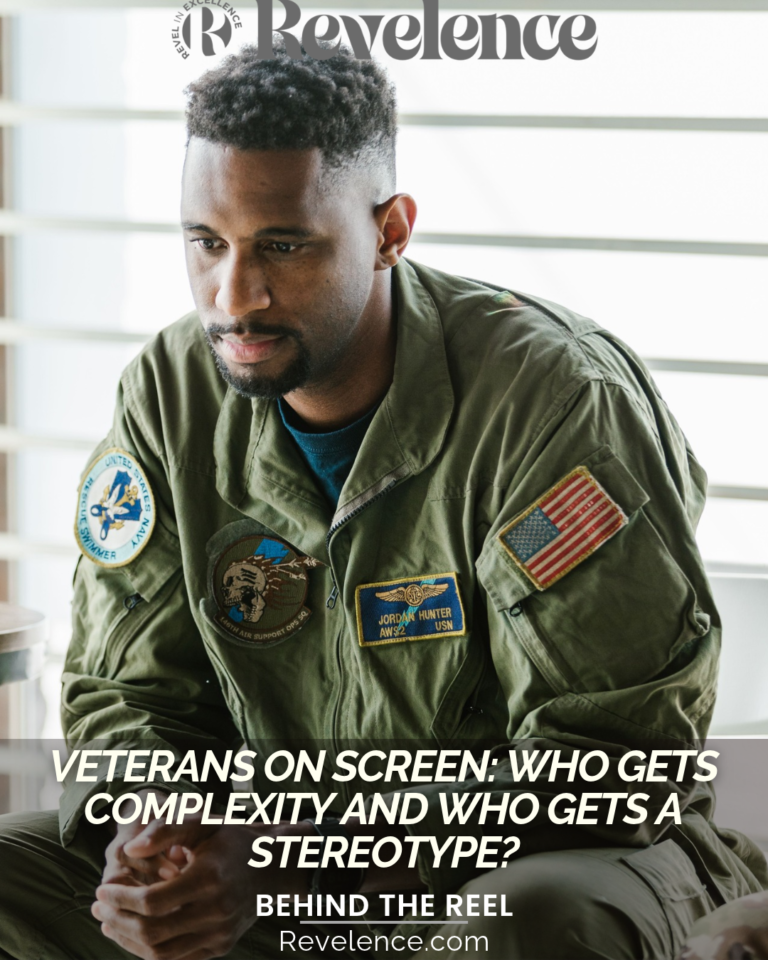
Yet veterans on screen often face a narrow choice. They are portrayed as celebrated heroes, emotionally damaged outsiders or dangerous individuals struggling to control their behavior.
These familiar images can make dramatic stories easy to recognize. However, they do not capture the full range of experiences among people who have served.
The more important question is whether filmmakers allow veteran characters to exist beyond their military histories.
The returning veteran deserves more than a homecoming scene
One of the strongest examples of a film exploring the complexities of returning military personnel is The Best Years of Our Lives (1946).
Directed by William Wyler, the film follows three servicemen returning to their hometown after World War II. Each faces a different challenge as he attempts to rebuild his civilian life.
The story addresses employment, relationships, disability, family expectations and the psychological effects of war. It also features Harold Russell, a veteran who lost both hands during military service and played a character with similar disabilities.
The U.S. Department of Veterans Affairs has highlighted the film’s treatment of the transition from military service to civilian life. Its historical account notes how the story challenged the assumption that returning home automatically meant returning to normal life.
Rather than presenting a single version of the veteran experience, the film gives its central characters different personal circumstances.
That distinction matters. A veteran’s life does not become defined by one shared experience simply because several people served during the same war.
Some films challenge the perfect hero narrative
Oliver Stone’s Born on the Fourth of July (1989) offers another perspective.
The film follows Ron Kovic, a Vietnam War veteran whose experiences before, during and after military service shape his political views and personal relationships.
Tom Cruise plays Kovic, whose story moves beyond combat and into disability, disillusionment, activism and his changing understanding of patriotism.
The film does not present military service as a simple journey from bravery to celebration. Instead, it examines the consequences of war and the difficult process of rebuilding an identity after service.
Its approach challenges the idea that veterans must always be presented as unquestioning national heroes.
It also makes room for disagreement, anger and political change without suggesting that one character represents every person who served in Vietnam.
The troubled veteran stereotype needs closer examination
Not every film gives veterans the same level of complexity.
Diane J. Keranen’s 2014 dissertation, Veteranness: Representations of Combat-related PTSD in U.S. Popular Visual Media, examines how popular visual media has shaped public ideas about combat veterans and post-traumatic stress.
Her research considers works including The Best Years of Our Lives, The Deer Hunter (1978), Casualties of War (1989) and The Hurt Locker (2008).
Keranen argues that popular portrayals can connect veteran identity with familiar assumptions about trauma. These repeated images can make viewers associate military service with a limited set of behaviors and expectations.
Research by Scott Parrott, David L. Albright and Nicholas Eckhart also examines how media portrayals influence public attitudes toward veterans.
Their study, published in Armed Forces & Society, found that exposure to stereotypical news stories could increase perceptions that veterans were likely to experience post-traumatic stress disorder. Stories challenging those stereotypes could help reduce that effect.
Although this study examined news exposure rather than film audiences specifically, it raises an important question for filmmakers: what happens when the same narrow character types appear repeatedly across popular media?
Who gets to be a complete person on screen?
Representation also involves asking which veterans appear in stories and whose experiences receive attention.
Research by Katy Parry and Jenna Pitchford-Hyde on British veterans’ perceptions of media representation highlights concerns about portrayals that frame veterans as mad, bad or sad.
Their work also discusses how gender and other aspects of identity can shape who gets recognized in military stories. Female veterans, for example, may be marginalized when screen narratives assume that military service and veteran identity are primarily masculine experiences.
This raises questions about race, gender, disability, class and the different ways people experience military service.
A veteran character can be brave without being invulnerable. A character can experience trauma without becoming a threat to everyone around them. A woman veteran can lead a story without her gender becoming the entire story.
The challenge is not to remove difficult experiences from film. It is to stop treating those experiences as the only available definition of a veteran.
The expert question: What does responsible representation look like?
A conversation with Scott Parrott, whose research examines veterans and media representation, would help establish how filmmakers can create more nuanced characters.
The interview should explore whether Hollywood’s familiar hero and damaged-veteran narratives influence public attitudes, how filmmakers can portray trauma without reducing a character to a diagnosis, and which stories remain underrepresented.
The discussion should also consider whether audiences need more stories about veterans who build careers, raise families, develop friendships, experience ordinary setbacks and pursue interests unrelated to military service.
These questions move the conversation beyond whether a film is respectful. They ask whether its characters are allowed to be fully human.
Beyond the stereotype
Veterans on screen deserve more than a familiar uniform, a heroic speech or a dramatic trauma storyline.
Films such as The Best Years of Our Lives and Born on the Fourth of July demonstrate how stories can explore the personal, social and political dimensions of military service.
Scholarship by Keranen, Parrott and other researchers offers another reason to examine these portrayals carefully. Repeated images can influence what audiences expect veterans to be.
A more thoughtful approach does not require every film to tell the same story. It requires filmmakers to recognize that veterans are not a single character type.
The strongest screen portrayals allow military service to be part of a person’s identity without making it the only thing that defines them.
About the Author