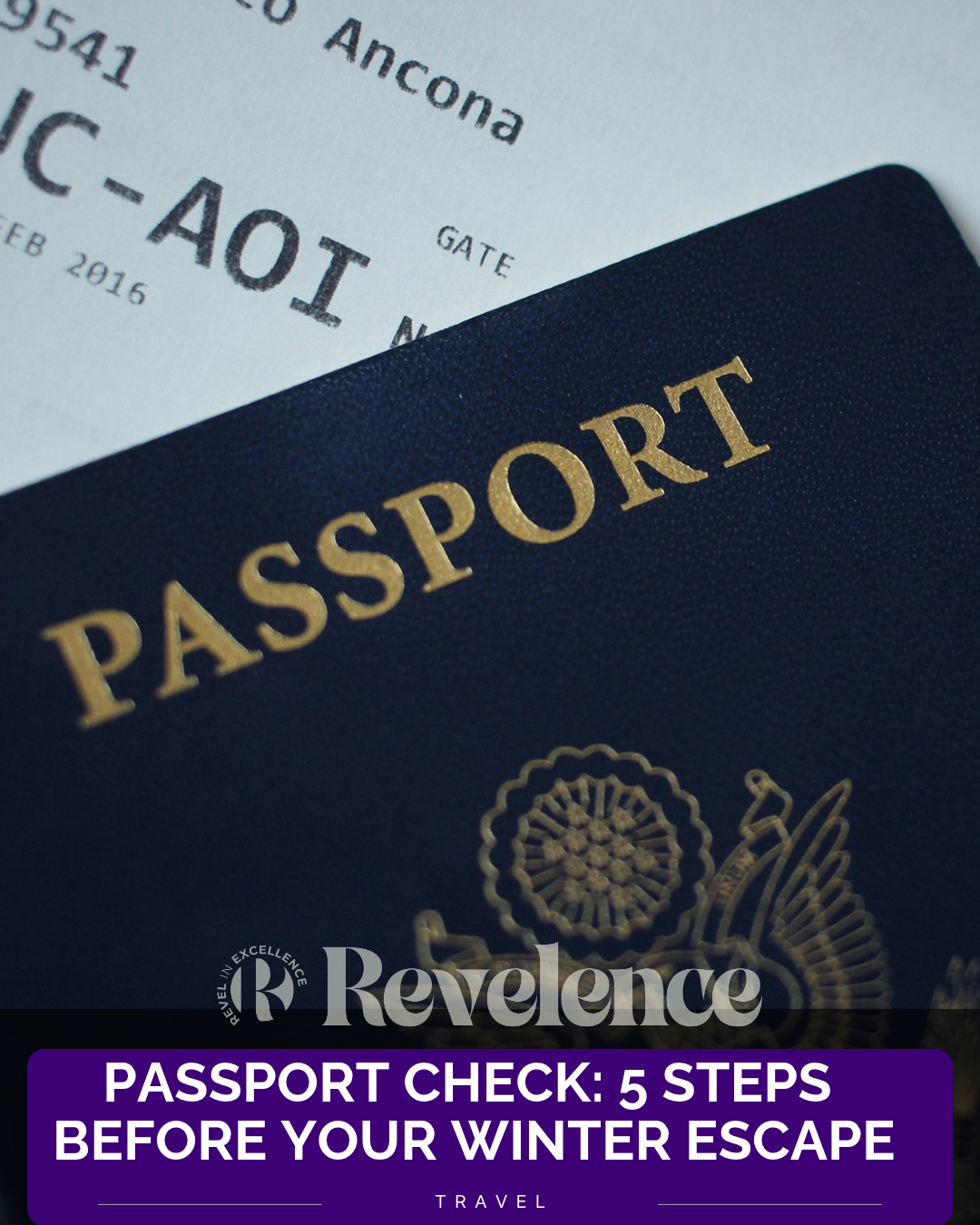
Photo by Nicole Geri on Unsplash
A winter getaway can be an exciting way to close the year. Whether you are planning a beach holiday, a European city break or a visit to family overseas, your travel preparations should begin before you pack your bags.
One important detail deserves an early check: your passport.
An unexpired passport does not automatically mean you can enter every country. Some destinations require travelers to have several months of passport validity remaining after arrival or departure. Others require a specific number of blank pages for immigration stamps and visas.
Checking these requirements before booking nonrefundable travel expenses can help prevent avoidable complications.
Check your passport expiration date first
Start by locating the expiration date on your passport. Compare it with your planned departure and return dates.
The U.S. Department of State explains that some foreign destinations require passports to remain valid for at least six months beyond the dates of a trip. Some airlines may also refuse boarding when travelers do not meet the destination’s passport requirements.
However, the six-month rule does not apply universally. Requirements differ by country, nationality and sometimes the type of travel document presented.
The safest approach is to check the official entry requirements for every destination on your itinerary. Do not rely solely on a general travel checklist or advice from someone who visited the country previously.
Understand the six-month passport rule
The six-month passport rule can catch travelers by surprise because the expiration date may appear comfortably distant.
For example, imagine someone planning to visit a country in December with a passport expiring the following April. The document remains valid during the trip. However, the destination may require six months of validity beyond the travel dates.
That traveler could face boarding or entry difficulties despite holding an unexpired passport.
Thailand provides one example of a country with a specific requirement. The U.S. Department of State’s travel guidance says U.S. citizens entering Thailand must have a passport valid for at least six months beyond their arrival date.
This is why travelers should check the rules for their actual destination instead of assuming that one country’s requirements apply everywhere.
Check blank pages, visas and travel documents
Passport validity is only one part of the entry process. Some countries also require a particular number of unused pages for visas and entry or exit stamps.
The U.S. Department of State notes that certain destinations require two to four blank visa or stamp pages. A nearly full passport could therefore create a problem even when its expiration date is acceptable.
Next, confirm whether your destination requires a visa or electronic travel authorization. Check whether you need to apply before departure and whether additional documents are necessary.
Travelers visiting several countries should review the requirements for each stop. A document that meets the entry rules for the first destination may not meet the requirements for the next one.
Make time for a document review
Before finalizing your winter travel preparations, review these details:
- Check the passport expiration date against your complete itinerary.
- Confirm the required remaining validity period with the destination’s official immigration authority or embassy.
- Count the available blank visa pages.
- Check visa and electronic travel authorization requirements.
- Review passport conditions and make sure the document is not damaged.
- Confirm that the name on your booking matches your travel document.
- Keep copies of your passport identification page separately from the original.
Families should also check children’s passports individually. U.S. passports issued to children under 16 are valid for five years, compared with 10 years for adults aged 16 and older.
Use official sources before you travel
The U.S. Department of State provides an international travel checklist that directs travelers to destination-specific information. Its country guidance includes entry, exit, visa and passport validity requirements.
Travelers can also review the destination country’s official embassy or immigration website. These sources are particularly important when rules change or an itinerary includes multiple countries.
If your passport needs renewal, consult the official passport agency in the country that issued it. Processing times and appointment availability can vary. Avoid making travel decisions based on an assumed delivery date.
A little preparation can make the difference between a smooth departure and an unexpected travel problem. Before the winter escape begins, give your passport the attention it deserves.
About the Author