Supreme Court faces 7 high-stakes questions on trans athletes
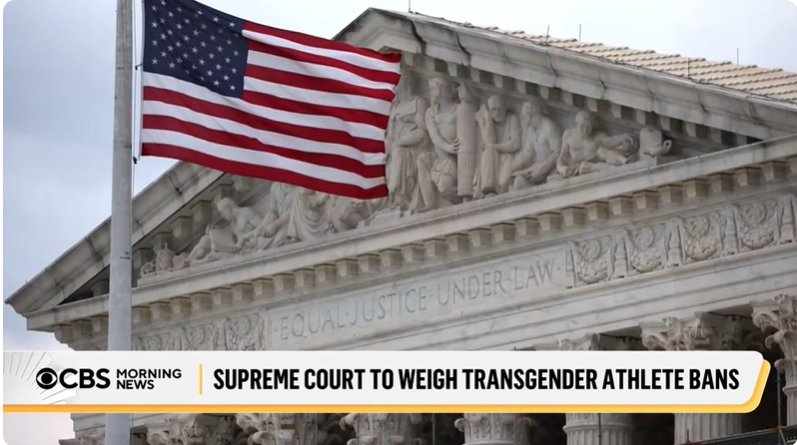
Courtesy: CBS News
The Supreme Court is confronting one of the most closely watched cultural and legal disputes of the moment as it considers challenges to state laws that restrict transgender athletes from participating in girls’ and women’s sports. The cases, originating from Idaho and West Virginia, mark the first time the justices have directly examined whether such bans are consistent with federal law and constitutional protections.
At issue is not only the fate of two student-athletes who brought the lawsuits, but also how far states may go in regulating athletic participation. With more than two dozen states having enacted similar measures in recent years, the court’s eventual ruling could shape policies affecting schools and sports programs across the country.
Why the court is stepping in now
The rise of state bans has pushed a once-niche policy debate into the national spotlight. Supporters of the laws argue they are designed to preserve fairness and opportunity for girls and women, citing physiological differences that emerge during puberty. Opponents counter that the measures single out transgender students and deny them equal access to school activities.
Lower courts have reached conflicting conclusions on related issues, creating uncertainty for schools and families. That legal patchwork has now prompted the Supreme Court to step in, even as the justices appear cautious about issuing a sweeping ruling that could apply nationwide.
How the justices are approaching the issue
During arguments, the court’s conservative majority signaled skepticism about striking down the state laws outright. Several justices focused on whether states have the authority to draw distinctions in sports participation without violating federal protections such as Title IX, the landmark law that expanded opportunities for girls and women in education and athletics.
At the same time, the court’s liberal justices emphasized narrower questions, including whether individual students should be allowed to challenge the laws as applied to their specific circumstances. That approach would leave the broader framework intact while allowing courts to consider factors such as an athlete’s developmental history and competitive context.
The role of science and fairness
Underlying the legal debate is an unresolved scientific discussion about athletic advantage. Research on transgender athletes remains limited, in part because the number of participants is relatively small. Experts disagree on how factors like hormone therapy and the timing of puberty may affect performance across different sports.
The justices appeared wary of basing a constitutional rule on scientific questions that continue to evolve. Several raised concerns about the court stepping ahead of legislatures and athletic organizations that are still grappling with how to balance inclusion and competitive equity.
Political and national implications
The cases arrive amid heightened political attention to transgender rights, particularly in education and sports. Federal agencies and national sports bodies have adjusted their policies in recent years, often in response to shifting administrations and public pressure. Those changes have added another layer of complexity, as schools attempt to comply with both state laws and federal guidance.
While the number of transgender athletes affected by outright bans is relatively small compared with the millions of students who participate in school sports, the symbolic weight of the issue is significant. Advocates on both sides see the cases as a bellwether for how the law will treat questions of gender identity in public life.
What happens next
The Supreme Court could resolve the cases in several ways. A narrow ruling might focus solely on the individual plaintiffs, sending their cases back to lower courts for further fact-finding. A broader decision could affirm or limit states’ authority to enforce categorical bans, setting a precedent that would influence laws nationwide.
For now, schools, athletes and families remain in a holding pattern, waiting for clarity from the nation’s highest court. Whatever the outcome, the decision is expected to resonate far beyond the courtroom, shaping conversations about fairness, equality and the future of youth sports in America.
Source: Adapted from reporting by The New York Times and associated coverage of Supreme Court oral arguments on transgender athlete bans
About the Author

Praise Swint
Wpseo_editor
Praise Swint is a contributor at Revelence, covering stories across news, entertainment, and culture.