Photo credit: Earthquakes (X)
California recorded three separate earthquakes Friday, with residents across San Diego County, Riverside County, the Bay Area and Humboldt County all reporting tremors within hours of each other. None of the quakes caused reported damage or injuries.
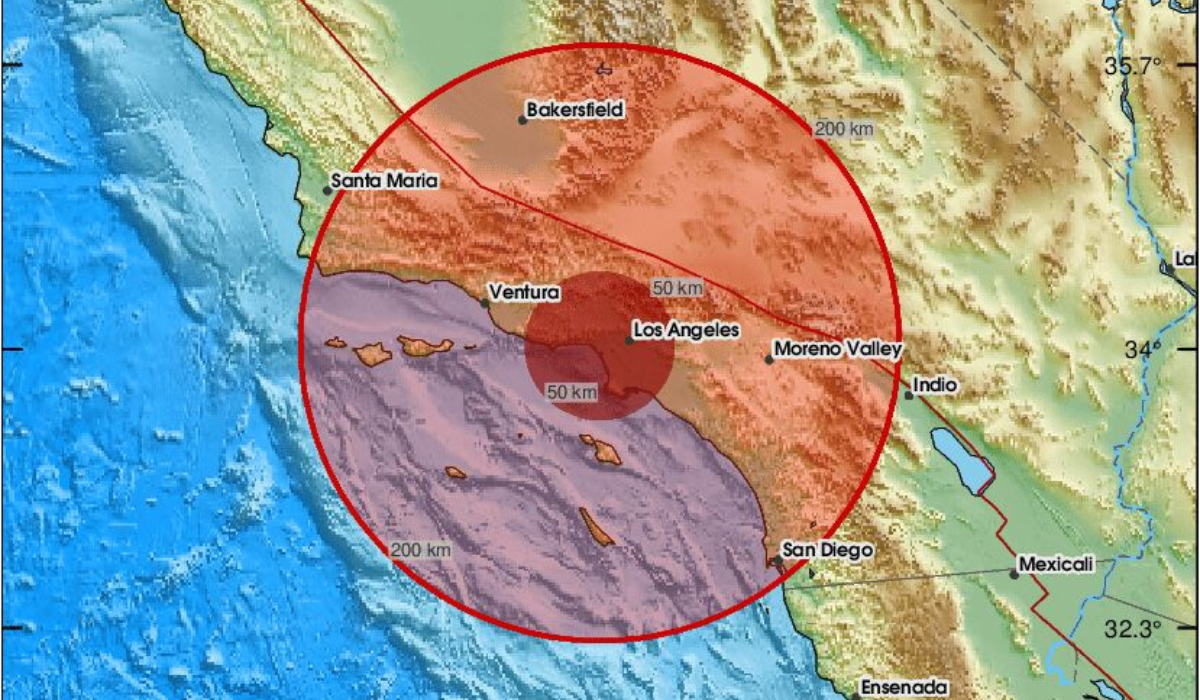
The largest of the three struck at 1:10 p.m. about five miles west of Palomar Observatory in San Diego County. The US Geological Survey recorded a preliminary magnitude of 3.2 at a depth of roughly 8.5 miles. Residents felt the shaking across a wide stretch of the region, including Escondido, Fallbrook, Ramona, San Diego, Valley Center and Vista. Riverside County residents also reported feeling the quake in Murrieta, Temecula and Wildomar.
What happened near Gilroy in the Bay Area
A second earthquake struck the Bay Area at 1:02 p.m., just minutes before the Southern California quake. The USGS recorded a preliminary magnitude of 2.9, centered 7.1 miles east-southeast of Gilroy, 8.3 miles north-northwest of Hollister and 16 miles southeast of Morgan Hill. Officials continued gathering details as the story developed throughout the afternoon.
A third, smaller quake near Petrolia
Earlier that same day, a preliminary magnitude 2.5 earthquake struck near Petrolia in Humboldt County around 1:25 a.m. The USGS recorded the quake at a depth of two miles, with an epicenter roughly 47 miles west of Petrolia. This marked the second quake near that location within days, following a similar magnitude 2.5 tremor recorded on July 28.
What these magnitudes actually mean
Magnitude measures the energy released at an earthquake’s source and has replaced the older Richter scale as the standard measurement. According to Michigan Tech, quakes between magnitude 2.5 and 5.4 are often felt but rarely cause significant damage. Earthquakes below magnitude 2.5 typically go unnoticed by most people.
Earthquakes can strike anywhere, though they occur most frequently in Alaska, California, Hawaii, Oregon, Puerto Rico and Washington, according to the Department of Homeland Security. Roughly 500,000 detectable earthquakes occur worldwide each year. Of those, about 100,000 are strong enough to be felt, and roughly 100 cause actual damage.
How to stay safe during an earthquake
Officials recommend dropping to your hands and knees immediately and holding onto something sturdy if an earthquake strikes. Those using a wheelchair or walker should lock their wheels and remain seated until the shaking stops. Covering your head and neck with your arms is essential, and crawling under a sturdy table offers additional protection when available. If no shelter is nearby, moving to an interior wall away from windows is the next best option.
Drivers should pull over, stop and set their parking brake. Those in bed should turn face-down and cover their head with a pillow. People outdoors should stay clear of buildings rather than heading inside, while those already indoors should remain there and avoid doorways. Officials also caution that aftershocks often follow a main earthquake, along with secondary hazards like gas leaks, water line damage or downed power lines.
About the Author