Lester Booker Jr.’s Big Move From CEOs to Classrooms
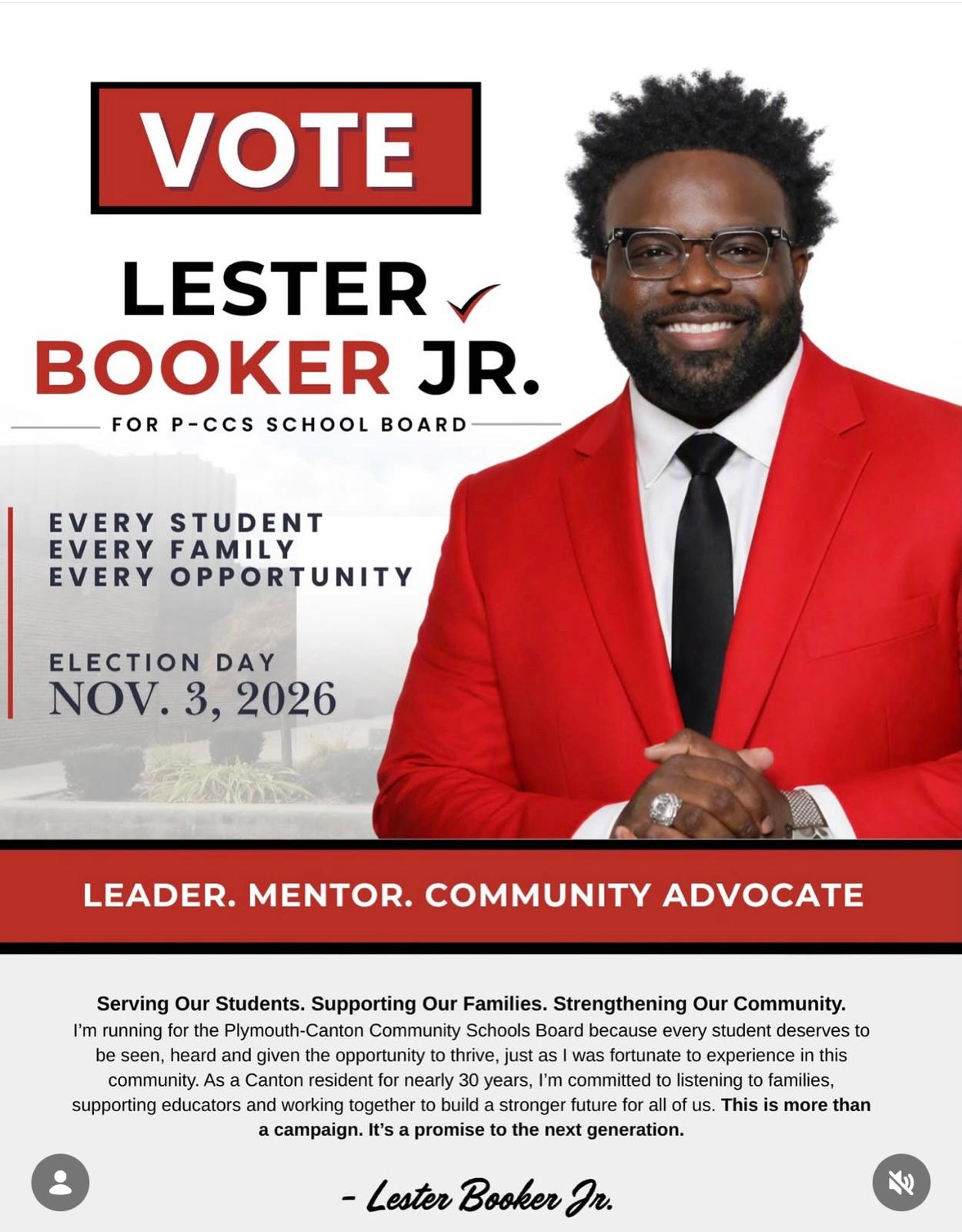
Photo credit: Lester Booker Jr.
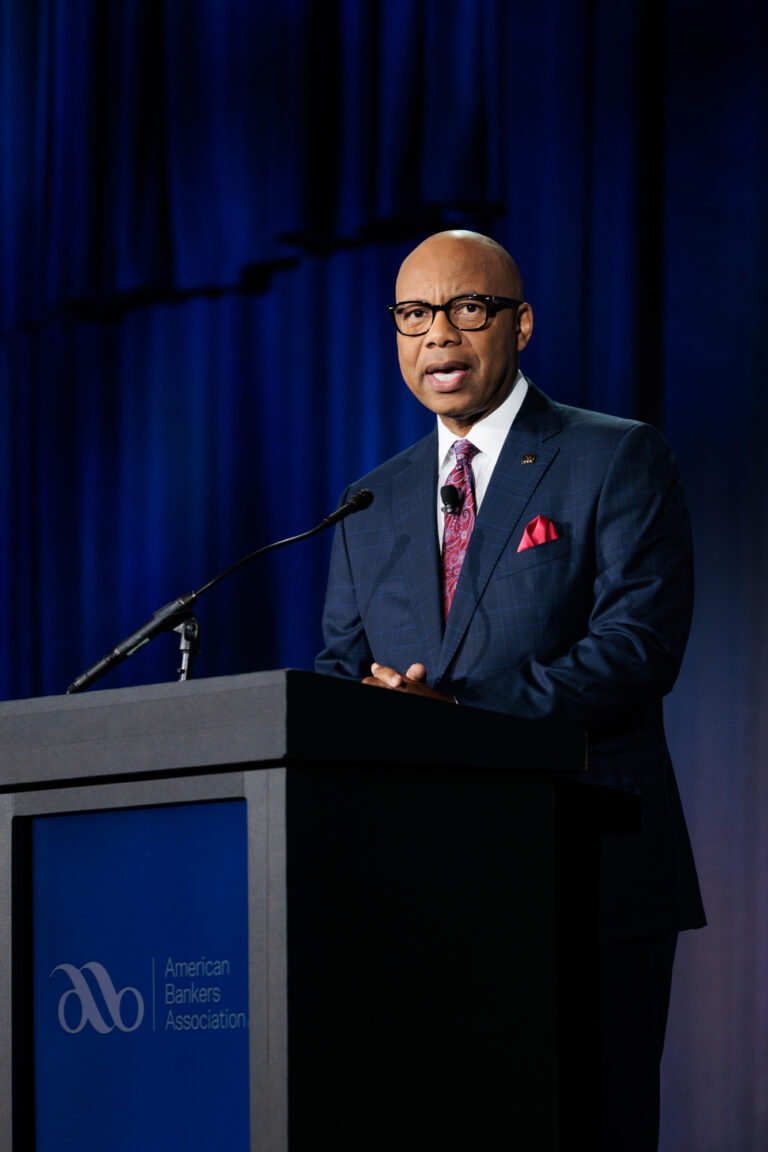
Lester Booker Jr. has spent the last two decades advising some of the most powerful leaders in America. He counseled executives at General Motors during the George Floyd reckoning. He built communications strategies for the Detroit Pistons. He also became the first Vice President of Diversity, Equity, and Inclusion Communications at Citizens Bank.
Now, he wants to take his leadership journey to another level.
The Plymouth-Canton Community Schools (PCCS) graduate and national C-suite consultant is running for a seat on the PCCS school board in Canton, Michigan. His pitch is straightforward: the district that built him deserves the expertise he has built in return. With education under attack, budgets tightening, and AI reshaping the workforce his students will enter, Booker, Jr. believes the time to show up is now, and that legacy demands nothing less.
What inspired you to pursue a seat on the PCCS school board at this moment?
So much life has happened, and I think there’s a great opportunity for me to come back home. The projects I’ve worked on, the relationships I’ve built, the experience I’ve gained all of it is a product of this district. So, there’s a real opportunity for me to give back. I’m a big believer in legacy and in making sure the seeds that were sown in me get passed on to others. Education is facing real challenges right now, and I want to be an advocate for growth and for providing real expertise to the board, the students, the teachers, and the community.
Your family moved from Detroit to Canton, MI in the middle of your school years. How did that experience shape the leader you became?
It was a very challenging time. This was the late ’90s, and my family moved in the middle of my 7th grade year. I went from the east side of Detroit to Canton, MI, and there were a lot of adjustments to make. My parents encouraged me to get involved in the community. That’s where I leaned into the Canton Township Youth Advisory Program. I got to work with students from different backgrounds, talk about real problems, and learn how a municipality actually operates.
That was a foundational moment for me. Those basic skills transferred through middle school, high school, college, and into my career. Everything I’ve done since the board work, the community service, the national consulting, traces back to those early lessons in Canton.
You went on to build a national career across four major industries including higher education, sports, automotive, and financial services. Walk us through that journey.
My foundation started with Plymouth-Canton, then continued at Central Michigan University. I studied broadcasting with a double minor in public relations and journalism, then earned my master’s in science administration with a concentration in sport administration. During that time, I worked for the NBA with the Detroit Pistons. I was there through five head coaches, three WNBA coaches, an ownership transition, and a near lockout. That grounded me in public relations and community work at a high level.
After that, I moved into automotive. I worked on both the agency and client sides at Ford Motor Company and General Motors. At GM, I led global communications across multiple brands and international markets. I was also there during the George Floyd reckoning in 2020, advising CEO Mary Barra and other senior leaders on the importance of inclusion and how the company needed to show up for communities. Additionally, I served as the first Vice President of DEI Communications at Citizens Bank, where I built the internal talent pipeline and created opportunities for people of color and women to move progressively throughout the organization.
From all of that experience, what broader perspective would you bring back to the Plymouth-Canton community?
I want to bring back how things are done at a global scale and apply that thinking locally. The time we’re in now is very different. There are real funding challenges. Michigan has fewer students than before, and school of choice means families can go anywhere. So, the question becomes: how do you preserve a tremendous district like Plymouth-Canton and also innovate for the future?
I also want to focus on active listening. Throughout my career as a communicator, listening has mattered just as much as speaking. I want to hear concerns from parents, students, and teachers, and bring that feedback into the right spaces. People have also lost a lot of faith in government right now, and they look to school boards for real representation in the community. That’s a responsibility I take seriously.
Which lessons from higher education, sports, automotive, and financial services are most applicable to school board governance?
First, working with people who don’t look like you or come from your background, and who are still able to move forward together, is essential. I’ve had to do that consistently across every industry I’ve worked in. Second, forward thinking and innovation matter. You have to push boundaries and challenge the status quo, especially in this climate.
Third, active listening before any major decision is non-negotiable. You have to gather a variety of viewpoints first. Finally, financial flexibility is critical. I’ve been in rooms where budgets were razor-thin and the question was how to still deliver. School boards face that reality every day, and having that experience gives me a real advantage in navigating it responsibly.
What do you see as the most pressing challenges facing PCCS right now?
Student enrichment and preparation top the list. AI is a game changer, and our students must understand it, not fear it. Automation is already eliminating jobs, and that pace is only increasing. So, we need to make sure students are equipped for the world they’re actually entering, not the one we grew up in.
Furthermore, our teachers need the right training and resources to teach in this environment. What it takes to educate students today is fundamentally different from what it took 20 years ago. We have to make sure educators get the support they need so students can succeed.
You’ve worked extensively in diversity, equity, and inclusion. How has that work shaped your understanding of educational access and student belonging?
I’ve done this work since before it was popular, back before people officially called it DEI. It goes back to moving to Canton and experiencing a real culture shock. That taught me early on how to engage across differences and create environments where people feel supported. Throughout my career, I’ve advocated for fairness in the workplace and in institutions, making sure that leaders cultivate spaces where people feel safe, where they belong, and where they can bring their best selves.
The current political climate has put inclusion efforts under pressure, but the underlying shift isn’t going anywhere. By 2044, according to the Census Bureau, multicultural consumers will outnumber the general market. The minority will become the majority. Brands and institutions that don’t understand that will be left behind. From a local perspective, cultivating an inclusive environment in our schools isn’t optional; it’s essential.
You’ve been transparent about not having any biological children enrolled in PCCS. How will you stay connected to students and families?
I have five Godkids and a host of nieces and nephews, so their education and growth matter deeply to me. Beyond that, I walk my neighborhood regularly and talk directly to students and community members. I’ve also spoken to students in the marketing class at Canton High School for several years, and I’ve gone back to speak with the Canton football program, where I played as a four-year letterman.
Going forward, I plan to create focus groups and community forums where I can hear firsthand feedback from students, families, and parents. Hearing lived experiences in real time is critical, and the board must stay receptive to that feedback as it makes decisions. I want people to see me out in the community, and when they do, I want them to feel comfortable enough to walk up and share what’s on their minds.
At the end of your service, what impact would you want students, families, and educators to associate with your time on the board?
I want people to know that someone heard them, that their opinions and concerns were seen even when something couldn’t happen immediately. Students should feel that their enrichment and programs were supported. Teachers should feel that their needs were prioritized. And board meetings should serve as genuine forums for community voices.
Most importantly, I want to be a visible, accessible presence in this community. Anyone who sees me with a question or concern should feel comfortable saying it out loud, and I want to be the kind of board member who is genuinely receptive when they do.
Election Day is Nov. 3. Follow Lester Booker Jr.’s campaign on Instagram and Facebook at @LesterBookerJr4PCCS. He will share website details on his social platforms when available.
Source: According to Porsha, featuring Porsha Monique and Lester Booker Jr.
About the Author

Praise Swint
Wpseo_editor
Praise Swint is a contributor at Revelence, covering stories across news, entertainment, and culture.