Photo credit: tschabalalaself (Instagram)
A towering sculpture of a Black woman is making a powerful statement in one of London’s most famous public spaces.
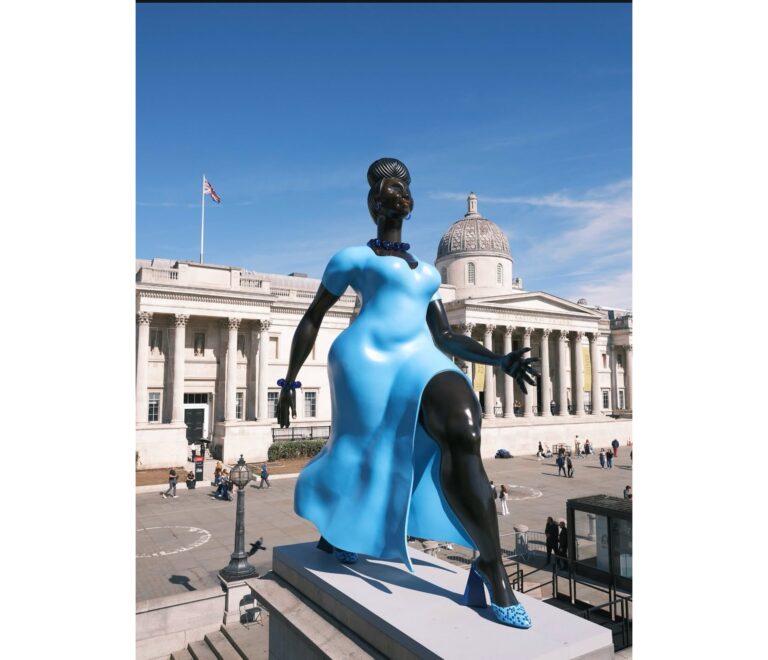
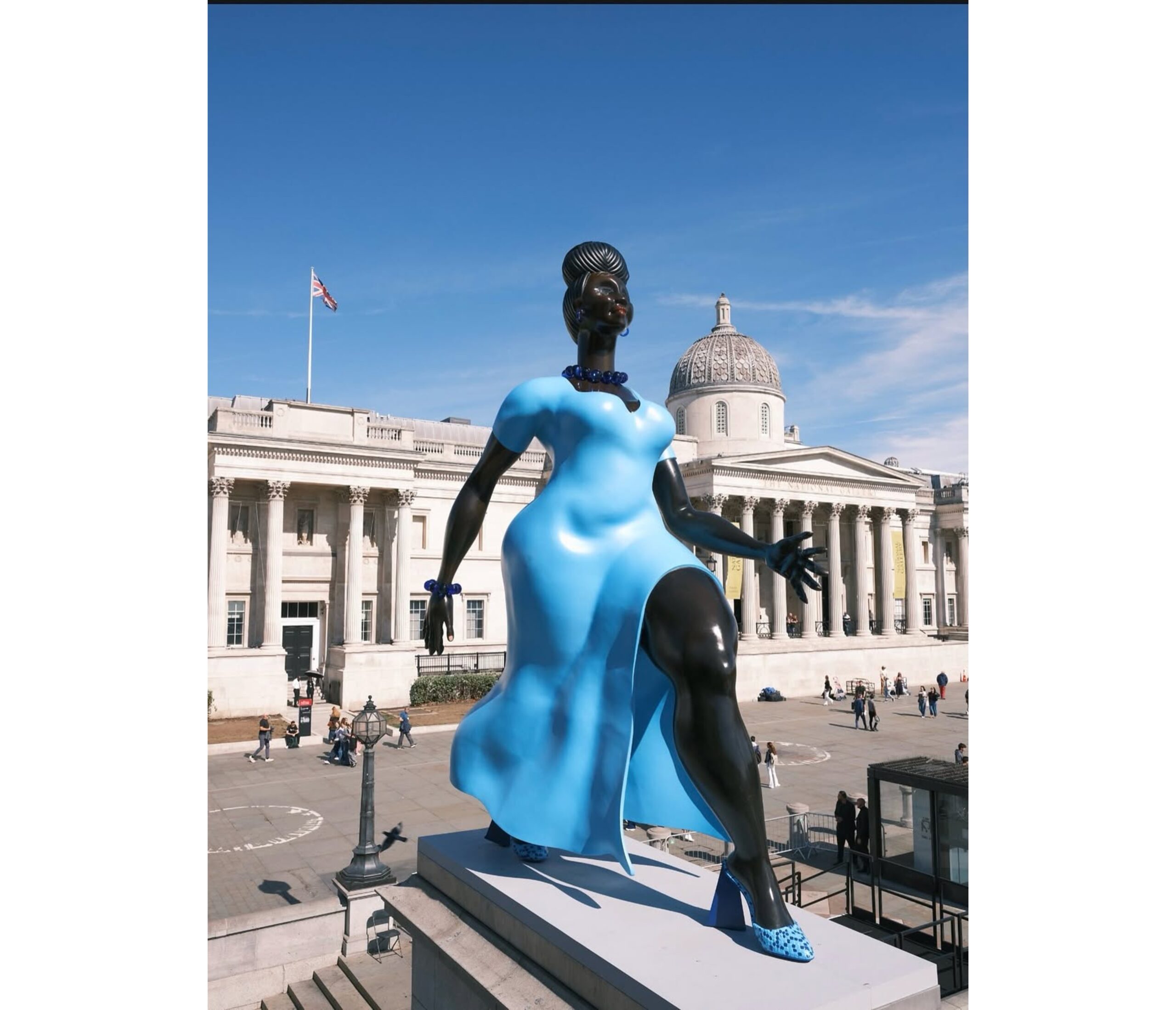
American artist Tschabalala Self’s The Lady in Blue now stands nearly 17 feet tall on Trafalgar Square’s Fourth Plinth. The monumental artwork portrays an everyday Black woman walking forward with confidence and purpose.
The sculpture has attracted praise for its bold representation. However, it has also sparked racist backlash and debate about who gets to represent modern London.
Tschabalala Self’s sculpture makes history
The Lady in Blue brings Self’s distinctive artistic vision to one of London’s most visible public spaces.
The sculpture depicts a Black woman in a tight-fitting blue dress as she walks with a sense of confidence. Its enormous size makes the figure impossible to miss in Trafalgar Square.
For many viewers, the artwork represents visibility and a celebration of Black womanhood.
The sculpture also places an everyday Black woman at the center of a space that attracts millions of visitors.
The Lady in Blue sparks debate
While many people have praised Self’s work, the sculpture has also faced criticism.
Some critics have objected to the figure being Black. Others have questioned the sculpture’s full-bodied proportions and its tight-fitting dress.
The artwork has also been dismissed by some critics as “too woke.”
Those reactions have turned The Lady in Blue into more than an art installation. It has become part of a wider conversation about race, representation and public art.
Who represents modern London?
The controversy surrounding The Lady in Blue has raised questions about who should be represented in prominent public spaces.
Trafalgar Square is one of London’s most recognizable landmarks. Therefore, placing a massive Black woman at its center creates an opportunity to consider how London’s identity is portrayed.
Self’s sculpture presents a different image of the city through the figure of an everyday Black woman.
The work also challenges viewers to think about whose stories and identities belong in highly visible public spaces.
A bold statement about Black womanhood
For supporters of the sculpture, The Lady in Blue is a celebration of confidence, movement and visibility.
The figure is not presented as a historical character or famous personality. Instead, she represents an everyday Black woman standing prominently in a major London landmark.
That choice gives the artwork a contemporary quality.
As visitors encounter the sculpture, they are also confronted with questions about beauty, identity and representation.
Whether praised or criticized, The Lady in Blue has succeeded in getting people talking about the role of Black women in public art.
View this post on Instagram
Source: theGrio
About the Author