Photo credit:
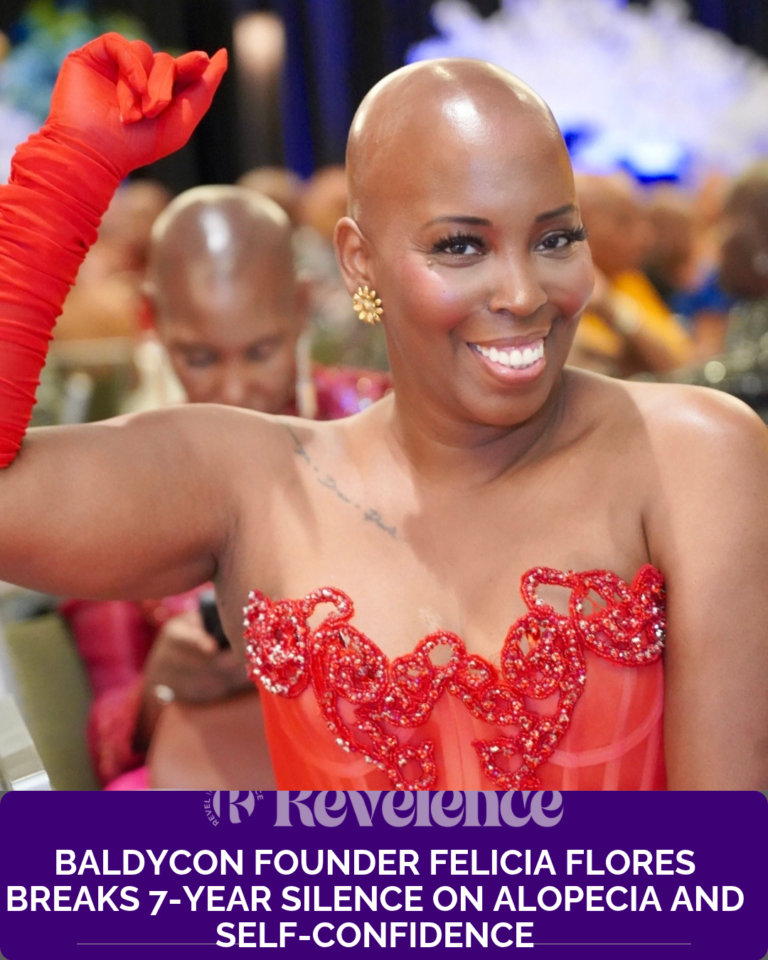
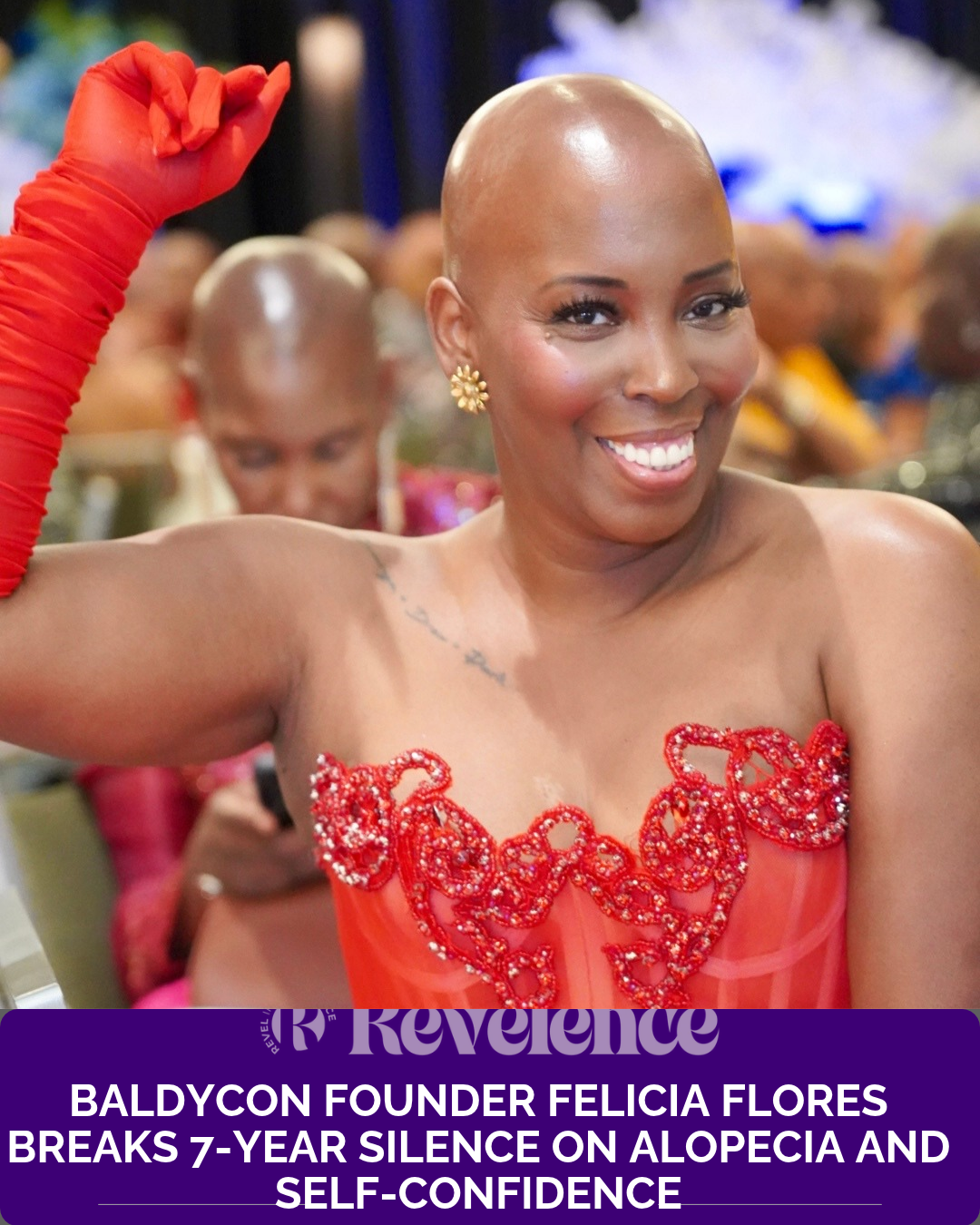
Felicia Flores is an Atlanta-based veteran hairstylist, motivational speaker, and alopecia awareness advocate who has lived with alopecia since 2001. She founded Baldie Con, a nonprofit conference that empowers women experiencing hair loss to embrace their authentic selves beyond traditional beauty standards. Her work has earned recognition from the City of Atlanta and Fulton County and has been featured in Vogue, Essence, and Good Morning America.
Felicia Flores hid her baldness for seven years. Not from strangers or casual acquaintances. From everyone. Even her own parents did not know what was underneath the wig she wore every single day.
When her hair began falling out in 2001, about a year after giving birth to her daughter, she did not have a name for what was happening. Her primary physicians were not familiar with it either. Eventually, a dermatologist gave her a diagnosis: alopecia, an autoimmune condition where the body attacks its own hair follicles. For nearly a decade, she carried that truth completely alone.
She stopped hiding and built something for every woman who still is
What finally pulled her out of hiding was not a medical breakthrough or a public moment. It was the desire to date authentically and let people meet her as she actually was. That decision cracked everything open. Fear of rejection followed. Then community. Then purpose.
Today, Flores is the founder of BaldyCon, a 501c3 nonprofit that brings together women experiencing hair loss for celebration, connection, resources, and the simple radical act of not having to explain yourself. The next BaldyCon takes place in Atlanta, Georgia from September 23 through 26. She sat down to talk about what changed when she stopped hiding, what she wishes someone had told her earlier, and what happens in a room full of women who finally feel truly seen.
For those who may not know, what is alopecia?
Alopecia is an autoimmune disease where your body attacks its own hair follicles. It treats them as foreign and destroys them, causing hair loss. There are different types. Traction alopecia affects the edges. Central Centrifugal Cicatricial Alopecia, or CCCA, affects the crown. Alopecia totalis means complete hair loss. Each form is different, but the core of all of them is the same: the body working against itself.
What changed first when you began experiencing alopecia? Was it your appearance, your confidence, or the way others treated you?
My confidence shattered first. I was wearing wigs, and no one knew, so on the outside everything looked fine. But I knew. Right then and there, I knew that I was hiding and that the version of myself people were seeing was not the real one. I was ashamed, and I kept that going for seven years. Not even my parents knew I was bald underneath that wig.
The shift came when I decided I wanted to date and actually get out there. I did not want to live in a false reality tied to the wig. I wanted men to meet me as I actually am, with no hair. That is when the challenges really began, because then the fear of rejection came into play. It happened in different phases, but that decision to stop hiding is when everything started to change.
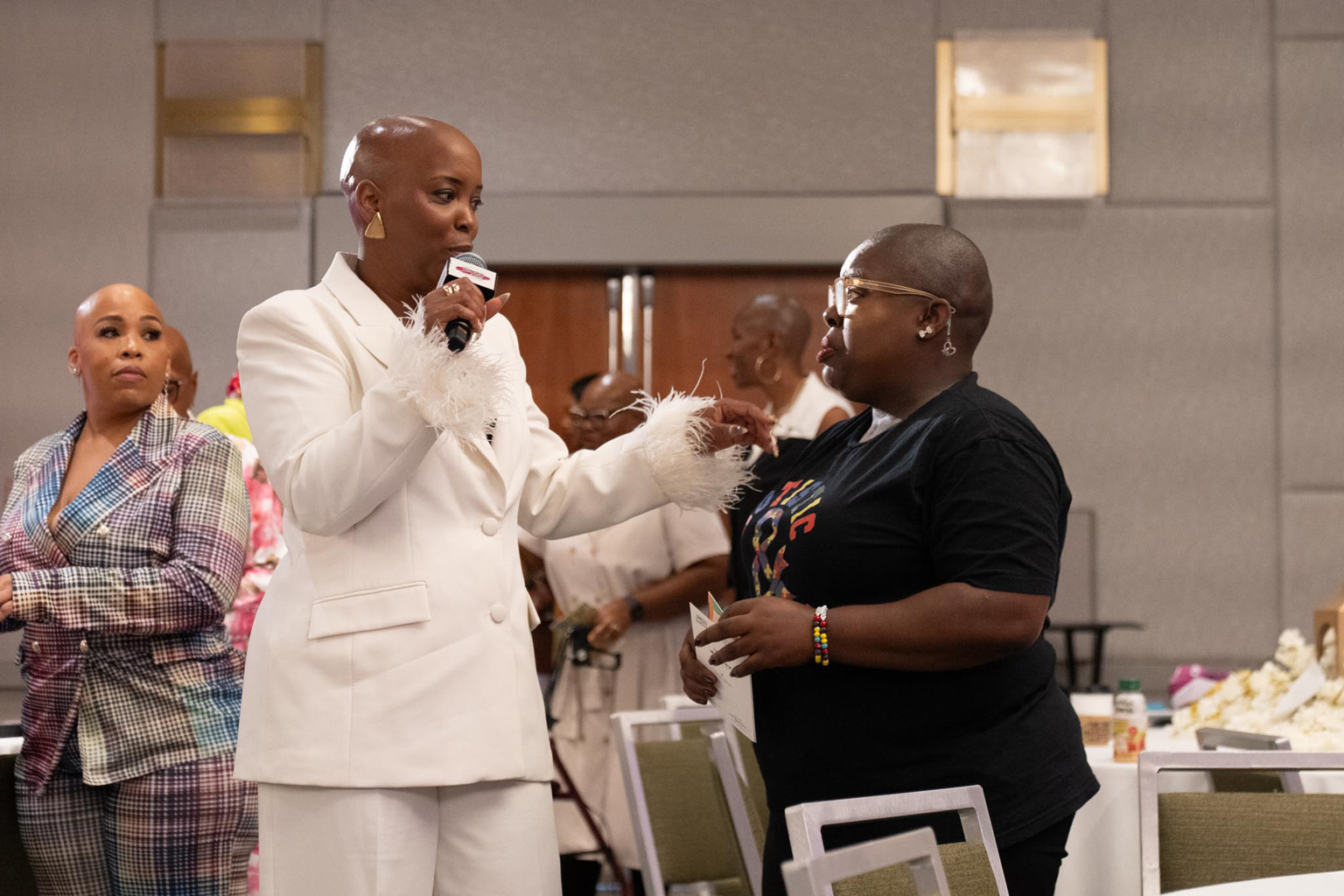
Black women are often taught that hair is central to beauty and femininity. How did losing your hair challenge what you had been taught about your identity?
It made me question everything about how people would see me, because we are taught that your hair is your crown, your beauty, the thing you stand in. When I no longer had it, I had to ask myself what my beauty would be now. I had to look inside and tell myself that I could not let this destroy me. I was still a woman. Still feminine. I had to figure out how to make that real for myself.
Moreover, this is not just my experience. Talking with hundreds of women, I have heard the same thing over and over. So at BaldyCon, we lean into the things that make us feel like ourselves. I have always been a fashion lover, and I wanted to create a space where you are still you. You just happen to not have any hair. You can still beat your face, still dress how you want, still show up fully as yourself.
What do you wish someone had told you in those early stages of alopecia?
Go see a dermatologist immediately. Some forms of hair loss can be reversed or slowed down if they are caught early enough. Traction alopecia can be addressed. CCCA, if caught soon enough, has treatments that can make a real difference. Waiting and hiding costs you options.
Do not hide. Get the diagnosis as quickly as possible and find out what your treatment plan looks like so you can start preventing further damage right away. The sooner you know, the more control you have over what happens next.
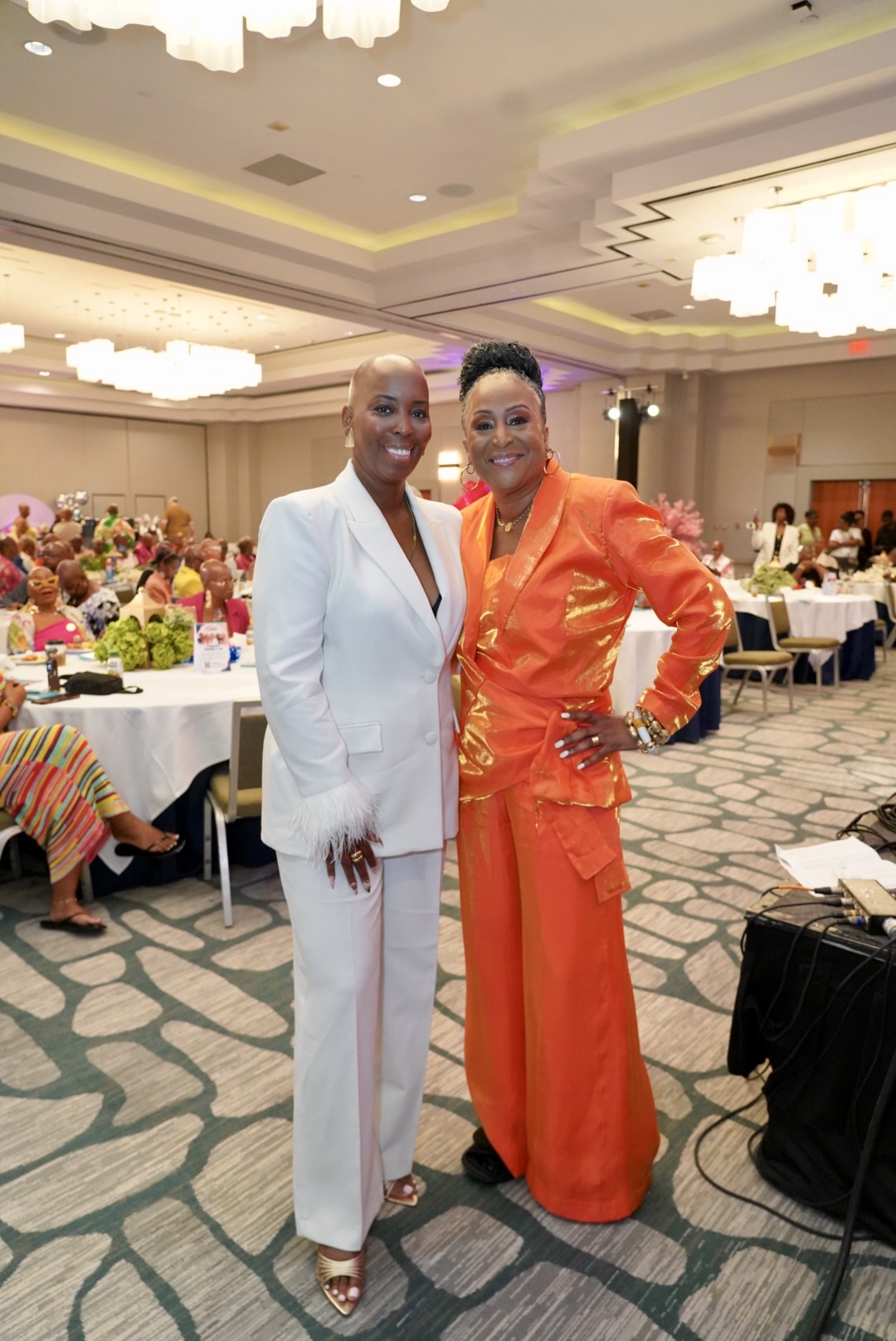
Is there a specific type of dermatologist women should seek out for hair loss?
Dermatologists broadly cover hair loss because it is a skin issue. However, I would strongly recommend finding someone who specifically treats alopecia or hair loss conditions. Look for someone for whom this is a proven focus area. They will recognize early signs that a generalist might miss, and they will be far better equipped to build the right treatment plan for you.
How can alopecia affect a woman’s relationships, career, and willingness to be visible even when she appears confident?
Women dealing with hair loss often feel they are not up to par. They feel they are not seen the same way and do not get the same opportunities as someone who has hair. That feeling touches every area of life. At BaldyCon, we want to address the whole person, not just the hair loss. We want to help women show up in corporate America, in their family lives, and in their social lives with the confidence to know that whatever room they walk into, hair does not define them. That is one of the most consistent things we hear from our community, and it is one of the main reasons BaldyCon exists.
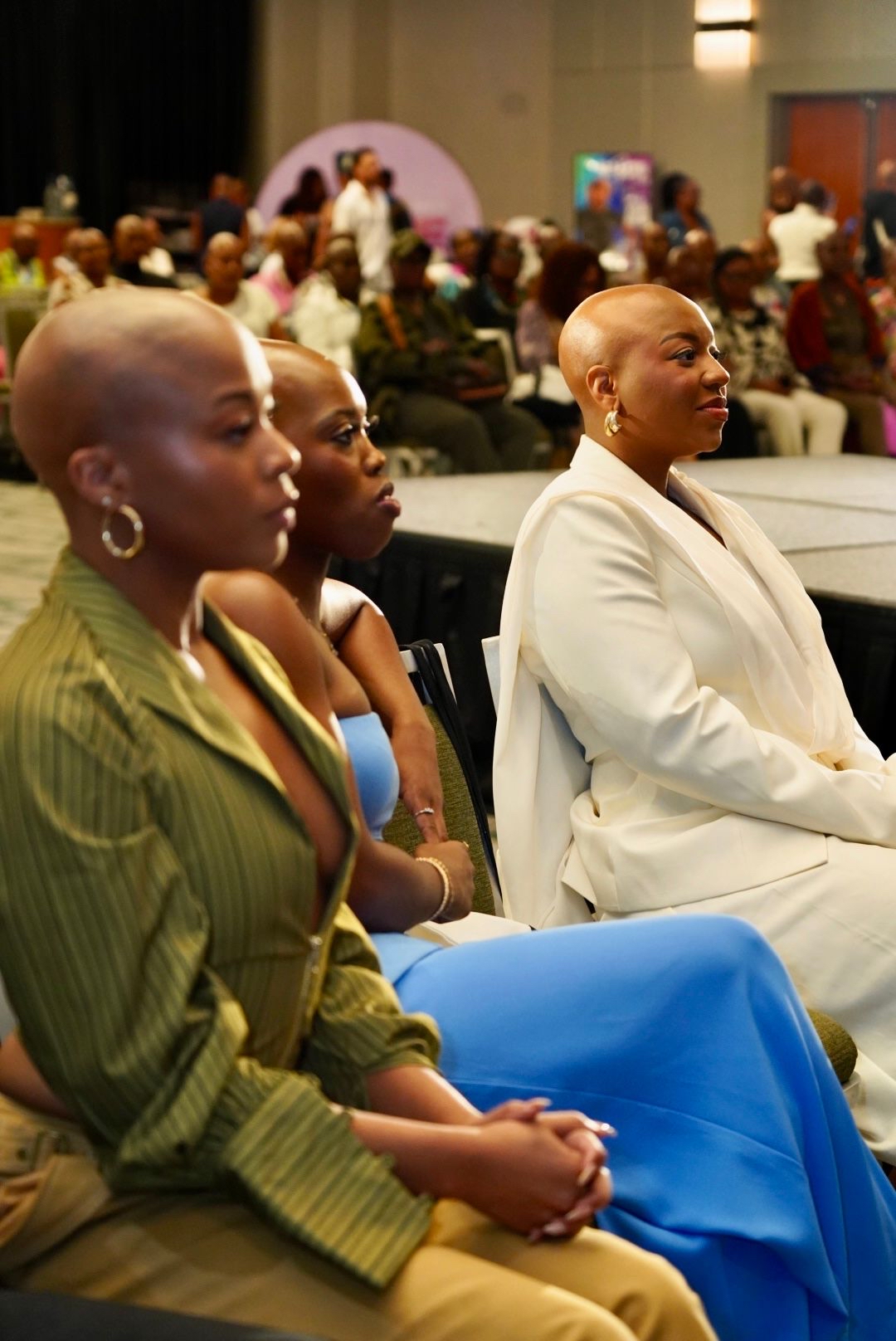
Tell us how BaldyCon came to be, and who it serves.
BaldyCon came out of my own experience of lacking confidence and not knowing how to show up as my best self without hair. I found a community called the Baldy Movement and realized there were so many women who were bald just like me. Seeing their confidence and their strength gave me something I had not had in years. I started serving in that community, sharing stories, and I noticed that my story ran parallel to so many others.
What was missing was a space that celebrated us and brought us the resources we needed to build confidence even when medicine did not work or was not the answer. So I created BaldyCon for that reason. We trademarked it around 2019, and our first event was in 2022 at a restaurant in Atlanta called Grits and Eggs. About 60 women came. It was small and intimate, with panel speakers, food, vendors, and a space for women to just be together and be seen. Furthermore, every year since then, the community has shown up and kept us going. This is truly my gift to them.
What happens when a woman walks into BaldyCon for the first time and realizes she no longer has to hide?
It is absolutely beautiful, and I get emotional every single time. Some of these women have never been in a room with so many women who look just like them. They do not have to explain. They do not have to come up with an excuse or a cover story. They are truly, truly seen.
Watching them come together, share their stories, and build bonds and friendships is one of the most beautiful things I have ever witnessed. Additionally, these women are not all dealing with alopecia. Some are going through cancer treatment, lupus, or other forms of hair loss. All of those experiences come together in that room, and everyone inspires each other. It melts my heart every time.
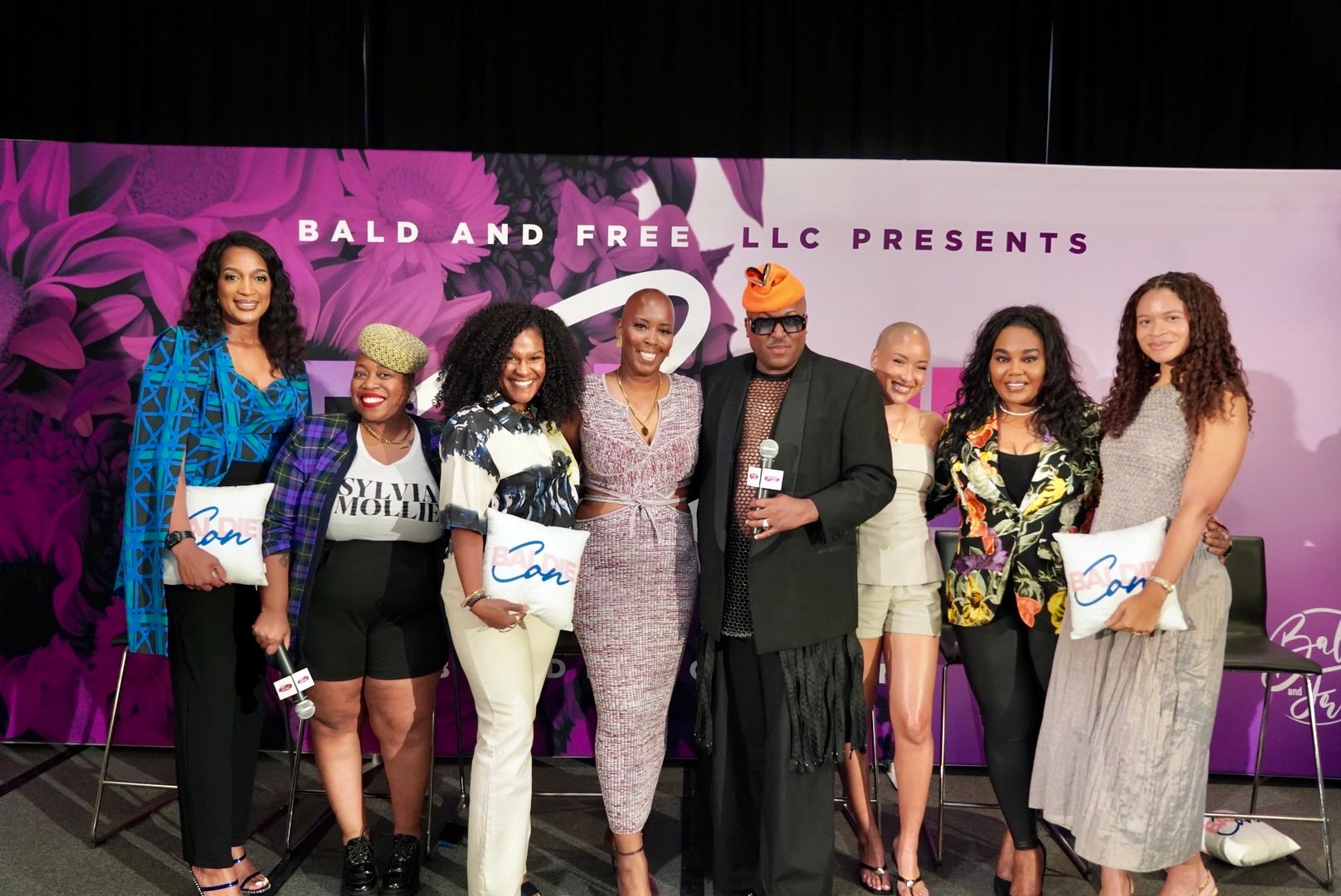
For women who are still avoiding mirrors, photos, and social events because of hair loss, what are three steps they can take right now?
First, start being kind to yourself. Look in the mirror and come up with three great things about yourself. Speak them to yourself every single day. That practice matters more than people realize.
Second, find a community. Whether it is BaldyCon or another space, find women who look like you and can walk alongside you. Having a support system of people who understand what you are going through and can actually help whether it is a question, a concern, or simply needing to feel heard is invaluable.
Third, get back to yourself. Get back to loving the things you have always loved and make that your priority. When you focus on what makes you happy, you start to forget that you are bald. You start to truly enjoy your life. That is when the confidence comes back for real.
Where can people find BaldyCon, support the mission, and get involved?
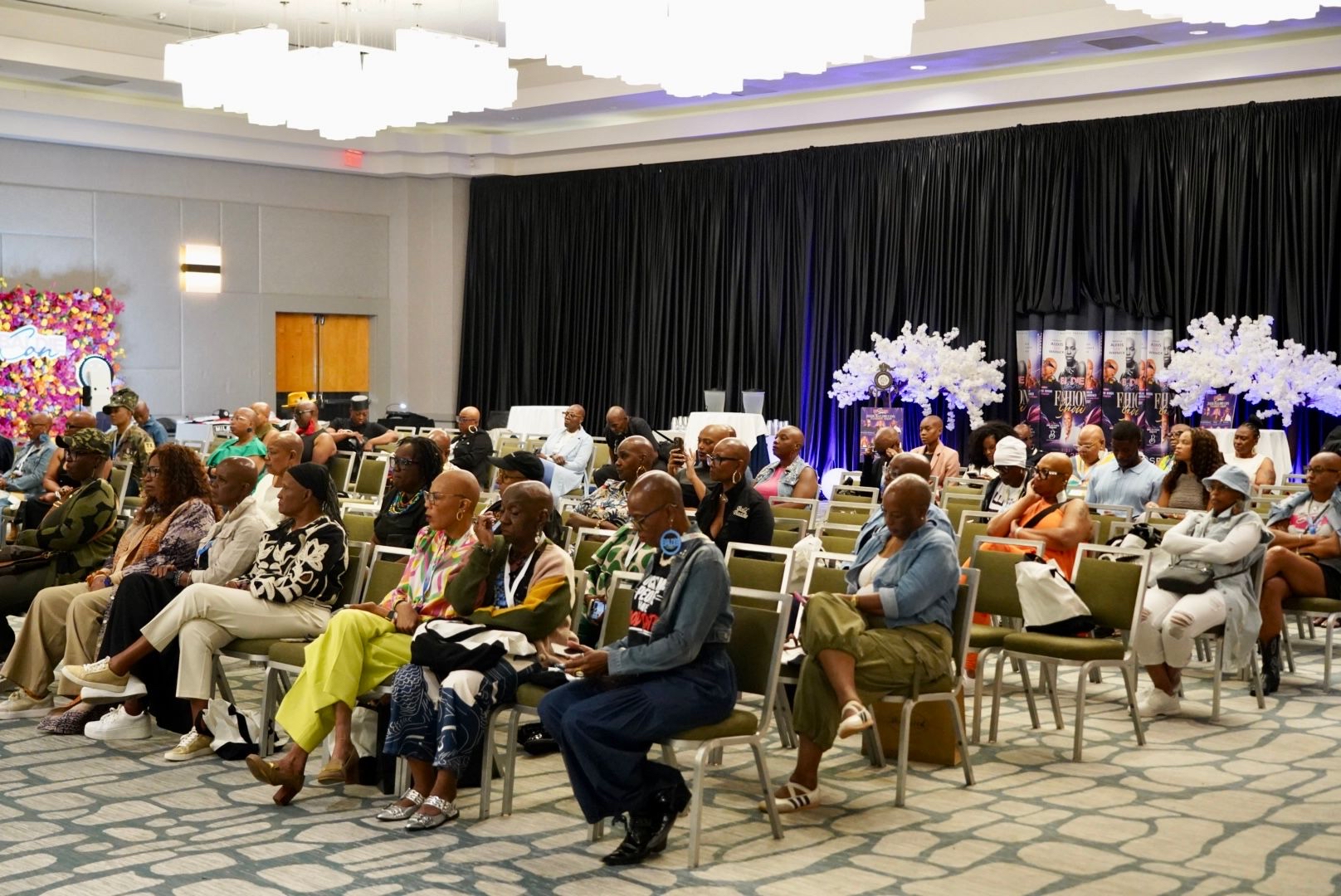
BaldyCon is a 501c3 nonprofit, so we rely heavily on donations to make the events and outreach programs possible. We are also building out spin-off communities around the world to grow the network. Find us at baldycon.com and on all social media platforms under BaldyCon, spelled B-A-L-D-I-E-C-O-N. Sign up for the mailing list and come see us at the next BaldyCon in Atlanta, Georgia from September 23 through 26. Also, volunteer. Serving in this community is how you truly understand it, and we deeply value the people who show up to make it possible.
Visit baldycon.com to register, donate, and learn more. Follow BaldyCon on all social media platforms at @BaldyCon.
Source: According to Porsha, featuring Porsha Monique and Felicia Flores
About the Author