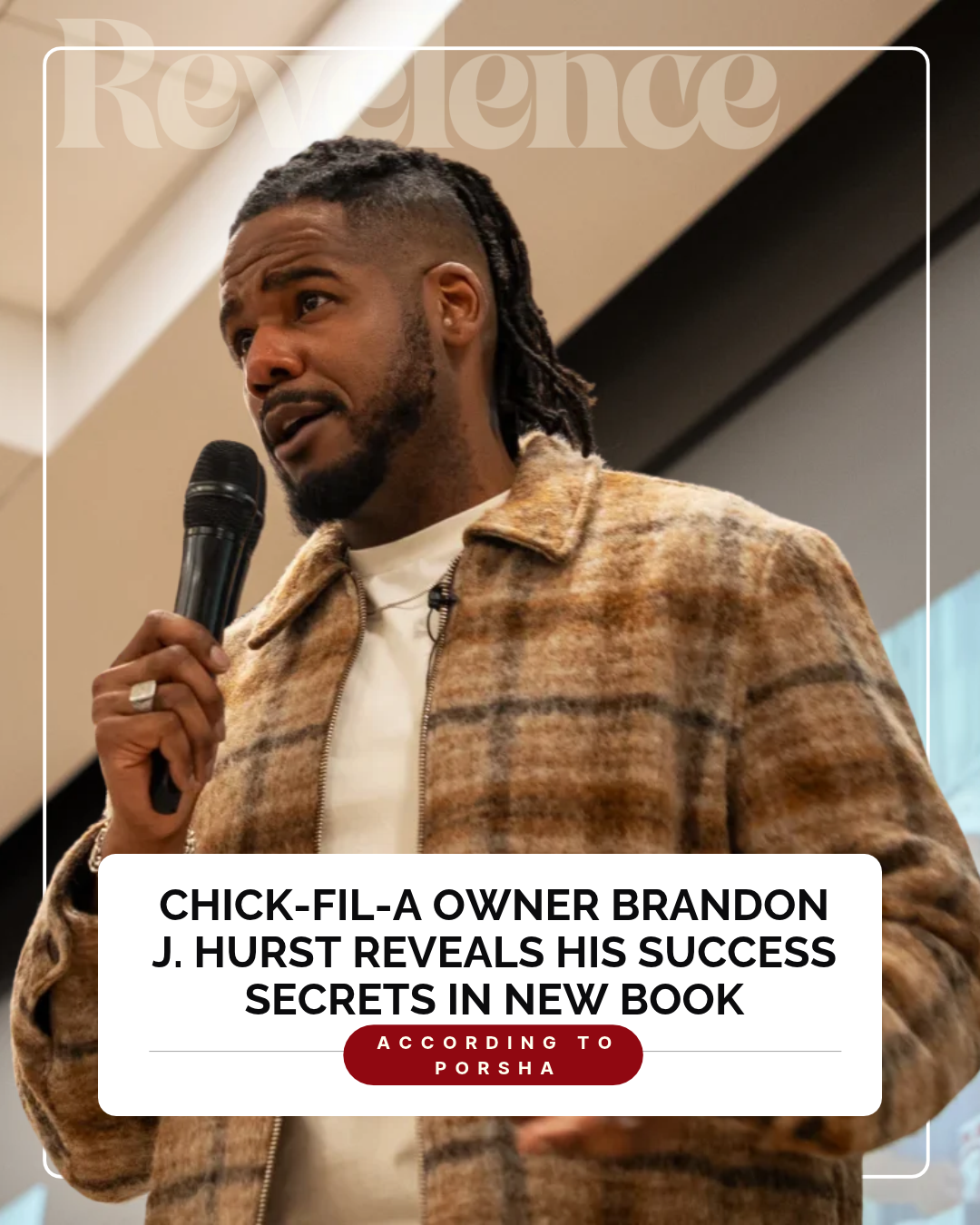
Chick-fil-A Owner Brandon J. Hurst Reveals His Success Secrets in New Book
Brandon J. Hurst was a broke college student who wanted to go to law school. Then a fraternity brother told him Chick-fil-A was hiring. Hurst pushed back because he had other plans. However, his friend kept encouraging him until he finally agreed to apply.
Two weeks after graduating from Alabama State University, Hurst packed his belongings and drove 14 hours to Chicago. He accepted a job paying $12 an hour and turned down a “free” master’s degree to pursue the opportunity. At the time, he had no idea where that decision would lead. Nearly 20 years later, he owns two of Chick-fil-A’s highest-grossing franchises, both located in Brooklyn, New York. One operates in Clinton Hill, while the other sits at Flatbush and Atlantic, across from the Barclays Center.
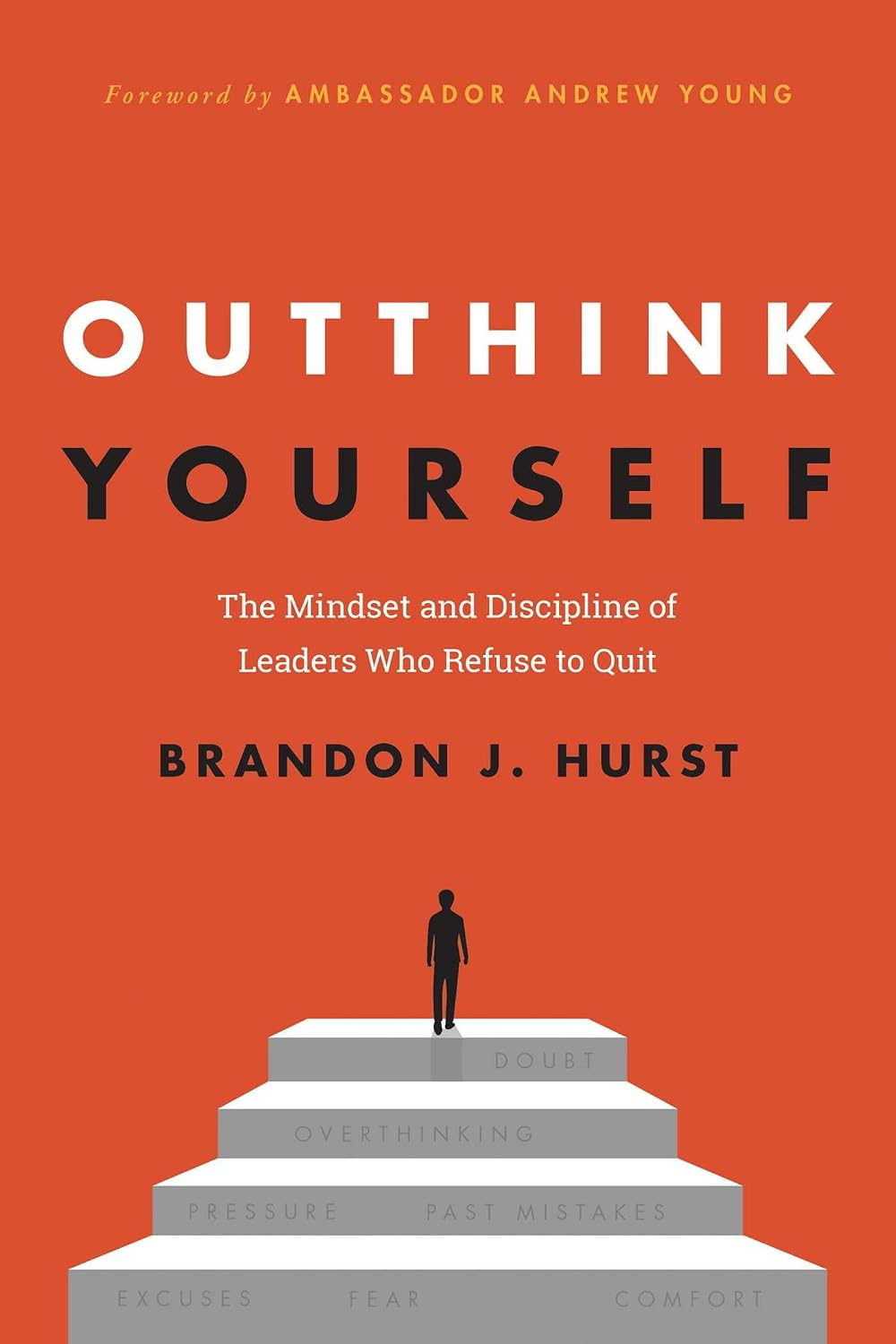
Today, Hurst shares the lessons from his journey in his debut book, Outthink Yourself: The Mindset and Discipline of Leaders Who Refuse to Quit. Post Hill Press will release the book on January 26, 2027, and readers can pre-order it now.
At the heart of the book is his Thinking Discipline System, a practical framework built around three phases: see, become and build. Hurst used this approach to make important career decisions and now applies it while leading more than 200 people in one of the country’s most complex business environments.
In this conversation, Hurst discusses the risks behind accepting that first $12-an-hour job. He also explains why leadership depends on the trust of others and shares three questions every emerging leader should write down this week.
From Atlanta to operating top-performing Chick-fil-A restaurants in Brooklyn, how did you get here?
I was born and raised in Atlanta, Georgia, which is the birthplace of Chick-fil-A, and I actually knew nothing about the brand growing up. Like most college students, I was broke and looking for a part-time opportunity. I told him I was trying to go to law school. He said just give it a shot. I eventually gave in, applied, got hired after a series of challenging interviews, and it just kind of took off from there.
View this post on Instagram
When I graduated, I turned down a free master’s to take a $12 an hour job in Chicago, which was a brand new Chick-fil-A market at the time. Two weeks after graduation, I drove 14 hours straight to start a new life. In hindsight, it was one of the best decisions I could have ever made. I completed my MBA while in Chicago, joined Chick-fil-A’s Elite Leadership Development Program, traveled and supported local owner-operators for almost three years on the corporate side, and then jumped into the pond to become an owner-operator myself. I opened my first Chick-fil-A at 26 in downtown Baltimore. The book, Outthink Yourself, came from nearly 20 years of trying to center and anchor the lessons I learned along the way.
What experience most changed your understanding of leadership?
The book centers on this idea that the quality of your life and your leadership is determined by the quality of your thinking. Throughout it, I introduce practical frameworks to help readers address their relationship with risk, ego, relationships, leadership, and personal growth, all in service of making better strategic decisions.
The framework I built is called the Thinking Discipline System, and it moves through three phases. The first is see. That phase is about getting clarity on what is actually in front of you and getting honest about your relationship with risk. So many entrepreneurs and leaders are risk-averse and never understand why they are paralyzed to take the first step. The second phase is become. That is the personal work of asking who you need to be and who you need to become to reach the level of success you want. The third phase is build. That is all about execution and the legacy you want to leave behind. You have clarified what is in front of you, you have done the internal work, and now it is time to move.
What belief about success did you have to unlearn over time?
Over time, my definition of leadership completely changed. Leadership, to me, is a permission given to you by the people who ultimately choose to follow you. That means leadership is less about your individual contributions and far more about your ability to get sustained, high-quality results through other people.
I still wrestle with that as an entrepreneur. Leading a team of over 200 people from various backgrounds and multiple generations means everyone does not want the same thing. And yet, so many of us fall into the trap of thinking that what worked in the past will keep working today. My challenge to everyone I talk to is: what if it does not? What if you have to truly out-think yourself and become somebody different to keep growing at the level you desire?
Walk us through a high-stakes decision using your Thinking Discipline System. What did the framework help you see that your first instinct missed?
My entire Chick-fil-A career has been built on this system. When I was deciding whether to stay in Alabama for a free master’s, go to law school, or take $12 an hour in Chicago, I had real options on the table, and I genuinely did not know what was on the other side of any of them. That is the risk framework in action.
I asked myself: what happens if I go to Chicago and it completely fails? What happens if it changes the trajectory of my life? Once I made the decision, everything I thought I knew got flipped upside down, and I had to humble myself. That was the become phase. I had to seek counsel and get wise people around me. A mentor eventually said, come here and learn under me and see where it takes you. That started the wheels spinning. By the time I knew it, I was in the build phase, opening my first restaurant at 26. None of that follows a straight line, and the framework is what kept me oriented throughout.
How do you know when you have enough information to act, especially when waiting carries a cost?
That tension is something I navigate regularly as an entrepreneur. My first approach is to understand the consequences of getting the decision wrong. I ask: is it reversible? What is the financial exposure? Who will be impacted? What happens if I wait a week or a month?
Beyond that, I lean on counsel from people who will actively challenge my assumptions, especially when I have a strong emotional attachment to an outcome. That is the ego check I address directly in the book. Am I too close to this? Who on my council is going to help me see that? Finally, once I understand the downside, I look for reasonable alternatives and map out how I would pivot if I am wrong. I do not need to rush the decision. However, I do need enough clarity to understand the risk and enough discipline to respond well if things do not go as planned.
Do you use time parameters to know when you have gathered enough information?
Being comfortable with a contingency plan is what actually gives you the courage to make the decision in the first place. Leaders and entrepreneurs rarely sit down to build those plans, and that is exactly why they freeze.
When I was deciding between Alabama, Chicago, and law school, my contingency plan was simple. I went to the school and asked whether, if they were offering to pay for my master’s today, they would still honor that offer two years from now. When they said yes, I had all the comfort I needed. That was me making sure I had a plan to pivot if Chicago failed. We do not spend nearly enough time working through if-then scenarios, and that is where a lot of paralysis comes from.
What is your approach to building wise counsel, and how do you select the right people?
Start by knowing yourself well. I have taken multiple assessments and spent real time self-reflecting, because you cannot choose the right mentor until you understand your own blind spots. For me, I know I am overly optimistic and move fast. That means I do not always think through the details. They may not want to find someone too tough and walk away. However, you need someone who balances what you bring.
One of my mentors once told me that you will never completely eradicate your weaknesses, but you can surround yourself with people who strengthen those areas. That is what I look for. Additionally, I look for people who are completely outside my lane, because I do not need another competitor. Focus instead on building balanced relationships. And just as importantly, recognize when that season is up.
For an emerging leader with limited time, money, or access, what thinking habits should they practice this week, and what would meaningful progress look like?
Three questions, focused on the see phase of the Thinking Discipline System. Write these down.
- First, what do I know to be true, and what am I simply assuming?
- Second, what is really holding me back, and what is actually in my control?
- Third, what is one meaningful action I can take in the next seven days?Not months. Not years. Just seven days.
We tend to overplan and underact. Meaningful progress does not have to mean launching a business or landing a promotion. It might mean making the phone call, completing the research, getting feedback, or taking one small calculated risk. Start there, and see what becomes possible.
Outthink Yourself: The Mindset and Discipline of Leaders Who Refuse to Quit is available for pre-sale now and releases January 26, 2027 through Post Hill Press. Purchase @BrandonJhurst.com or on Amazon, Books-A-Million, and Barnes and Noble. Follow Brandon J. Hurst on Instagram and LinkedIn at @IamBrandonJHurst.
Source: According to Porsha, featuring Porsha Monique and Brandon J. Hurst
About the Author