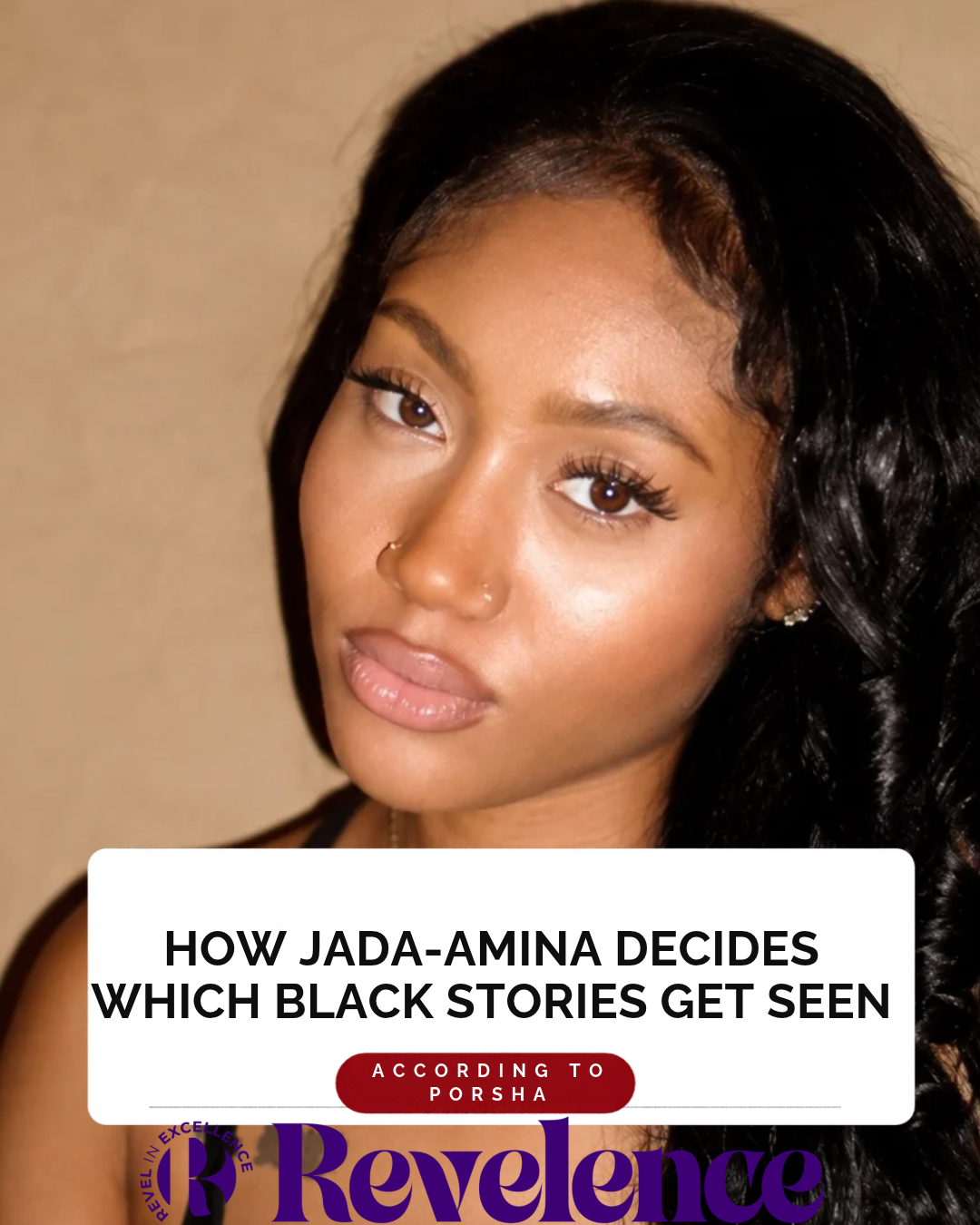
Photo credit: Jada-amina
Selecting films for a festival involves more than finding compelling stories. Curators must consider how each film communicates, what audiences will experience and which voices deserve greater visibility.
For jada-amina, lead curator of the Black Harvest Film Festival, the process also requires trusting her creative instincts. She looks beyond familiar storytelling formulas to understand the heart of each film.
As the festival prepares for its 32nd year, jada-amina is helping bring a wide range of Black experiences to the screen. The 2026 festival runs November 6–15 at The School of the Art Institute of Chicago’s Gene Siskel Film Center.
However, her approach to selecting films does not follow a simple checklist. Instead, she considers the creative spirit behind each project while maintaining important standards for the cinema experience.
Jada-amina looks beyond technical perfection
Film quality matters when Jada-amina evaluates submissions. She considers the visuals and sound because audiences deserve a film they can comfortably experience on a large screen.
Accessibility also forms part of her thinking. A film must offer an experience that audiences can engage with, rather than creating unnecessary barriers.
However, technical quality does not tell the whole story. Jada-amina also considers whether the people and subjects in a film feel fully developed.
For her, that question applies to both documentaries and narrative films. A compelling subject needs room to exist beyond a surface-level description.
This approach gives different kinds of filmmakers room to express themselves. It also allows the festival to consider work that may not follow conventional storytelling structures.
Why Jada-amina refuses to reduce Black stories
One of the most important parts of Jada-amina’s curation is how she approaches stereotypes.
She does not automatically reject a familiar character or subject because audiences have seen similar portrayals before. Instead, she considers whether the filmmaker has explored the person beyond a simplified image.
A character can come from a recognizable stereotype and still have depth. The important question is whether the story reveals the character’s humanity, emotions and inner life.
Consequently, jada-amina looks for the spirit behind the work. That creative intention can appear in a documentary, biopic, narrative feature or experimental short.
Some films may use dialogue to communicate their ideas. Others may rely on images, sound and visual experimentation. Either way, she wants the audience to encounter something meaningful.
Black cinema needs room for different creative forms
Black stories do not belong to one genre or filmmaking style. Therefore, Jada-amina’s approach makes room for projects that explore different subjects and forms.
The Black Harvest Film Festival presents documentaries, narrative films, experimental work and short films. Its 2026 lineup includes nine feature films and 10 shorts programs, according to the festival’s official website.
That range reflects the different ways filmmakers can examine Black life. Some stories may explore familiar experiences, while others challenge audiences to consider perspectives they have not encountered before.
Additionally, experimental filmmaking can create opportunities to communicate ideas outside traditional narrative structures. These films do not always need to explain every image or experience to a wider audience.
Instead, they can invite viewers to observe, interpret and engage with the work on its own terms.
What audiences gain from a thoughtful selection process
A curator’s decisions influence which films receive a platform and how audiences encounter them. For Jada-amina, that responsibility means considering the creative value of each project without forcing every story into the same framework.
Her approach also makes room for films that may not immediately appeal to conventional expectations. A story does not have to fit a familiar image of Black life to deserve consideration.
Ultimately, the selection process is about recognizing the depth and variety of Black storytelling. It allows filmmakers to explore their subjects with greater creative freedom while giving audiences opportunities to discover different perspectives.
The 32nd Black Harvest Film Festival opens November 6 and continues through November 15 at The School of the Art Institute of Chicago’s Gene Siskel Film Center. Audiences can explore the schedule and ticket information through the official festival website.
About the Author