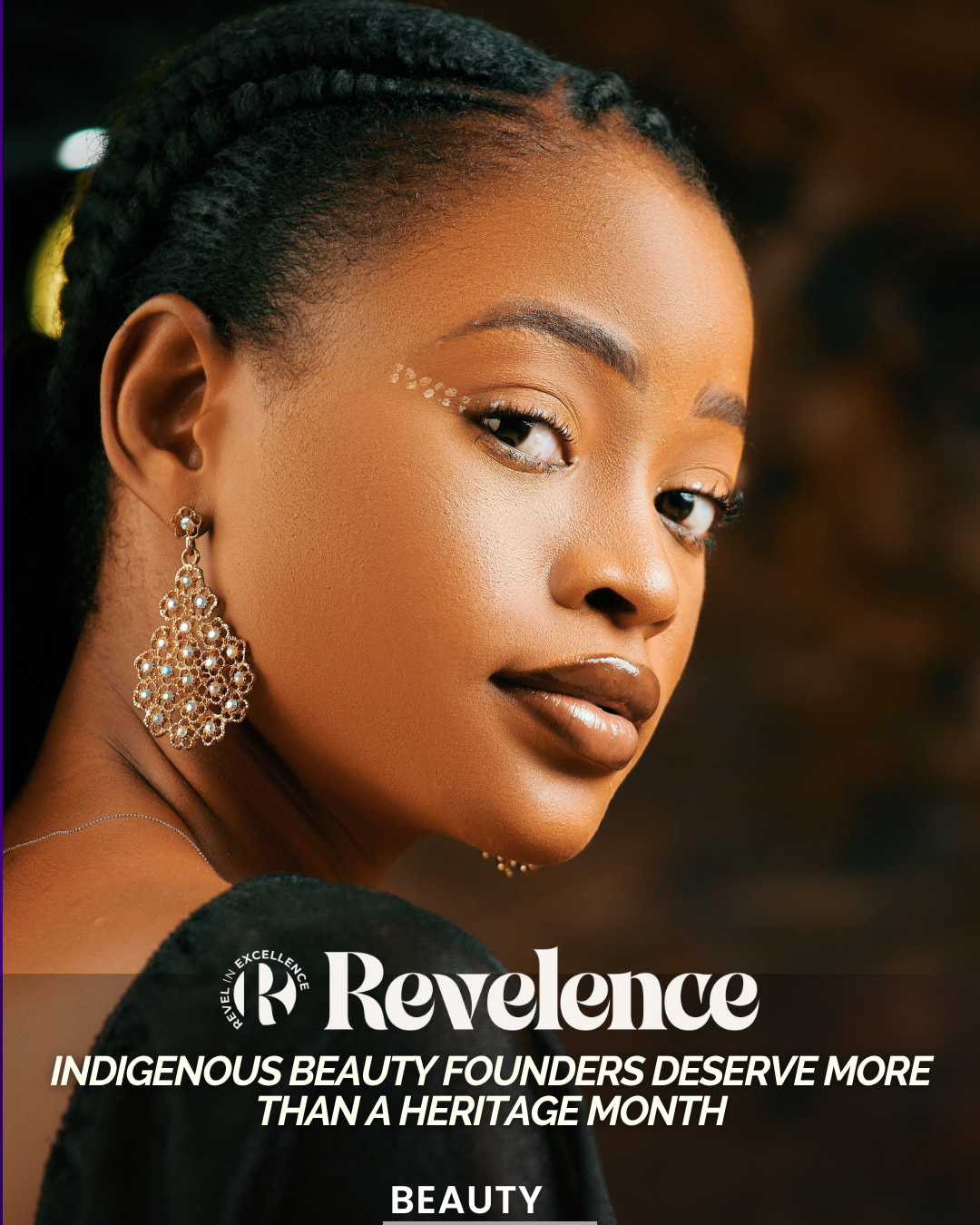
Photo by Nemmy Media
Indigenous beauty founders deserve recognition beyond heritage-month celebrations. Their businesses represent entrepreneurship, creativity, cultural identity and the opportunity to reshape an industry that has not always reflected Indigenous communities.
From cosmetics to skincare, Indigenous-owned beauty brands are building businesses that connect personal stories with products and community representation. Yet, meaningful coverage should go beyond identifying a company as Indigenous-owned. It should introduce the founder, explain the brand’s origins and recognize the community and experiences that inform its work.
For beauty publications, that means giving founders room to tell their own stories throughout the year rather than limiting their visibility to designated cultural celebrations.
Indigenous beauty brands are changing representation
For years, mainstream beauty campaigns have left many Indigenous consumers searching for products and brands that reflect their identities.
Founders are helping change that experience by creating businesses that place Indigenous representation at the center of their work.
One example is Prados Beauty, founded by Cece Meadows. According to the brand’s official website, Meadows identifies as a proud Indigenous Yoeme woman. She started the company in New York with $250 and a belief that Indigenous beauty deserved a place on every shelf.
The company describes its mission as creating an inclusive beauty brand inspired by Indigenous communities throughout Turtle Island. It also highlights collaborations with Native artists as part of its approach to creative representation.
Another example is Cheekbone Beauty, founded by Jenn Harper. The Canadian cosmetics company grew from Harper’s experience reconnecting with her Indigenous roots and recognizing the need for greater representation in beauty.
On its official website, Cheekbone Beauty explains that its mission is to create a space where Indigenous people feel represented and seen. The company also supports Indigenous students through its scholarship initiative.
These businesses demonstrate that Indigenous beauty entrepreneurship is not one story. Each founder brings a distinct background, business vision and relationship with community.
A founder’s identity deserves accurate representation
Writing about Indigenous-owned beauty brands requires more than copying an identity description from a product page.
Journalists should ask founders how they want their names, communities and identities presented. Indigenous peoples are not one culturally uniform group. Their histories, languages, traditions and community relationships differ.
For example, Prados Beauty identifies Cece Meadows as Yoeme. That identification should not be replaced with a broader label when the founder’s preferred description is available and confirmed.
The same care applies to Jenn Harper and Cheekbone Beauty. Coverage should use the founder’s preferred community identification rather than assume details based on a company’s location or general Indigenous ownership.
Accurate identification also helps readers understand the people behind the businesses instead of reducing their stories to a marketing category.
The story behind a beauty brand matters
A founder’s journey can explain why a brand exists, what gap it hopes to address and how its products connect with its larger purpose.
Meadows has previously discussed the lack of Indigenous representation she experienced while working in the beauty industry. In a published interview with Soko Glam, she described wanting Indigenous people to see their faces and stories represented in cosmetics.
Her experience highlights a broader issue. Beauty brands should not only feature Indigenous-inspired imagery. They should also create opportunities for Indigenous entrepreneurs and artists to lead the storytelling.
Cheekbone Beauty’s origins offer another example. The company’s official founder story explains that Harper’s inspiration came from a dream of Indigenous girls wearing colorful lip gloss. That vision developed into a business focused on representation and sustainability.
These stories deserve deeper coverage than a short heritage-month product roundup. They offer insight into entrepreneurship, identity, creative direction and the challenges of building a business.
Representation should continue throughout the year
Indigenous founders should not have to wait for a designated month to receive media attention.
In a 2022 Beauty Independent feature, several Indigenous beauty entrepreneurs discussed how the industry could better represent their communities. Founder Arianna Johnny-Wadsworth of Quw’utsun’made called for more consistent coverage instead of attention limited to occasions such as Indigenous Peoples’ Day.
Other founders emphasized the importance of allowing Indigenous people to tell their own stories and showing the diversity within their communities.
Their perspectives point to a practical responsibility for beauty publications and retailers. Indigenous-owned brands should be considered for regular product coverage, business features, founder interviews and industry conversations.
Better coverage starts with listening
A meaningful beauty feature should give founders control over how their stories are presented.
Journalists can begin by asking why the founder started the business, which experiences shaped its direction and how the company works with its community. They should also ask how the founder wants their name and cultural identification credited.
Brands should not be expected to represent every Indigenous community. Instead, coverage should recognize the specific founder, business and community being discussed.
Ultimately, Indigenous beauty founders deserve to be recognized for their products, business decisions and creative contributions. Their stories should not appear only when a heritage-month calendar makes them timely.
The beauty industry has room for these businesses throughout the year. The media should make room for their voices, too.
About the Author