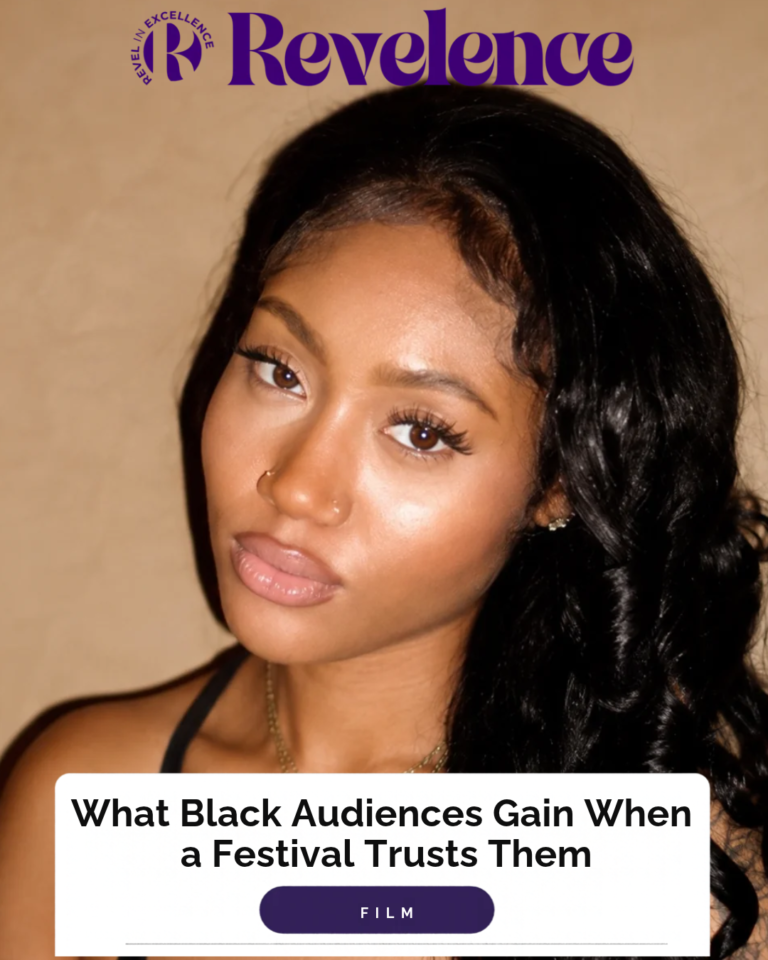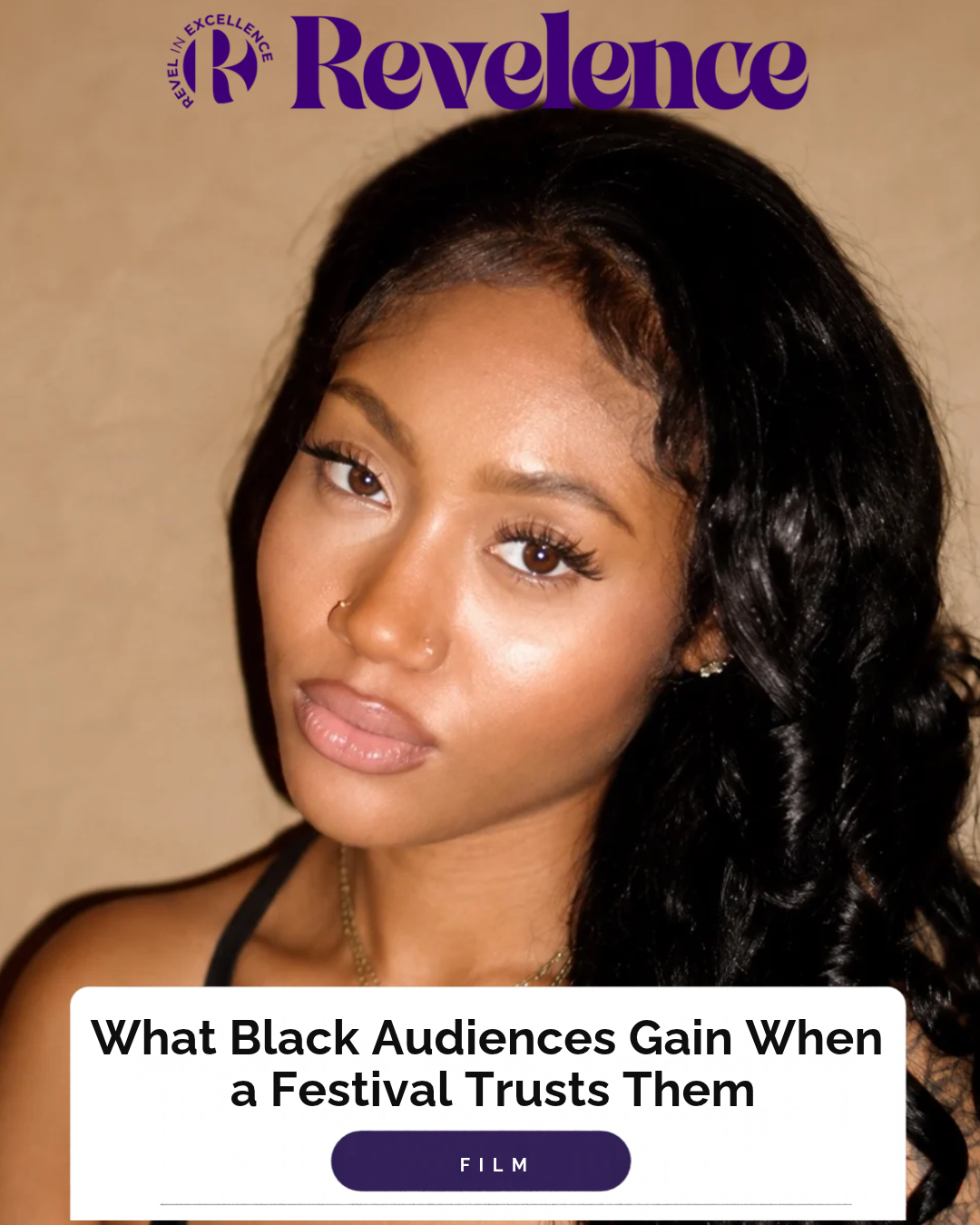
Photo credit: jada-amina
A film does not have to explain every cultural reference to make its meaning clear. Sometimes, the audience already understands the language, the history and the feeling behind what appears on screen.
That understanding is central to how jada-amina approaches the Black Harvest Film Festival. As its lead curator, she champions films that allow Black people to encounter their experiences without constantly translating them for an unfamiliar audience.
For jada-amina, that trust creates room for authenticity, recognition and a deeper connection between a film and the people watching it.
The annual showcase brought together films across the Black diaspora, continuing a tradition of presenting Black stories through different genres, generations and perspectives.
Black audiences deserve stories that speak their language
When asked what becomes possible when a film trusts Black audiences without explaining everything, jada-amina points to authenticity and resonance.
She describes the theater as a space where people gather and bear witness to stories. Her understanding draws on the cultural experiences she carries, including the influence of the Black American South and the church in her family.
That familiarity shapes how she experiences cinema. Cultural references do not always need an explanation to communicate their meaning. A gesture, sound, setting or shared experience can carry a history that audiences recognize.
She also explains that something changes when Black people gather to engage with stories about Black experiences. The room can become a place where viewers share an understanding that might be difficult to reproduce in a different setting.
Black Harvest welcomes everyone, but its focus remains on creating space for Black stories and the audiences who recognize themselves in them.
Representation should not become another box
Trusting audiences also means allowing Black characters and filmmakers to exist beyond narrow expectations.
jada-amina challenges the idea that every festival must separate certain identities into a single category. When asked why she does not create a dedicated queer or LGBTQ+ program, she explains that she does not want those stories confined to one section of the festival.
Instead, queer experiences can appear throughout the lineup. This approach allows audiences to encounter those stories across different programs rather than treating them as separate from Black cinema.
Her programming philosophy also makes room for complicated characters. She does not believe a character must avoid familiar stereotypes to be worth showing. The important question is whether the film gives that person depth and a fully realized interior life.
That distinction creates space for filmmakers to explore Black experiences without being restricted to stories designed to satisfy outside expectations.
A festival experience extends beyond the screen
The relationship between a festival and its audience does not end when a film finishes.
jada-amina points to filmmaker conversations, audience questions and post-screening discussions as important parts of the experience. At Black Harvest, viewers can speak with directors, share feedback and discuss creative decisions, including alternative endings.
These exchanges give audiences a role beyond watching. They can respond to the work and take part in conversations that continue after the screening.
That kind of engagement also creates opportunities for filmmakers. A festival can introduce their work to new viewers, connect them with other creators and help build relationships that continue beyond one event.
In the interview, jada-amina describes seeing filmmakers who first met at the festival later working together on projects. Those connections show how a screening can become the beginning of a longer creative relationship.
Black cinema needs audiences who show up
The festival’s approach rests on a simple idea: Black stories deserve to be seen, discussed and preserved.
For jada-amina, audience participation matters. Attending screenings, sharing information and supporting filmmakers help sustain the spaces where these stories reach the public.
The festival’s 2026 program included contemporary films alongside restoration work. Its closing-night presentation featured Gordon Parks’ Solomon Northup’s Odyssey in a new 4K restoration. The screening connected contemporary audiences with an important work of Black film history.
That combination of new work and preservation reflects the value of giving Black cinema room to develop while keeping earlier stories accessible.
What audiences carry with them
A festival that trusts its audience does more than present films. It creates an environment where viewers can recognize familiar experiences, encounter perspectives beyond their own and take part in conversations without being treated as outsiders to the stories on screen.
jada-amina’s approach places that relationship at the center of curation. Black audiences do not need every experience explained before they can understand its significance. They deserve films that respect their knowledge, complexity and imagination.
The result is a festival experience built around recognition, conversation and the freedom to tell Black stories in all their depth.
About the Author