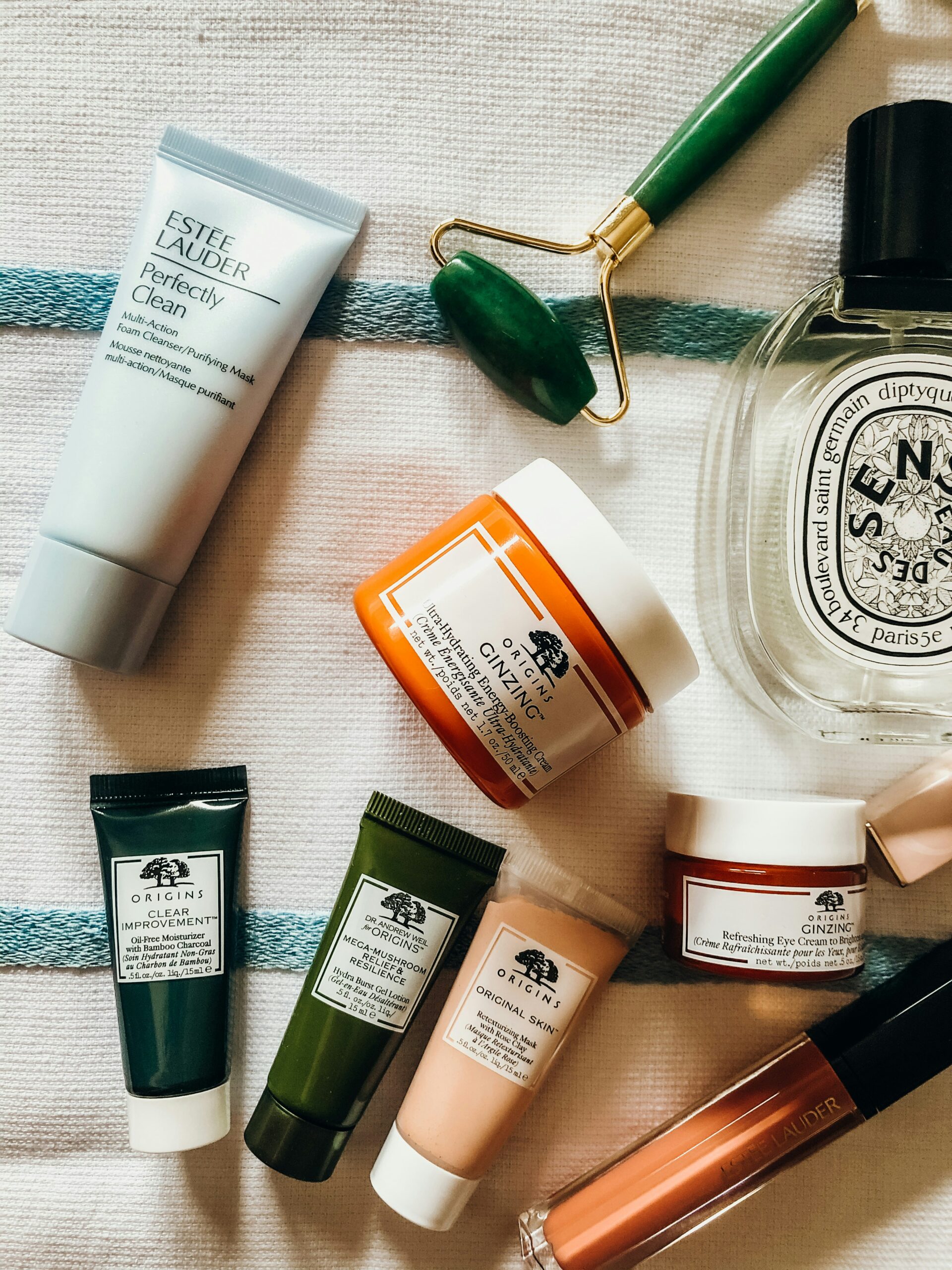
Photo by michela ampolo on Unsplash
Fragrance is the most common hidden ingredient that irritates sensitive skin. It appears in moisturizers, cleansers, sunscreens, shampoos, conditioners, and many other personal care products. Manufacturers often list it simply as fragrance or parfum on the label.
However, that single word can represent dozens of different chemicals. As a result, people may react to an ingredient they cannot easily identify.
The European Union requires companies to disclose several fragrance allergens on cosmetic labels. In contrast, U.S. regulations do not require the same level of detail. Because of this difference, many consumers have little information about what “fragrance” actually contains.
Natural fragrances are not always safer than synthetic ones. Essential oils such as lavender, citrus, peppermint, tea tree, and eucalyptus frequently trigger contact dermatitis. Therefore, products labeled “natural” may still irritate sensitive skin.
Alcohols and preservatives can damage the skin barrier
Not every alcohol found in skincare products is harmful. Still, knowing the difference is important.
Short-chain alcohols, including ethanol, denatured alcohol, isopropyl alcohol, and SD alcohol, can dry out the skin. They evaporate quickly and create a light, refreshing feel. However, repeated use may weaken the skin barrier and increase irritation.
By comparison, fatty alcohols such as cetyl alcohol, stearyl alcohol, and cetearyl alcohol work as moisturizers. Most people tolerate these ingredients well. Therefore, checking the exact type of alcohol matters before deciding whether a product is suitable.
Preservatives can also trigger reactions. Methylisothiazolinone (MI) and methylchloroisothiazolinone (MCI) are among the most common contact allergens. Because of their high allergy rates, the European Union has restricted their use in many cosmetic products.
Some preservatives release small amounts of formaldehyde over time. These ingredients may cause irritation in people with formaldehyde allergies. For this reason, consumers should learn which preservative families affect their skin instead of avoiding every preservative altogether.
Sulfates and silicones affect skin differently
Sulfates remain one of the most debated skincare ingredients. Sodium lauryl sulfate (SLS), in particular, can strip away the skin’s natural oils after repeated use.
People with eczema, rosacea, or dry skin often notice more irritation when using products that contain SLS. In many cases, switching to sulfate-free cleansers reduces dryness within a few weeks.
Silicones work differently. Ingredients such as dimethicone and cyclopentasiloxane rarely cause allergic reactions. Instead, they form a protective layer over the skin.
For acne-prone individuals, that layer can trap oil, bacteria, and debris. As a result, some people experience more breakouts. Others may have no problems at all. Choosing silicone-based products should depend on your skin type rather than general recommendations.
How to read ingredient labels more effectively
Reading an ingredient label starts with looking at the first few ingredients.
Manufacturers list ingredients in descending order by concentration. Therefore, the first five to ten ingredients usually make up most of the product.
An irritating ingredient near the top of the list deserves more attention than the same ingredient listed near the bottom. Fortunately, many products contain only tiny amounts of certain ingredients that are unlikely to cause problems.
Patch testing helps prevent unwanted reactions
Patch testing remains the best way to identify ingredients that irritate your skin.
Apply a small amount of a new product to your inner arm or behind your ear for several days before using it on your face. This simple step often prevents larger reactions.
In addition, keep a record of the products you use and any reactions you notice. Over time, you may identify patterns that point to specific ingredients.
If irritation continues, schedule an appointment with a dermatologist. Professional patch testing can identify allergens that are difficult to detect on your own. Combining label reading, patch testing, and expert advice gives most people the best chance of finding products that truly suit their skin.
Source: American Academy of Dermatology (AAD), National Eczema Association, U.S. Food and Drug Administration (FDA), and the European Commission’s Cosmetics Regulation on cosmetic ingredients and fragrance allergens. Information adapted from dermatologist guidance on common skin irritants.
About the Author