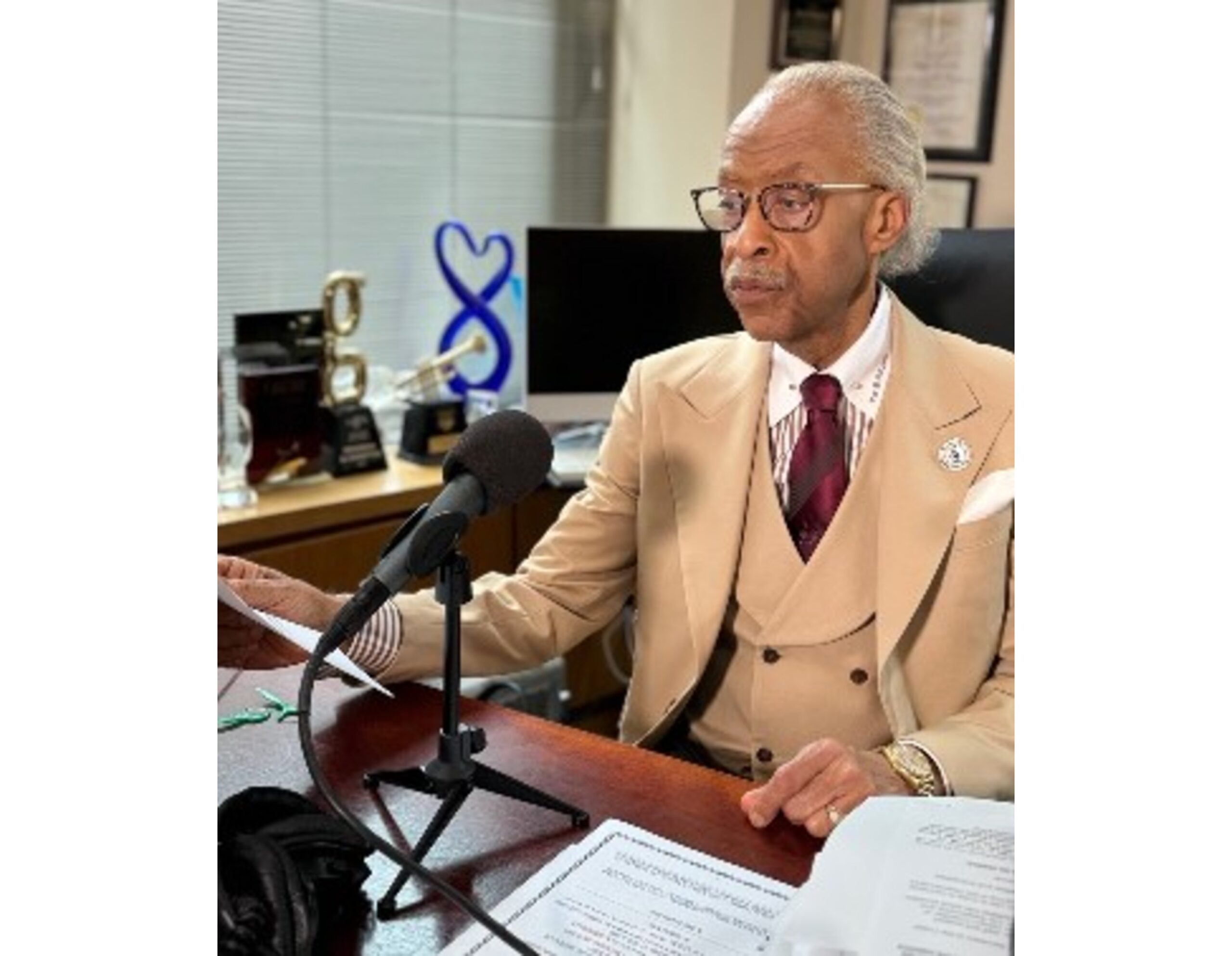
Photo credit: Al Sharpton (Instagram)
The March on Washington 2026 Defend the Vote event will take place in Washington, D.C. on Friday, August 28, 2026. National Action Network Founder and President Rev. Al Sharpton announced the march alongside Martin Luther King III, the eldest son of Dr. Martin Luther King Jr., and Arndrea Waters King. Moreover, the Drum Major Institute and a growing list of community partners have also confirmed their participation in what organizers are framing as a direct continuation of the 1963 march’s legacy. Furthermore, August 28 marks the 63rd anniversary of the original March on Washington, when 250,000 people gathered at the Washington Monument and marched to the Lincoln Memorial in one of the most consequential civil rights demonstrations in American history. Consequently, the date carries enormous symbolic weight for the movement and for the communities whose rights the march is designed to protect.
The original 1963 March on Washington sought civil and economic rights for African Americans. Advocates pushed for fair employment, meaningful civil rights legislation, an end to racial segregation, and the protection of voting rights particularly in the South. Moreover, Dr. Martin Luther King Jr. delivered his I Have a Dream speech from the Lincoln Memorial that day before a crowd that included domestic workers, grandmothers, and prominent civil rights leaders including A. Philip Randolph and Dr. Dorothy Height. Additionally, that speech became one of the most celebrated and widely quoted addresses in American history. Consequently, the decision to hold the 2026 march on the same date connects present-day activists to a lineage of resistance that has never lost its relevance.
Why voting rights are at the center of the 2026 march
The Defend the Vote theme places voting rights at the heart of the 2026 March on Washington. Voting access for Black Americans and other marginalized communities faces ongoing legislative and legal challenges that activists say represent a continuation of the same threats that motivated marchers in 1963. Moreover, the National Action Network and its partners have identified voting rights as the defining civil rights issue of the current moment. Furthermore, the involvement of Martin Luther King III and Arndrea Waters King gives the march a direct family connection to the man whose voice defined the 1963 event. Consequently, the 2026 march carries both historical continuity and contemporary urgency in equal measure.
Rev. Sharpton has led multiple major civil rights demonstrations throughout his career as founder and president of the National Action Network. Moreover, his decision to center this march on voting rights reflects a read of the current political environment that the broader coalition of partners clearly shares. Additionally, the 1963 march included voting rights as a core demand alongside fair employment and anti-segregation advocacy. Consequently, the 2026 Defend the Vote march is not a departure from the original spirit of August 28 but a return to one of its most fundamental concerns.
The full coalition of partners confirmed for the march
The March on Washington 2026 Defend the Vote has assembled one of the broadest coalitions of civil rights, labor, faith, and civic organizations in recent march history. The following national organizations have confirmed participation:
American Federation of Teachers, American Federation of Government Employees, NAACP, National Council of Negro Women, National Urban League, National Coalition on Black Civic Participation, League of United Latin American Citizens, UnidosUS, Working Families Party, Federation of Protestant Welfare Agencies, Lawyers’ Committee for Civil Rights Under Law, Veterans Equity Project, Phi Beta Sigma Fraternity, Common Cause, People Power United, United For Democracy, Vote.org, Family Equality, In the Public Square, Bet Mishpachah, Faith in Action Fund, Faith in Action National Network, National Council of the Churches of Christ in the USA, and the Interfaith Alliance.
Moreover, multiple houses of worship have also confirmed their involvement. Additionally, The Honorable Yvette Clarke, Chair of the Congressional Black Caucus, will attend alongside a delegation of Congressional Black Caucus members. Consequently, the march brings together labor, civil rights, faith, legal advocacy, and elected government representation under a single unified call to defend voting rights.
What the march represents for the current moment in civil rights
The breadth of the coalition assembled for the March on Washington 2026 signals something important about how civil rights advocacy has evolved since 1963. Organizations representing Black, Latino, labor, faith, legal, and LGBTQ+ communities are all participating. Moreover, that cross-community alignment reflects a shared understanding that voting rights protections matter for every constituency that has faced barriers to full democratic participation. Furthermore, the inclusion of labor unions alongside civil rights organizations echoes the 1963 march, which was formally organized as a march for jobs and freedom rather than a purely racial justice demonstration. Consequently, the 2026 march builds on a tradition of coalition politics that recognizes the connections between economic power and voting power.
August 28 has become one of the most significant dates in American civil rights memory. Beyond the 1963 march, it marks the anniversary of the murder of Emmett Till in 1955 and became the date of Barack Obama’s historic presidential nomination acceptance speech in 2008. Moreover, choosing August 28, 2026 as the date for the Defend the Vote march layers additional historical resonance onto an already charged anniversary. Additionally, the presence of Martin Luther King III and Arndrea Waters King ensures that the King family’s moral authority remains connected to the march’s legacy in its present form. Consequently, the March on Washington 2026 is positioned as one of the most historically and politically significant civil rights gatherings since the 2020 march that Rev. Sharpton helped organize in the wake of George Floyd’s death.
Source: ESSENCE / Bridgette Bartlett Royall
About the Author