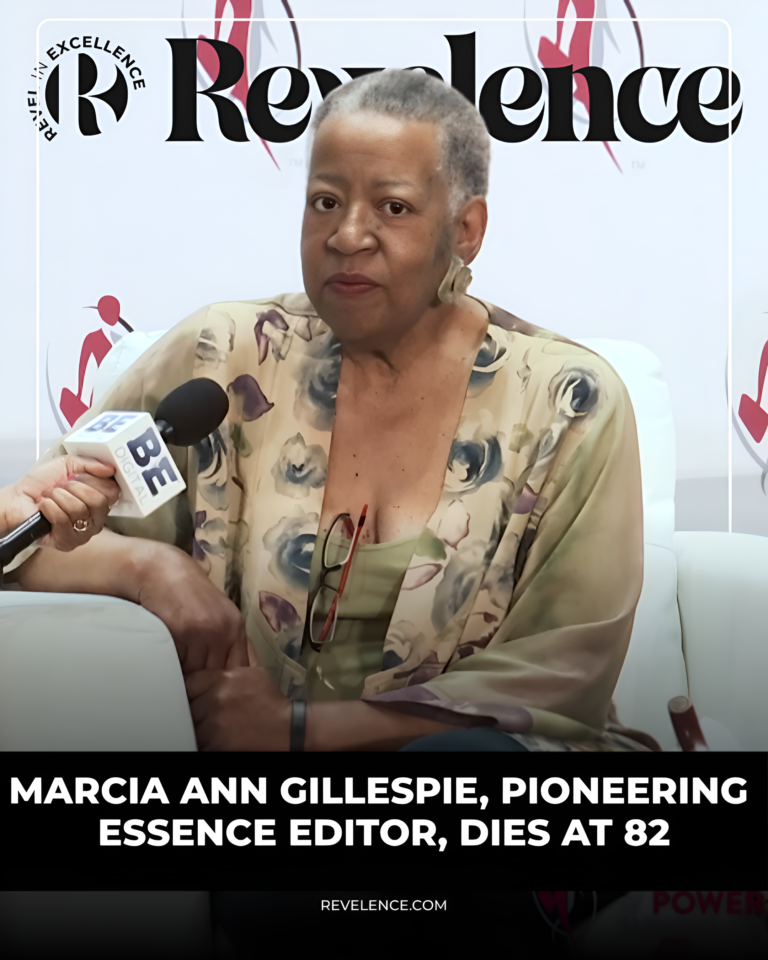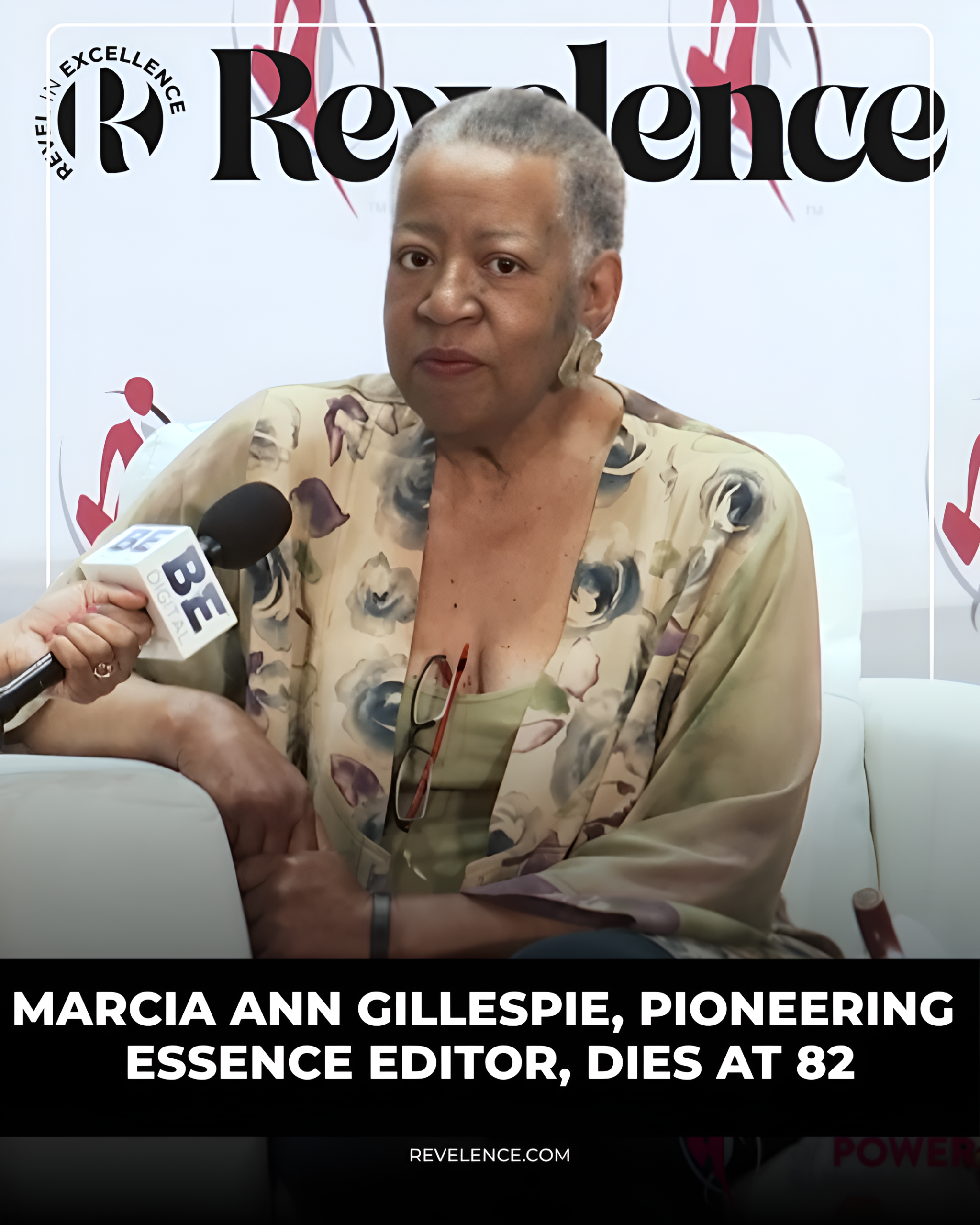
Photo screenshot: Black Enterprise YOUTUBE/Media Goddess, Marcia Ann Gillespie on the Importance of Paying it Forward
Marcia Ann Gillespie spent decades changing who got to tell stories in American media. As the editor who helped shape Essence in its early years and the first Black woman to lead Ms. magazine, she opened doors for Black women in journalism and challenged publications to reflect lives often overlooked by mainstream media.
Gillespie has died at 82, according to her colleagues. Her death was reported Oct. 31 by Essence and journalist Phil Lewis. No cause or date of death has been publicly disclosed.
Her passing comes less than two months after the death of Gloria Steinem, her longtime ally. Together, the two women helped preserve Ms. magazine after acquiring it in 1998.
How Gillespie helped shape Essence
Born July 10, 1944, in Rockville Centre, New York, Gillespie grew up in a working-class family on Long Island. Her father worked as a church sexton and operated a floor-waxing business. Her mother worked as a domestic and ran a catering business.
After graduating from Lake Forest College in 1966 with a degree in American studies, Gillespie began her career as a researcher at Time Inc.
Her path to Essence began when she approached photographer Gordon Parks, one of the people behind the magazine’s launch, about a job. She joined the publication as managing editor in 1970.
Just one year later, at 26, Gillespie presented her vision for the magazine and asked to lead it. She got the position and served as editor from 1971 to 1980.
Under her leadership, Essence became one of the country’s fastest-growing women’s magazines and won a National Magazine Award.
Gillespie also demanded careful attention to how Black life appeared on its pages. Susan L. Taylor, who succeeded her, recalled that Gillespie once required a cover to be reshot seven times. One of Gillespie’s favorite covers appeared in June 1974 and celebrated the love between Black fathers and their children.
Breaking barriers at Ms. magazine
In 1980, Steinem invited Gillespie to contribute to Ms. She later became executive editor before taking over as editor in chief in the early 1990s.
Her appointment made her the first Black woman to lead a mainstream American magazine.
Gillespie had once said that running a publication outside the Black press had not seemed like a realistic possibility, given the industry’s structure at the time. Her rise represented a significant shift in that landscape.
In 1998, Gillespie and Steinem formed Liberty Media for Women, a group of women investors that purchased Ms. for approximately $3 million. Gillespie served as president. Ownership later transferred to the Feminist Majority Foundation, which continues to publish the magazine. She stepped down as editor in 2001.
A partnership that helped preserve feminist publishing
Gillespie and Steinem shared a commitment to keeping Ms. alive and broadening its perspective.
Their work also challenged the limited representation of Black women within the wider feminist movement. Steinem reportedly credited Gillespie with helping the magazine move beyond the predominantly white image associated with early second-wave feminism.
Their partnership showed that Black women were not simply participants in the women’s movement. They were among the people shaping its direction.
The legacy Gillespie leaves behind
Beyond her editorial work, Gillespie mentored younger journalists and helped develop future media leaders. She also co-wrote an authorized biography of her friend and mentor Maya Angelou.
She later taught media and communications at SUNY Old Westbury. Her contributions earned recognition from Black Enterprise, which presented her with the Barbara Graves Legacy Award.
Gillespie’s influence reached beyond the magazines she led. She helped create space for Black women to see their experiences reflected in influential publications and challenged the industry to make room for voices it had too often excluded.
Her career began with a young editor willing to put her vision on paper and ask for the opportunity to make it real. The impact of that decision continues to reach across generations of journalists and readers.
About the Author