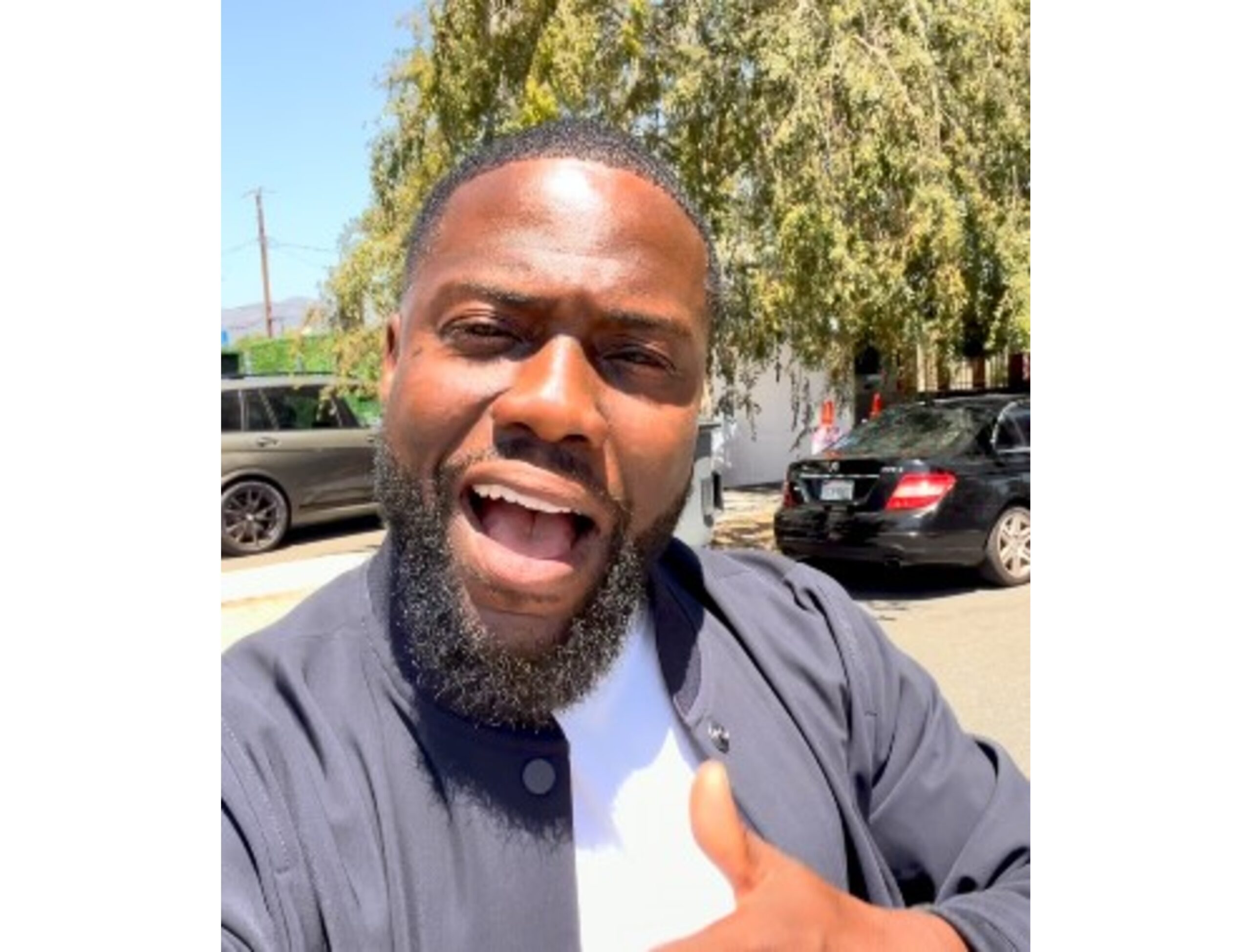
Photo credit: Kevin Hart (Instagram)
Kevin Hart’s entrepreneur advice on ownership is direct and counterintuitive for many founders who have been conditioned to protect their equity at all costs. During a conversation with School of Hard Knocks, Hart made the case that holding 100 percent of a company that lacks the resources to scale is not actually an asset. Moreover, he said successful entrepreneurs are willing to bring in partners who can contribute capital, expertise, infrastructure, and access to new markets that the founder could not reach alone. Furthermore, Hart framed giving up equity not as a loss but as the mechanism that transforms a small business into something large enough to generate real wealth. Consequently, his message challenges one of the most deeply held assumptions in entrepreneurship culture, which is that diluting ownership is always a form of defeat.
Hart has built his business portfolio around exactly this philosophy rather than simply preaching it. His ventures include the media company Hartbeat, the premium tequila brand Gran Coramino, the wellness company VitaHustle, and the venture capital firm Hartbeat Ventures. Moreover, each of those businesses reflects a different kind of partnership structure and industry relationship rather than a single founder holding all control. Furthermore, the scale of what he has built across multiple industries would not have been achievable if he had insisted on maintaining complete ownership of every project he touched. Consequently, his credibility on this topic comes from demonstrated results rather than theoretical advice.
The Authentic Brands Group partnership as a real-world example
Hart entered a significant partnership with Authentic Brands Group in January 2026 that puts his ownership philosophy into direct practice. Under the agreement, Hart and Authentic co-own and manage the Kevin Hart brand together. Moreover, Hart also became a shareholder in Authentic Brands Group as part of the deal, giving him equity in a company with one of the most extensive brand management portfolios in the world. Furthermore, he framed the partnership as giving his brand access to the global infrastructure necessary to expand into additional markets and industries that his team could not have reached as efficiently on its own. Consequently, the Authentic Brands Group deal is the clearest real-world illustration of what chopping the pie up actually looks like at the scale Hart operates at.
Authentic Brands Group manages some of the most recognized consumer brands across sports, entertainment, and lifestyle categories. Partnering with them gives Hart’s brand placement alongside that network and the operational infrastructure that comes with it. Moreover, the shareholder component of the deal means Hart participates in the upside of Authentic’s overall growth rather than simply receiving management services. Additionally, the structure demonstrates exactly the kind of mutual benefit Hart describes in his ownership philosophy, where both parties gain something they did not have before the partnership. Consequently, the deal serves as a case study in how sharing equity can produce outcomes that exceed what either party could have achieved independently.
View this post on Instagram
Why Hart says a smaller share of a growing company beats 100 percent of nothing
Hart’s core argument is about the math of business growth rather than the psychology of ownership. A founder who owns 100 percent of a company generating limited revenue is in a structurally weaker position than a founder who owns 60 percent of a company with the resources to expand aggressively. Moreover, the absolute value of a smaller percentage of a larger and faster-growing company will frequently exceed the absolute value of complete ownership of a company that cannot access the capital or infrastructure needed to scale. Furthermore, that argument applies across industries and business sizes rather than only at the level Hart operates. Consequently, his advice translates to founders at early stages of building as much as it applies to established entrepreneurs looking to expand their reach.
The resistance to sharing equity often comes from fear of losing control rather than from a rational assessment of what the equity is actually worth. Many founders attach a psychological value to ownership percentage that exceeds its actual financial significance in the context of their company’s current trajectory. Moreover, Hart’s framing of 100 percent of nothing explicitly names that dynamic and pushes founders to evaluate their equity in terms of what the company can realistically become rather than what they currently control. Additionally, bringing in partners with real capabilities changes what the company can become, which is the variable that ultimately determines whether the equity is worth anything at all. Consequently, the choice Hart describes is between protecting a percentage and maximizing the absolute value of what that percentage represents.
What Hart’s broader business philosophy reveals about his approach
Hart’s entrepreneurial approach across Hartbeat, Gran Coramino, VitaHustle, and Hartbeat Ventures reflects a consistent pattern of building businesses in categories where his personal brand adds authentic value rather than simply lending his name to unrelated products. Each venture connects to something he can credibly represent as both a celebrity and a consumer. Moreover, that alignment between brand identity and business selection is a principle that experienced investors consistently identify as one of the most important factors in celebrity business success. Furthermore, Hartbeat Ventures gives him a seat at the table in other founders’ growth stories through his venture capital activity, extending the partnership philosophy he advocates into an investment framework. Consequently, Hart’s business portfolio functions as a living demonstration of the ownership principles he shares publicly.
His willingness to share these insights directly reflects a broader commitment to making business knowledge accessible to aspiring entrepreneurs who might not have the networks he has spent decades building. Moreover, the School of Hard Knocks interview format reaches an audience of serious business-minded individuals who are actively working to apply these principles in their own ventures. Additionally, Hart’s specific and actionable language, chop that pie up, gives audiences a mental model they can apply immediately rather than a vague motivational sentiment. Consequently, his entrepreneur advice carries practical weight that goes beyond celebrity endorsement of general principles.
Source: AfroTech / School of Hard Knocks / Authentic Brands Group
About the Author