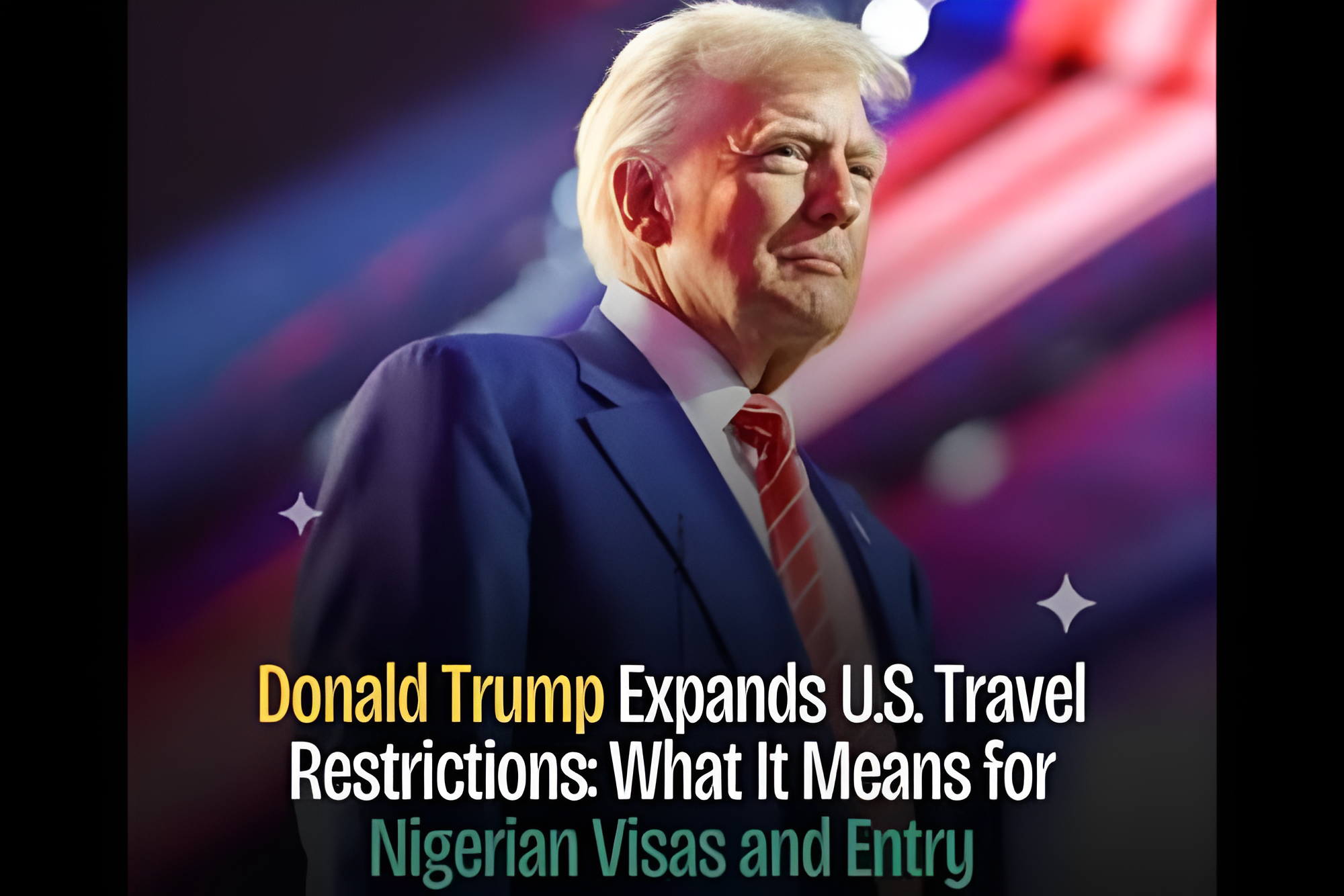
Courtesy: Donald Trump (X)
A federal judge has overturned the Trump administration policy that paused immigrant visa issuance for nationals of 75 countries, including Nigeria.
The ruling came Friday from US District Judge Jeannette Vargas in Manhattan. She found that the State Department policy exceeded Secretary of State Marco Rubio’s legal authority and conflicted with federal immigration law.
The decision matters to Nigerians with family based or employment based immigrant visa cases. It also affects applicants from countries across Africa, Asia, the Caribbean and other regions.
The State Department had paused immigrant visa issuance for the 75 countries on Jan. 21, 2026. Nigeria appeared on the department’s official list. The policy did not cover tourist or student visas. Instead, it focused on immigrant visas used by people seeking permanent residence in the United States.
Nigerians were among those affected
The State Department said the pause was part of a review of applicants it considered more likely to rely on public benefits in the United States. However, the court found a problem with treating nationality as the deciding factor.
Under federal immigration law, visa decisions require consideration of an applicant’s individual circumstances. Those factors can include finances, age, health, skills and family situation.
The court found that the policy instead required consular officers to refuse certain immigrant visa applications based on nationality. That approach removed the individual review required by law. That distinction is important for Nigerian applicants. A person’s nationality alone can no longer serve as the basis for the policy that the court struck down.
The State Department’s own records confirm that Nigeria was among the 75 countries covered by the January pause.
What the court decision means now
The ruling vacates the policy, but it does not mean every affected visa application will immediately receive approval. Applicants can still face other legal grounds for refusal. Existing cases may also require further processing as the government responds to the ruling.
The Trump administration can appeal. Judge Vargas gave both sides until Sept. 11 to propose how the remaining issues in the case should be handled. For Nigerians watching the US immigration system, the ruling marks an important change.
The January pause had placed nationality at the center of immigrant visa processing. Now, the court has rejected that approach as beyond the authority given to the secretary of state. The next question is how quickly the State Department responds and what happens to applications that were held or refused under the policy.
About the Author