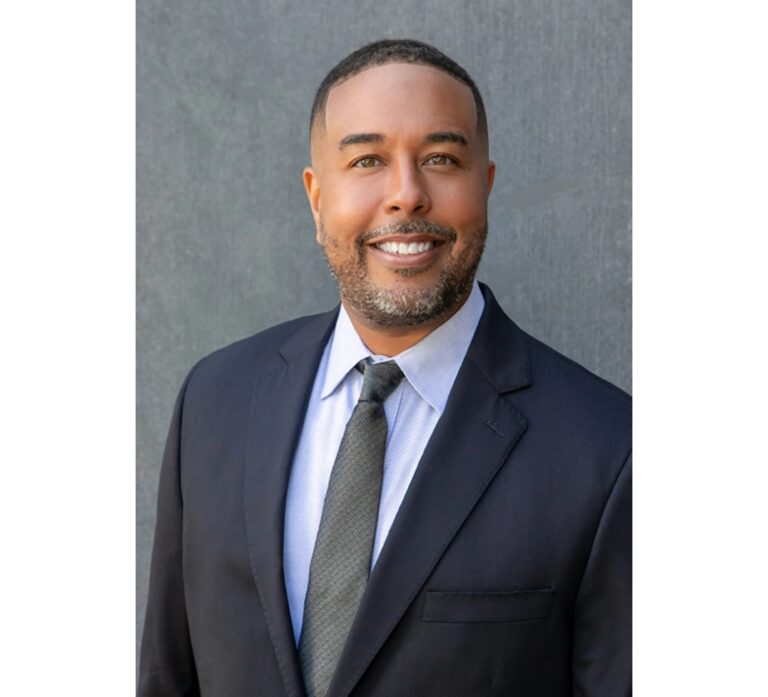
Photo credit: Jonathan Kyle
Jonathan Kyle did not plan to start a company. A layoff made the decision for him.
After years of navigating corporate tech environments and startups, Kyle found himself part of the wave of hundreds of thousands of technology workers who were let go in a single year. Instead of looking for the next job, he looked inward and launched Ten Sparrows, an AI company built around a principle that most of the industry overlooks: responsibility. He is building AI with the people who usually get left out in mind
Ten Sparrows is not chasing enterprise contracts or building the flashiest product. Its focus is on making artificial intelligence practical, secure, and genuinely accessible especially for the small businesses, nonprofits, churches, and underserved communities that the AI boom is currently passing by. Kyle, who has been programming since he was eight years old watching his mother write code on a family computer, believes the technology gap is not about capability. It is about literacy, governance, and who gets to own their own data.
He sat down to talk about the agentic workforce, the risks nobody is discussing, and why the real question is not what AI can do but what people can do now that it exists.
Tell us about your upbringing, how you got into tech, and what ultimately made you start your own company.
I am originally from Nashville, Tennessee, and I have pretty much always been into technology. It started with my mom way back in the 80s, with the old computers, the Commodore 64, the VIC-20. I am an old nerd and proud of it. I have been in technology my whole life.
Most recently, after going through a few corporate adventures and a couple of startups, I joined the cohort of hundreds of thousands of people who got laid off last year. Rather than waiting, I thought there was no better time to found my own company. That is how Ten Sparrows came to be.
What is the significance of the name Ten Sparrows?
The name actually came from my mother. She was looking out her back window and said, I see seven, eight, or nine sparrows, why not ten? She is an artist, and I loved it immediately. I asked if I could borrow the name, and she said yes.
Then I discovered that sparrows carry significant meaning in cultures all around the world. That aligned perfectly with what Ten Sparrows as a company is about: connecting with people, maintaining a very human aspect, and holding meanings that are right in front of us. For those of us who have been to church, sparrows tend to carry a lot of meaning there as well.
What gap in the technology landscape inspired you to launch Ten Sparrows, and what does it mean to make AI practical, secure, and accessible?
The gap is actually responsibility. We are in a land grab right now during the technology revolution. Companies are moving fast and being careless, and the communities that do not have access, resources, or knowledge are getting left further behind. Ten Sparrows is committed to sitting in this space and building artificial intelligence solutions that are fair and responsible.
When I think about responsibility, I think about human impact. Is the system transparent? Are the decisions being made visible to the people they affect? Is it safe? Is it private? That is a really big one. And is it accountable? At the end of the day, someone has to be responsible for the decisions being made. That person has to be human.
You describe this work as the future of modern work. What does that actually look like?
The future of work means that everybody needs the ability to amplify their voice, their productivity, and the way they operate. Think about the past 30 days. What is one recurring task you do at work that you would hand off to a trusted employee if you could? For a lot of people, it is email. Spending 30 minutes writing one email means there is something else you are not doing, something you would probably rather be doing.
AI can write that email in your voice, on your behalf. That is the entry point of what this transformation looks like. When you can get two and a half hours of your day back from a single task, that changes everything about what you can accomplish.
Where do you see the greatest opportunity for AI to expand human capability rather than replace it?
There is a maturity ladder people have to climb before they can use AI effectively. Access to artificial intelligence is nearly universal right now. The problem is that literacy around it is very low. That creates two camps. One group is fearful because they do not understand what AI can and cannot do. The other group is cavalier and just throws everything at it without caution.
The magic is somewhere in between. People try to build applications using AI-generated code without understanding engineering principles, and it works for a few weeks before falling apart or creating security vulnerabilities. The expertise required is still there. It is still evolving. The good news is that everybody is starting from basically zero, which means now is the best time to get on board and learn alongside everyone else.
We are moving beyond chatbots toward agents capable of completing complex tasks. What becomes possible, and what new risks must we confront?
This is what we call the agentic workforce. You express your intent to an AI agent that learns from you, and it goes out and spins up a whole network of other agents to complete tasks on your behalf. This does not have to be technical work. It could be as simple as the agent noticing you are running late, knowing your Thursday dinner preferences, and ordering food before you even think to ask.
The risks, however, are real. If an employer builds an AI agent around you and it becomes essentially your second brain, what happens when you leave the company? Who owns that intellectual property? Who is accountable for decisions the agent made on your behalf? What happens if someone is intentionally poisoning the AI that was learning from you, and now it is making bad decisions after you are gone? These are not hypothetical risks. Being aware of them is the first step to addressing them.
What decisions should we feel comfortable with AI making on our behalf, and which ones require human judgment?
All of it requires accountability. We can never defer our accountability to an artificial intelligence. At the end of the day, this is all about people. People built this technology, the work is being done for people, and a human must always remain in the loop because humans are always the ones being impacted.
Trust has to be built before anything is handed off, and that trust must be consistent, competent, compassionate, and communicative over time. Even then, you trust but verify. Always. Governance, observability, and continuous learning are what keep AI from going off the rails. Training an AI and then firing and forgetting is not a strategy. You review, adjust, and iterate, the same way you would with a junior employee.
Large corporations can adopt AI quickly. How do we ensure small businesses, nonprofits, churches, and underserved communities are not left out?
This is a very difficult question, but there are real answers. Many large companies offer AI subscriptions for ten, twenty, or a hundred dollars a month, which makes access affordable. The catch is that you often do not own your data and you are beholden to how the platform chooses to operate.
Ten Sparrows takes a different approach. We offer the ability to run AI locally, which means you own your data, nobody else sees it, and you are not dependent on a third party’s decisions. Beyond that, there are AI models that run on your phone, on your laptop, even on devices in your home. There are smaller models, open-source options, and tools that do not require expensive hardware. Cost avoidance is a real strategy, and being educated about these options is how communities protect themselves from being priced out of the technology that is reshaping the economy.
What questions should every leader ask before adopting an AI platform?
Start by asking yourself what you actually want to achieve. Do not adopt AI because of the hype. Think about what you want to measure, and what a successful outcome looks like for your specific situation. Without that clarity, it is very easy to spend money on AI for six months and realize you cannot articulate what changed.
Once you know your goal, identify one task you want to automate or improve and start there. You do not have to hire a team. You do not have to overhaul your operations overnight. Find one thing, let AI take two and a half hours of that task off your plate, and use those hours for the work that actually moves your business forward. That is how you build from a foundation that works rather than chasing every new tool that comes out.
You believe the most important question is not what AI can do but what people can do now that AI exists. What is your answer to that today?
AI lets you do things you have always wanted to do but could not get to. People have visions, creative ideas, outcomes they are trying to reach, but the path to get there felt too long or too technical. Now you can speak that vision into existence, get something back quickly, refine it, and move forward. You no longer have to spend years thrashing toward a goal. You get the outcome faster, iterate on it, and keep going.
That is what makes me optimistic. In a very positive and human way, AI gives people the ability to close the gap between what they can imagine and what they can actually build.
Visit tensparrows.com to learn more about Ten Sparrows and its AI solutions for small and medium businesses. Reach Jonathan Kyle directly at jonathan.kyle@10sparrows.com or connect with him on LinkedIn.
Source: According to Porsha, featuring Porsha Monique and Jonathan Kyle
About the Author