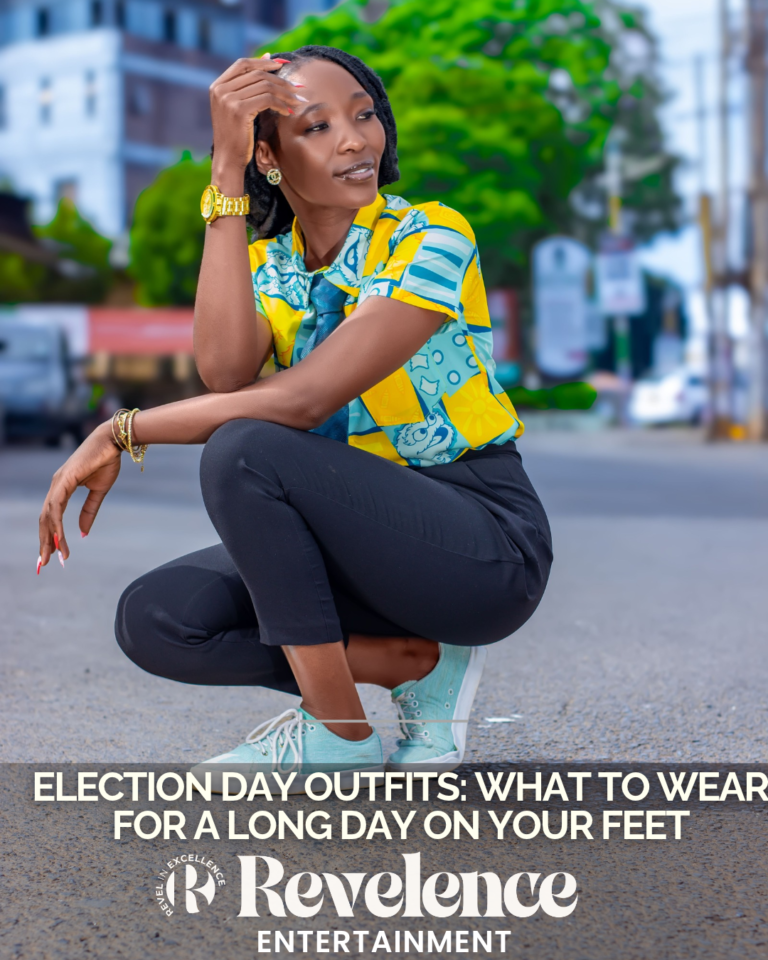
Photo credit: Unsplash
Election Day dressing is about comfort first. Voters wait in lines, poll workers stand for hours, and volunteers move between indoor and outdoor spaces. As a result, an outfit that looks good but pinches or overheats can wear you down fast.
This guide covers practical layers and footwear at a range of prices. It also includes free and low-cost options, so every budget has a path to a comfortable day.
Plan around the day before you pick the outfit
Start with a quick look at the forecast and your schedule. A short stop to vote calls for a different outfit than a full shift at a polling site. Therefore, ask yourself how long you will stand, how much time you will spend outdoors, and whether you can sit.
Next, think about rules at the polling place. Some states limit campaign clothing, buttons, or slogans near voting areas. For that reason, check with your state or local election office before you go, and use Vote.gov to find the right official contact.
Neutral clothing avoids the question entirely. A solid sweater or plain jacket works anywhere. In addition, it keeps your attention on the day instead of your outfit.
Build Election Day dressing around three simple layers
Layers let you adjust as temperatures change. First, choose a breathable base layer, such as a cotton or cotton-blend tee. Next, add a mid layer you can remove easily, such as a cardigan, zip-up fleece, or light sweater.
Finally, top the outfit with a jacket that suits the weather. A water-resistant shell can help on a rainy morning. Meanwhile, a warm coat with an easy zipper makes sense for a cold line outside.
Fabric choice matters as much as the pieces. Soft, stretchy materials move with you during long stretches of standing. In contrast, stiff or tight fabrics can feel restrictive by midday.
Fit deserves attention too. Clothing that is too snug can bind when you sit and stand repeatedly. Choose sizes that feel easy, and look for brands that offer a wide size range if that helps.
Choose footwear that supports hours of standing
Shoes are the most important part of Election Day dressing for anyone who will be upright for hours. Look for a cushioned sole, a roomy toe box, and a secure fit at the heel. Sneakers, supportive walking shoes, and comfortable flats with good soles are all solid choices.
Break in new shoes before the big day. Even a well-made pair can rub if it has never been worn. Wear them around the house or on short errands first.
Skip brand-new heels, stiff boots, and unsupportive flip-flops for a long shift. However, there is no single best shoe for everyone. Foot shape, job demands, and personal comfort all play a role.
Do not overlook socks and insoles
Socks can change how a shoe feels. Moisture-wicking or cushioned styles may reduce rubbing, though results vary by person. Pack a spare pair in your bag if you expect a very long day.
Insoles are another easy upgrade. Cushioned inserts can add comfort to a shoe that feels a little flat. Because feet differ, choose a style that fits your shoe without crowding it.
Blister prevention helps as well. Bandages or blister pads in your bag can save the day. Also, consider a small tube of foot balm if your skin tends to dry out.
Find Election Day dressing options at every price point
Comfort does not have to cost a lot. Prices vary by brand, region, and sales, so treat the ranges below as general guides. Start with what you already own, since a favorite pair of broken-in sneakers and a familiar sweater cost nothing.
On a tight budget, many people spend under about $25 per item. Basic tees, simple cardigans, and a pair of cushioned socks often fit in that range. Secondhand and thrift stores can also turn up sturdy jackets and sweaters for a few dollars.
For a midrange budget, roughly $25 to $75 per piece, options expand. You may find a fleece layer, a water-resistant jacket, or a pair of walking shoes on sale. In addition, brand-name insoles often fall in this range.
For those who want to invest, $75 and up can buy a well-made coat or premium walking shoes. These items may last for many seasons, so cost per wear can drop over time. Still, a higher price does not guarantee a better fit, so try pieces on when you can.
Pack a small bag that keeps your hands free
A smart bag completes the outfit. A cross-body bag or small backpack keeps your hands free for forms, phones, and coffee. Choose one with a secure zipper so nothing falls out in a crowd.
Next, think about what belongs inside. Carry your ID if your state requires it, along with a water bottle, a snack, and a phone charger. Tissues, hand sanitizer, and a compact umbrella are useful extras.
Bring a light scarf or extra layer as well. Polling places can run warm or chilly depending on the building. Because conditions change, flexibility is the real goal.
Final thoughts on Election Day dressing
Election Day dressing works best when it prioritizes comfort, flexibility, and fit. Build three easy layers, choose supportive shoes, and add small extras like spare socks. Above all, work within your budget and your closet, because the best outfit is the one that lets you focus on the day.
The American Podiatric Medical Association offers guidance on choosing shoes that fit well. Its advice is a useful reference if you have foot pain or a medical condition. In that case, a podiatrist can give advice tailored to you.
About the Author