

Venus Williams’ emotional milestone ends in 3-set setback
Courtesy; Austrialian open
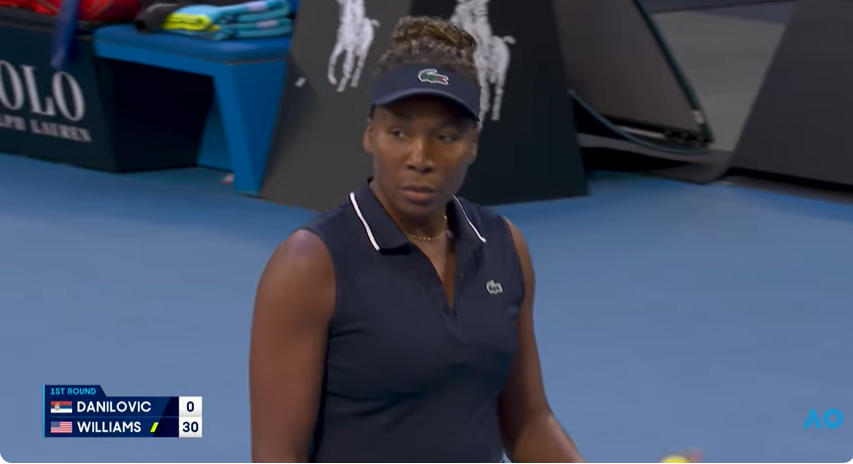
At 45, Venus Williams returned to one of tennis’ biggest stages and delivered a moment that blended history, resilience and raw competition. Her latest appearance at the Australian Open marked a significant milestone in the sport, even though the night ultimately ended in a narrow three-set loss that reflected both her enduring skill and the physical challenges of elite-level tennis.
Williams, a seven-time Grand Slam singles champion and former world No. 1, entered the tournament on a wildcard and immediately set a new benchmark. She became the oldest woman to compete in the singles draw at the Australian Open during the Open Era, surpassing the previous mark held by Japan’s Kimiko Date, who last appeared at age 44 in 2015. The achievement alone underscored Williams’ rare longevity in a sport that continues to skew younger with each generation.
A historic return to Melbourne
Williams first played at the Australian Open in 1998 as a teenager, long before many of today’s competitors were born. Nearly three decades later, she walked back onto the Melbourne courts with the same powerful serve and unmistakable presence that defined her career. The crowd responded warmly, offering sustained applause that reflected her influence on the game and her status as one of its most recognizable figures.
The opening set showed flashes of why Williams has remained a compelling competitor. She held her ground during tight exchanges and pushed the match into a tiebreak, where her experience proved valuable. The set went her way, setting the tone for a contest that felt anything but routine for a first-round matchup.
Momentum shifts in a demanding match
As the match progressed, the physical demands of a three-set battle became clearer. Olga Danilovic, ranked 69th in the world, adjusted her strategy in the second set and increased the tempo. The shift paid off as the set moved quickly, forcing a deciding third frame.
Williams regained control early in the final set and built a commanding lead, putting herself within reach of her first Grand Slam singles victory since Wimbledon in 2021. The moment carried added weight given her limited match play over the past year and the questions surrounding her competitive rhythm. However, momentum swung again as Danilovic found consistency, stringing together games and ultimately closing out the match by winning six straight games to seal the victory.
1. A record-setting appearance
The most enduring takeaway from the match may be the record itself. Williams’ appearance redefined expectations for age and longevity in women’s tennis. By stepping onto the court at 45, she demonstrated that elite competition remains possible well beyond traditional career timelines.
2. A reminder of elite-level demands
The match also highlighted the fine margins that define Grand Slam tennis. Williams showed she can still compete with ranked opponents, yet the physical and mental strain of sustaining that level across three sets remains a challenge, particularly with limited recent match play.
3. What comes next for Williams
Despite the loss, Williams’ Australian Open run is not over. She is set to continue competing in the women’s doubles event alongside Ekaterina Alexandrova, offering another opportunity to showcase her experience and court awareness. The singles match also adds to a recent stretch that includes competitive performances at both the U.S. Open and Australian Open, even if the results have not tipped in her favor.
Williams returned to tour action in July 2025 after more than a year away, earning a win at the Washington Open before facing a string of close defeats. Those outings suggest progress, even as consistency remains elusive.
As the Australian Open continues, Williams’ latest appearance will be remembered less for the final score and more for the broader statement it made. Her presence reinforced her lasting impact on tennis and her willingness to challenge expectations, regardless of outcome.
Source: BBC Sport
About the Author

Praise Swint
Wpseo_editor
Praise Swint is a contributor at Revelence, covering stories across news, entertainment, and culture.





1 thought on “Venus Williams’ emotional milestone ends in 3-set setback”