Courtesy:Azzi Fudd
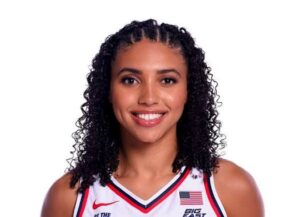
The 2026 WNBA Draft delivered a defining moment for the league’s new era as Azzi Fudd was selected No. 1 overall by the Dallas Wings, marking a franchise-shaping decision that immediately reshaped expectations for the upcoming season.
Fudd, formerly of the UConn Huskies, enters the league with heightened anticipation after being reunited with former teammate Paige Bueckers, setting up one of the most closely watched rookie connections in recent WNBA history.
The selection also signals a dramatic financial shift in the league, as the new collective bargaining agreement continues to transform player compensation and team-building strategies.
A historic payday reshapes expectations
Fudd’s selection at No. 1 comes with a reported rookie salary of $500,000, a figure that reflects the league’s rapidly changing financial landscape. The updated CBA has significantly increased the salary cap and minimum rookie earnings, positioning incoming stars to earn substantially more than previous draft classes.
By comparison, last year’s top pick earned under $80,000, highlighting the scale of the new agreement’s impact. The shift has also introduced million-dollar contract possibilities for top-tier veterans, signaling a new economic era for the WNBA.
League insiders view the change as a turning point in how talent is valued, especially as rising viewership and commercial interest continue to expand the league’s global profile.
Rival prospects and a deeper draft class
While Fudd claimed the top spot, the draft class featured several high-profile names expected to shape the league’s future.
Olivia Miles was selected second overall by the Minnesota Lynx, entering the league as one of Fudd’s strongest competitors for the top pick. Her selection continues the Lynx’s push to retool around young, versatile guards.
Further down the board, international prospect Awa Fam Thiam joined the Seattle Storm, while standout collegiate talent Lauren Betts landed with the Washington Mystics. The early picks underscored the depth of the class, with multiple programs represented across the lottery selections.
The first round also saw record-breaking representation from UCLA, which surpassed previous school draft records for early selections, signaling a broader distribution of elite talent across college programs.
Major names, major movement across the league
The draft was also defined by notable trades and shifting team strategies. LSU standout Flau’jae Johnson was selected eighth overall before being moved in a draft-night trade, reflecting the increasing value placed on roster flexibility and future assets.
Several franchises used the draft to accelerate rebuilds, while others focused on adding complementary talent to already competitive cores. The movement highlighted a league increasingly shaped by long-term planning under the new salary structure.
As teams adjust to the expanded cap environment, front offices are now able to pursue more aggressive roster construction, a shift that could redefine competitive balance over the next several seasons.
A new era for the WNBA begins
The selection of Fudd at No. 1 symbolizes more than just a draft outcome. It reflects a league entering a new phase of visibility, financial growth and competitive intensity.
With young stars like Fudd and Bueckers now poised to enter the league together, attention is expected to follow their development closely. Their shared history adds another layer of narrative intrigue as Dallas prepares for a season built around emerging talent.
As the 2026 season approaches, the combination of rising salaries, deeper talent pools and increased media attention suggests the WNBA is entering one of its most transformative periods yet.
Source: Fox News
About the Author