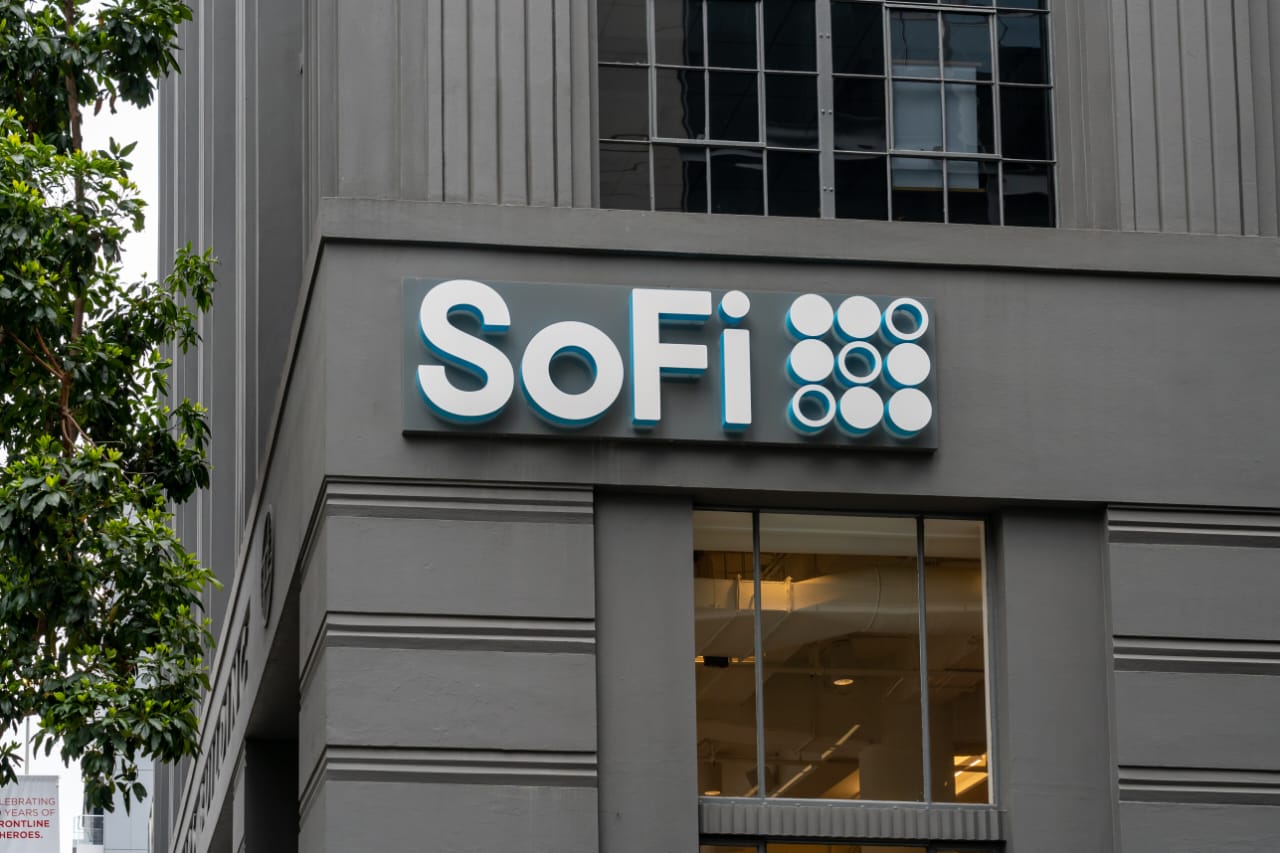
SOFI Q1 2026 earnings came in ahead of expectations on April 29, 2026. SoFi Technologies delivered record net revenue of $1.1 billion
for the quarter. That figure is a 43 percent increase from the same period last year. Net income reached $166.7 million. Moreover,
adjusted EBITDA rose 62 percent to $339.9 million, reflecting a 31 percent EBITDA margin. The results beat analyst estimates, which
called for revenue of roughly $1.05 billion and earnings per share of $0.12. Together, the numbers mark the company’s most profitable
quarter to date.
Record loan originations and fee-based revenue drive the quarter
Two factors powered SoFi’s quarter above the rest.
Loan originations hit an all-time high
First, loan originations reached $12.2 billion in Q1. That is a new company record across personal, student, and home loan products.
Additionally, lending contribution profit jumped 60 percent to $382.4 million. The growth shows that SoFi’s core lending engine is
gaining speed rather than slowing down.
Fee-based revenue continues to shift the business model
Second, fee-based revenue climbed to $386.8 million, up 23 percent year over year. That matters because fee income does not rely on
interest rates the way traditional lending does. As a result, SoFi’s revenue mix is becoming more stable. The Financial Services and
Technology Platform segments together added $503.6 million of net revenue, up 24 percent. Furthermore, total deposits reached
$40.2 billion and total members grew 35 percent year over year to 14.7 million. Credit quality also held up, with total annualized net
charge-offs at 2.04 percent.
SOFI Q1 2026 earnings spark raised FY 2026 guidance outlook
Following the strong Q1 result, SoFi raised and detailed its full-year 2026 outlook. Management now targets adjusted net revenue of
$4.655 billion, implying about 30 percent annual growth. The company also set adjusted EBITDA guidance of $1.6 billion, equal to a
34 percent margin. Adjusted net income is expected to reach $825 million, and adjusted EPS guidance stands at $0.60 per share.
Analysts had expected consensus full-year EPS of $0.59, so the guidance comes in slightly above the Street. For Q2 2026 specifically,
management targets roughly 30 percent adjusted net revenue growth and a 30 percent adjusted EBITDA margin. Notably, the
company did not provide a specific Q2 EPS figure, which adds some near-term uncertainty for investors building models.
What analysts and institutional investors think about SOFI right now
Wall Street remains divided on SoFi despite the strong quarter. Among the 20 analysts covering the stock, seven carry a Buy rating, ten
have a Hold rating, and three rate it a Sell. The consensus price target sits at $24.79, well above the stock’s April 29 opening price of
$18.36.
Recently, Needham & Company cut its target from $36 to $33 but kept a Buy rating. JPMorgan Chase upgraded the stock from Neutral
to Overweight with a $31 target. By contrast, Keefe, Bruyette & Woods reduced its target to $17 and kept an Underperform rating.
Overall, the consensus rating remains a Hold.
On the institutional side, several large investors added to their positions in the fourth quarter of 2025. Morgan Stanley raised its stake
by 33.6 percent to 13.3 million shares. Marshall Wace nearly quintupled its position, lifting it by 372.9 percent. State Street also added
6.7 percent more shares. However, insider selling has been notable. In the last three months, insiders sold 218,422 shares worth
roughly $4.1 million while purchasing just 38,900 shares worth $705,398. Insiders currently own 2.60 percent of the company.
Competitive pressure and risks remain on the horizon
The strong quarter does not remove all concern. Competition is growing fast. Elon Musk’s X Money platform has launched with high
savings rates and cash-back rewards. That could pull deposit balances away from SoFi’s banking products. Furthermore, rival fintech
Mercury recently secured a conditional OCC charter and hired a former SoFi executive to lead its proposed bank. That move signals
that the talent and regulatory competition is intensifying.
Still, SoFi’s record Q1 results and raised guidance suggest the company is executing well in a difficult environment. For investors who want to understand how SoFi compares to peers like LendingClub, Robinhood, and Chime.
Source: MarketBeat, April 29, 2026. Additional data via SoFi Technologies Q1 2026 8-K filing with the SEC
About the Author