Photo credit: LivweNOW from FOX
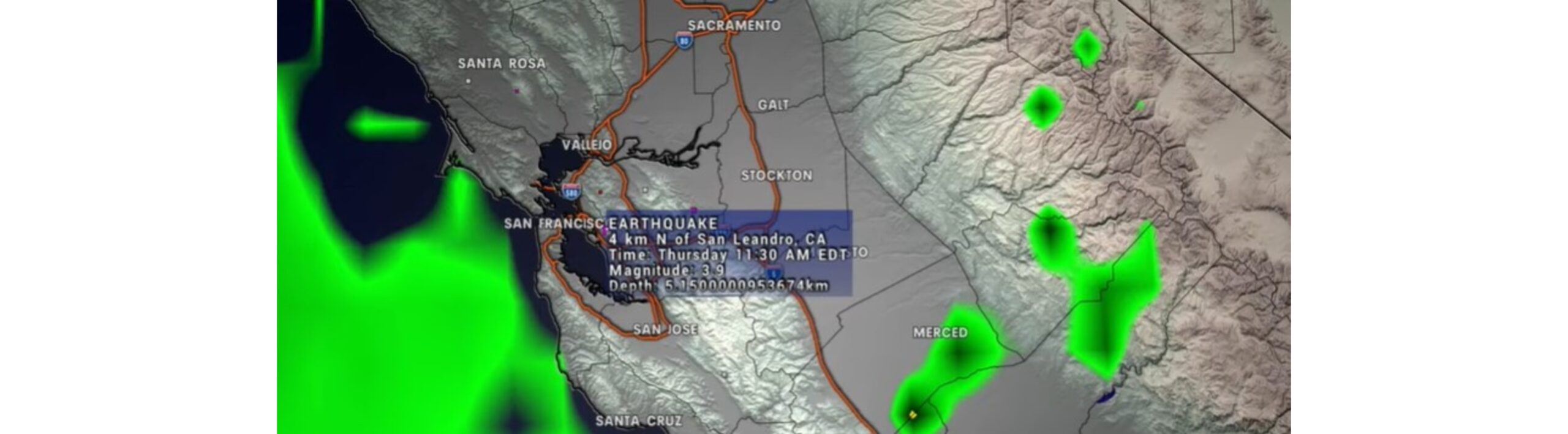
A 3.8-magnitude earthquake shook the San Francisco Bay Area on Thursday morning, sending residents scrambling as the region experienced a strong jolt.
The San Francisco Bay Area earthquake struck at about 8:30 a.m. Pacific time, according to the United States Geological Survey. The agency initially reported the earthquake as having a magnitude of 4.1 before revising the figure to 3.8.
The quake occurred about 2 miles north of San Leandro, California.
San Francisco Bay Area earthquake disrupts commute
The earthquake caused temporary disruptions during the busy morning commute.
BART, the Bay Area’s regional transit system, briefly held trains after the quake. The agency then operated trains at reduced speeds while workers inspected the tracks for potential damage.
No problems were detected during the inspections.
The earthquake was felt across parts of the Bay Area, including Oakland, which is located close to the reported epicenter.
Oakland residents feel the earthquake
People living near the epicenter described feeling a sudden and powerful jolt.
Carla Marinucci, a political analyst and longtime reporter who lives in Oakland, said she was drinking tea when she felt the shaking.
She compared the experience to a truck hitting her house. Neighbors quickly began texting one another after feeling the earthquake.
The shaking also reminded residents of the potential threat posed by the Hayward Fault.
California residents living near active faults are accustomed to preparing for earthquakes. However, even smaller events can cause concern because of the possibility of a larger earthquake.
Aftershocks follow the San Francisco Bay Area earthquake
Several aftershocks were detected following the initial earthquake.
Aftershocks typically occur when a fault adjusts after the initial movement. They can continue for days, weeks or even longer after an earthquake.
Scientists also warn that aftershocks can sometimes reach the same magnitude as the original earthquake or become larger. These events can create additional risks in areas where buildings or infrastructure have already suffered damage.
The USGS may also revise earthquake data as scientists analyze additional information.
What caused the Bay Area earthquake?
The San Francisco Bay Area sits in one of the most seismically active regions in the United States.
The Hayward Fault runs through the East Bay and is part of the broader network of faults responsible for earthquakes throughout Northern California.
Thursday’s earthquake was relatively small compared with major earthquakes that have struck California. Still, the event served as another reminder that residents should remain prepared for future seismic activity.
For now, officials have reported no major damage from the 3.8-magnitude earthquake.
Source: The New York Times / United States Geological Survey
About the Author