Photo screenshot: x
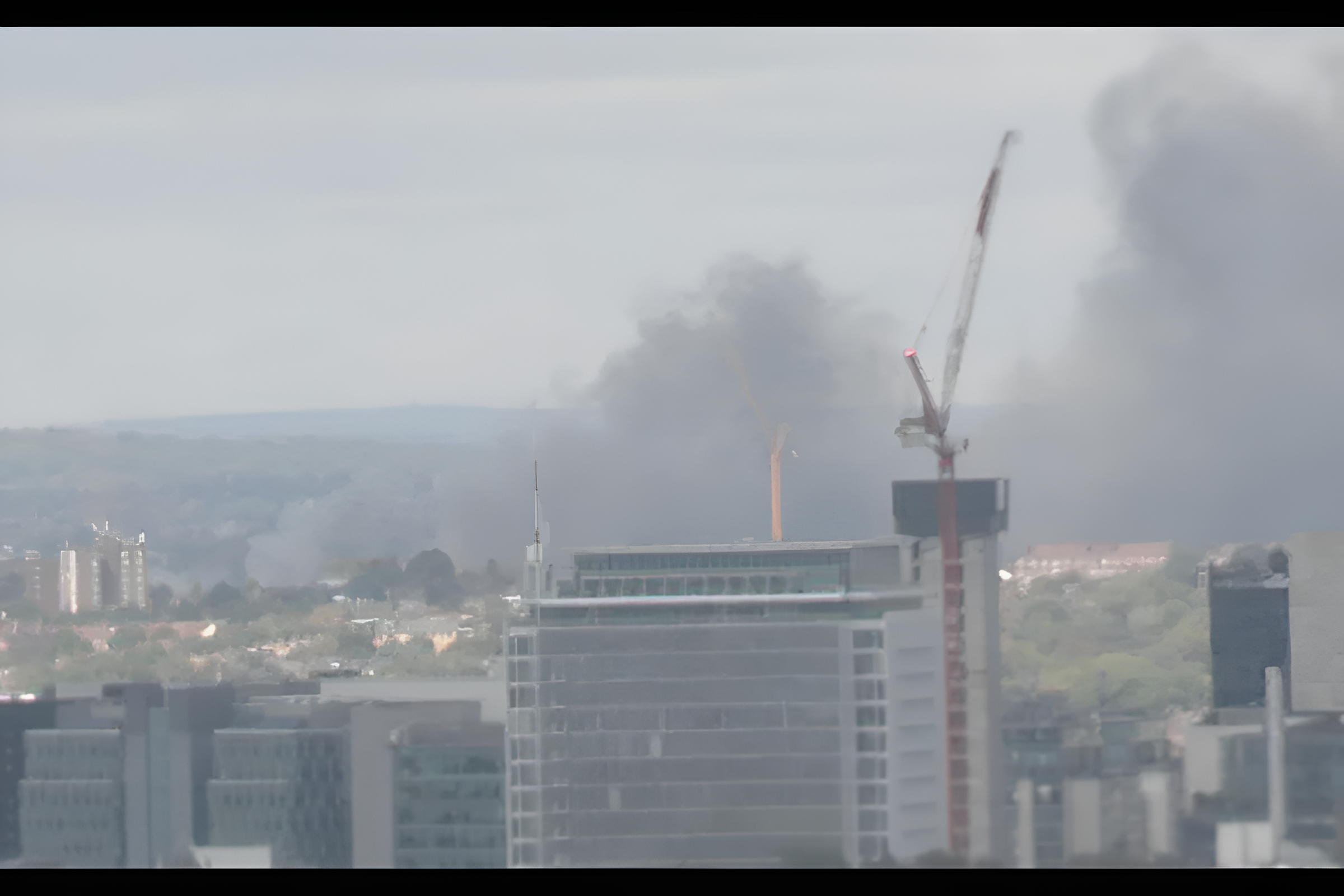
A huge blaze tore through a waste facility in Neasden, north-west London, today. It sent a plume of smoke into the sky. As a result, crews shut down Tube and rail lines near Wembley. So far, officials have not reported any injuries. However, the London Fire Brigade said the blaze would take the rest of the day to bring fully under control.
Travel across north-west London took the biggest hit. For instance, Transport for London suspended the Metropolitan line entirely. In addition, the operator partially closed the Jubilee line between Willesden Green and Wembley Park. Meanwhile, trains in and out of London Marylebone faced delays and cancellations.
What happened at the site
The brigade dispatched crews just after 11.30am to Hannah Close, an industrial estate in Neasden. There, they found a well developed blaze inside a waste transfer facility. In fact, an industrial unit roughly 100 meters by 150 meters was alight. The brigade sent 20 engines and about 125 personnel to the scene. Meanwhile, crews deployed drones and turntable ladders and fielded more than 90 calls about the incident. As a precaution, officials told nearby residents to keep doors and windows shut against the smoke.
London Energy runs the site as part of the North London Waste Authority, which handles waste for seven boroughs. According to the company, all of its staff were safe and no one was hurt. Meanwhile, workers evacuated a nearby Amazon facility as a precaution, though the blaze did not directly affect it. So far, investigators do not yet know what caused the blaze.
Why waste sites keep catching blazes
This was not an isolated event. In fact, a blaze at a waste centre in Bermondsey disrupted London Overground trains just nine days earlier. Overall, incidents like these have grown steadily more common across the country.
Lithium ion batteries drive much of that trend. Specifically, vapes, phones, toothbrushes and toys often carry these batteries, and people routinely toss them into general rubbish and recycling. When a bin lorry or sorting facility crushes or punctures one, it can ignite and set nearby dry waste alight. According to the waste industry’s trade body, UK sites recorded 1,518 such incidents in the year to March 2026. Of those, it tied at least 541 directly to lithium batteries, with the true number likely higher. As a result, the group estimates these incidents now cost the country close to 1 billion pounds a year.
Investigators have not established what caused the Neasden blaze, and officials have not linked it to batteries. Even so, the rise of these so called zombie batteries helps explain the pattern. Indeed, a shed full of mixed waste can turn into a day long, transport halting event. That happens more often than people expect. Because of this, brigade officials continue to urge people to recycle batteries separately rather than bin them.
What comes next for commuters
Waste site blazes tend to be stubborn. Typically, the material burns hot and slow. Moreover, batteries mixed inside can cause it to reignite again and again. That is why crews are treating this as a protracted incident. For Londoners, that means smoke drifting toward the city centre and a cluster of suspended lines. Consequently, officials expect disruption to stretch into Friday evening’s rush hour. All of this comes as the area heads into a busy weekend of events around Wembley.
Meanwhile, Transport for London said it is working with the brigade to determine what can run safely. As a result, line closures may ease as the blaze comes under control. The brigade expects crews to remain on scene for hours. Overall, both the travel picture and the investigation into the cause may continue to shift through the day.
More in News
About the Author