Photo credit: Facebook/WXII 12 NEWS
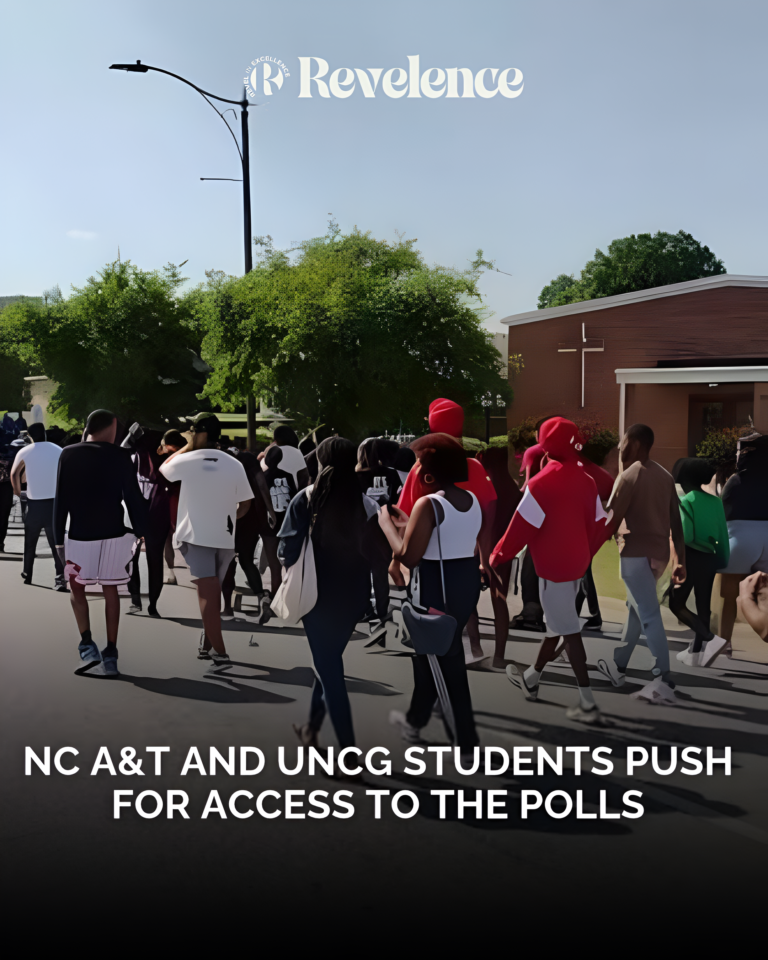
More than 100 students from North Carolina A&T State University and UNC Greensboro marched to a polling place on Oct. 15 after election officials rejected requests to restore early voting sites on their campuses.
The march marked the first day of early voting in North Carolina. Students from Bennett College also joined the broader demonstration, according to reports. The walk highlighted students’ determination to cast ballots despite the longer trip to their nearest early voting location.
At North Carolina A&T, students gathered in hot weather before heading toward Union Square, the closest early voting site. The trip took about 45 minutes. Along the way, some faced blocked sidewalks and areas with missing pavement, forcing pedestrians into the street.
Students push forward to cast their ballots
The Guilford County Board of Elections denied requests for on-campus early voting locations at both North Carolina A&T and UNC Greensboro. The schools had offered campus polling sites during the 2024 general election, but not during previous midterm elections.
The decisions drew concern from students and voting advocates, who argued that a longer trip could create another obstacle for college voters. North Carolina A&T is the largest four-year historically Black college in the country.
At the polling site, first-year UNC Greensboro student Dasiyah Weiters joined the line after finishing class. She wanted to take part in the election and make sure her voice counted.
The line stretched outside the building as students arrived to vote. Student organizer Xavier Jones said the turnout showed that students would continue organizing even when polling places moved farther from campus.
Elected officials encourage student turnout
Several North Carolina political leaders joined the demonstration and urged students to vote and encourage their peers to do the same. They included state Supreme Court candidate Anita Earls, state Sen. Gladys Robinson and state House Minority Leader Robert Reives.
Their message focused on participation and the importance of helping other students reach the polls. Reives urged those who had already voted to bring along classmates who had not yet cast their ballots.
The march also brought renewed attention to the state’s decisions on campus voting access. The state Board of Elections voted 3-2 along party lines in January to deny North Carolina A&T’s request for an early voting site. The Republican-led board rejected the campus location again in August, according to the reports.
At the later hearing, Democratic board member Jeff Carmon questioned whether reducing polling options served any voter better.
Early voting continues through Oct. 31
North Carolina’s early voting period runs through Oct. 31. Voters will decide several closely watched races, including the U.S. Senate contest between former Gov. Roy Cooper, a Democrat, and Republican Michael Whatley.
For the students who marched, the long walk offered a visible show of commitment to voting. Their demonstration also placed campus access and the practical barriers facing student voters at the center of the election conversation.
About the Author