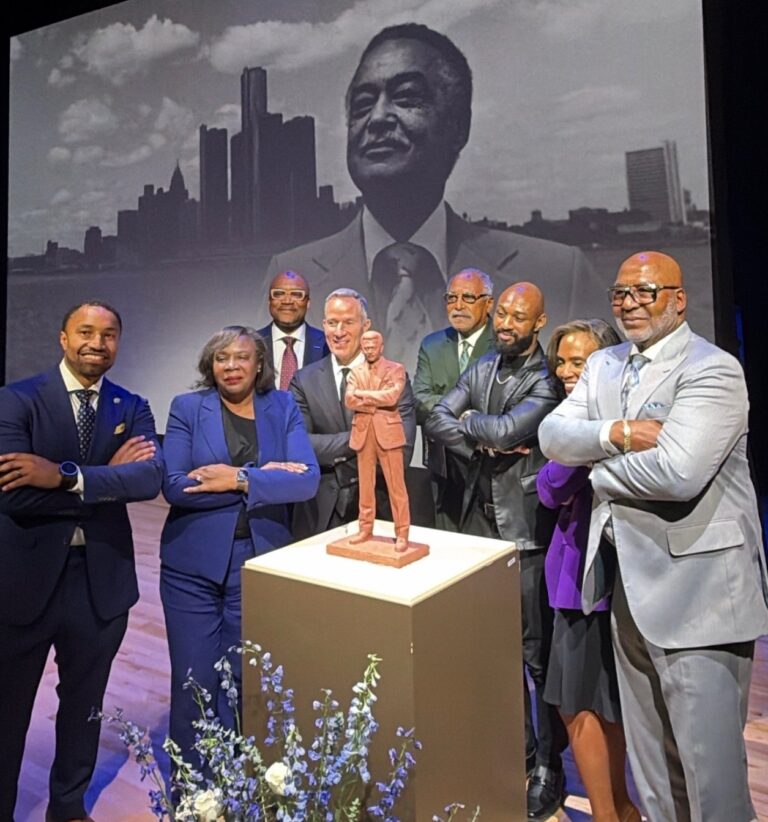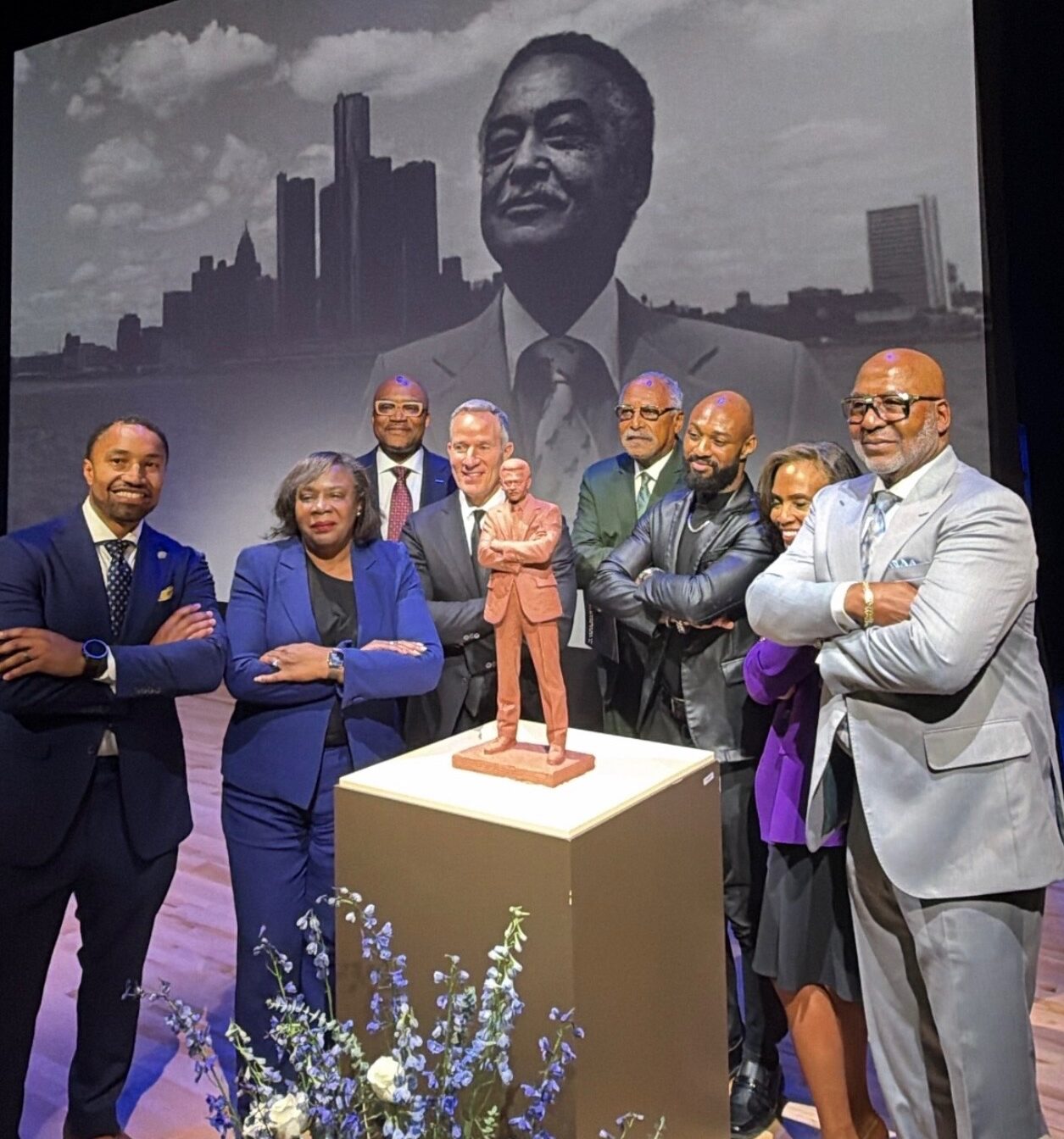
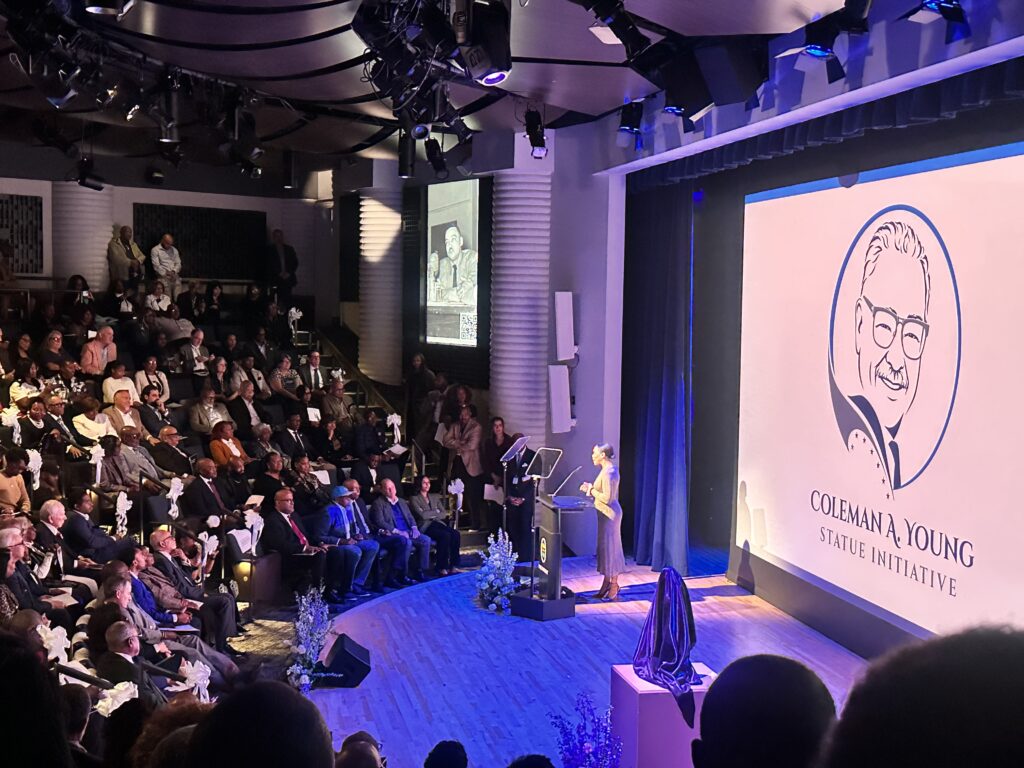
The Coleman A. Young Statue Initiative launch celebration at Detroit’s Charles H. Wright Museum of African American History on October 20, 2026.
An emotional evening at the Charles H. Wright Museum celebrated Detroit’s first Black mayor, with all six of his successors present and plans for two statues carrying his legacy forward.
By: Porsha Monique | Revelence
DETROIT- Before Coleman A. Young takes his place in the nation’s most enduring collection of state-selected leaders, Detroit gathered to affirm the place he already holds in its heart.
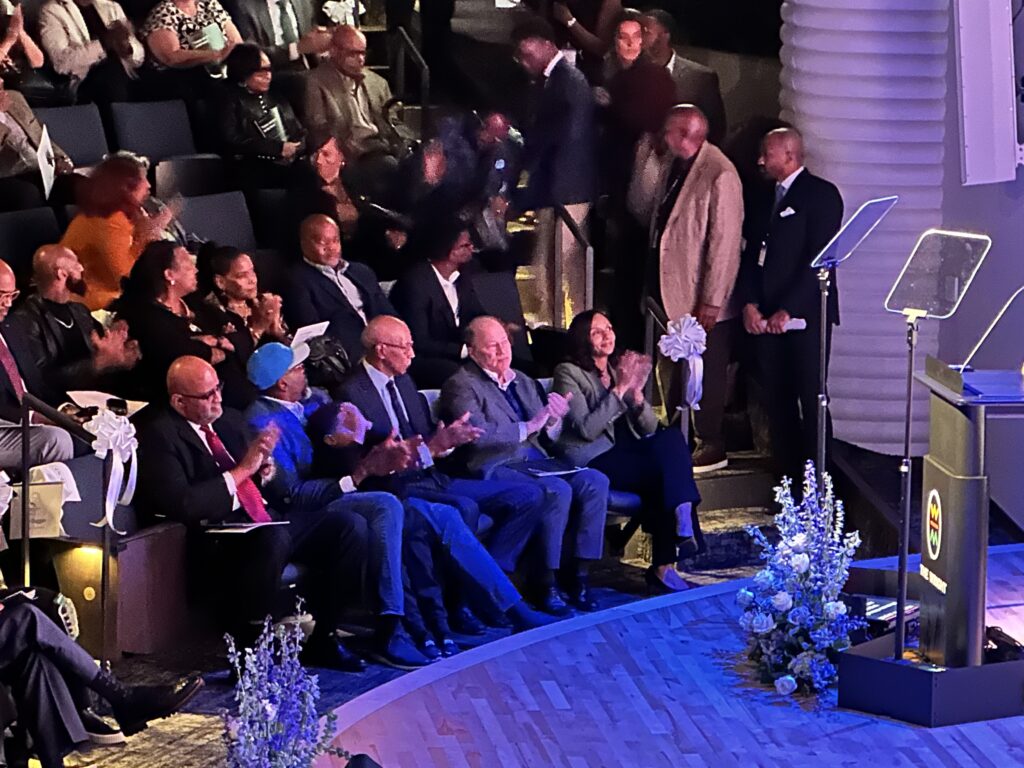
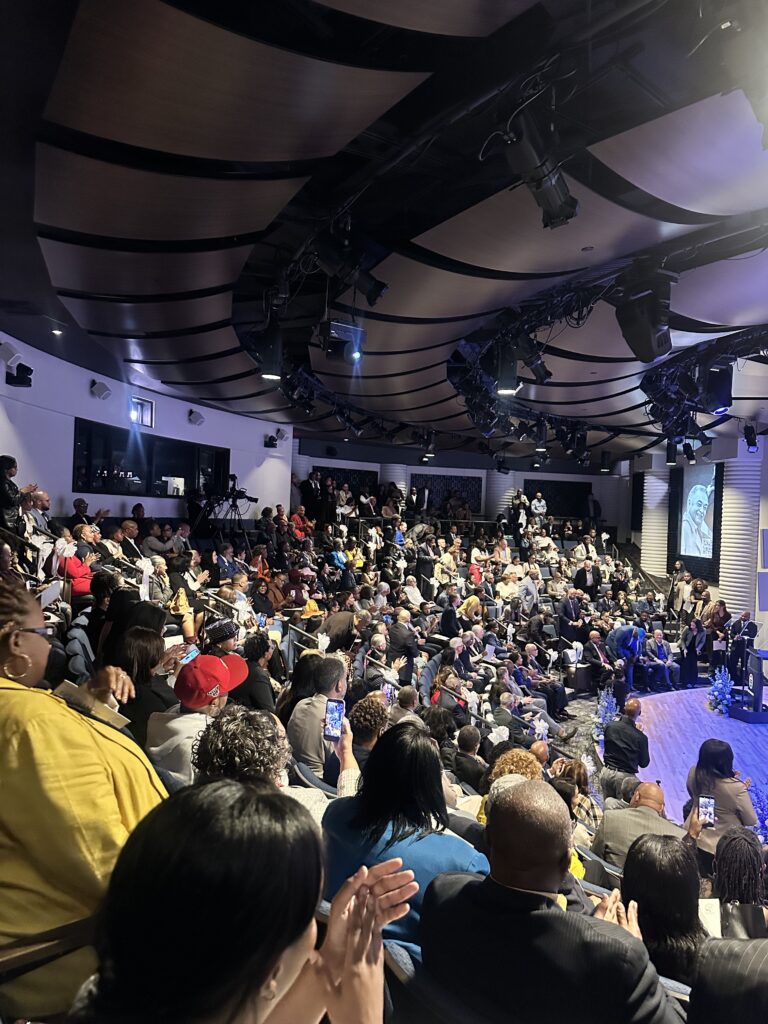
The theater at the Charles H. Wright Museum of African American History was filled to capacity on October 20 as dignitaries, community leaders and Detroiters assembled for the official launch celebration of the Coleman A. Young Statue Initiative. The evening honored a man whose influence remains woven into the city’s identity, and introduced the next chapter in how his story will be preserved.
For a city that knew his voice, his resolve and his fierce insistence on Detroit’s worth, the occasion carried the intimacy of a family tribute and the significance of a national milestone.
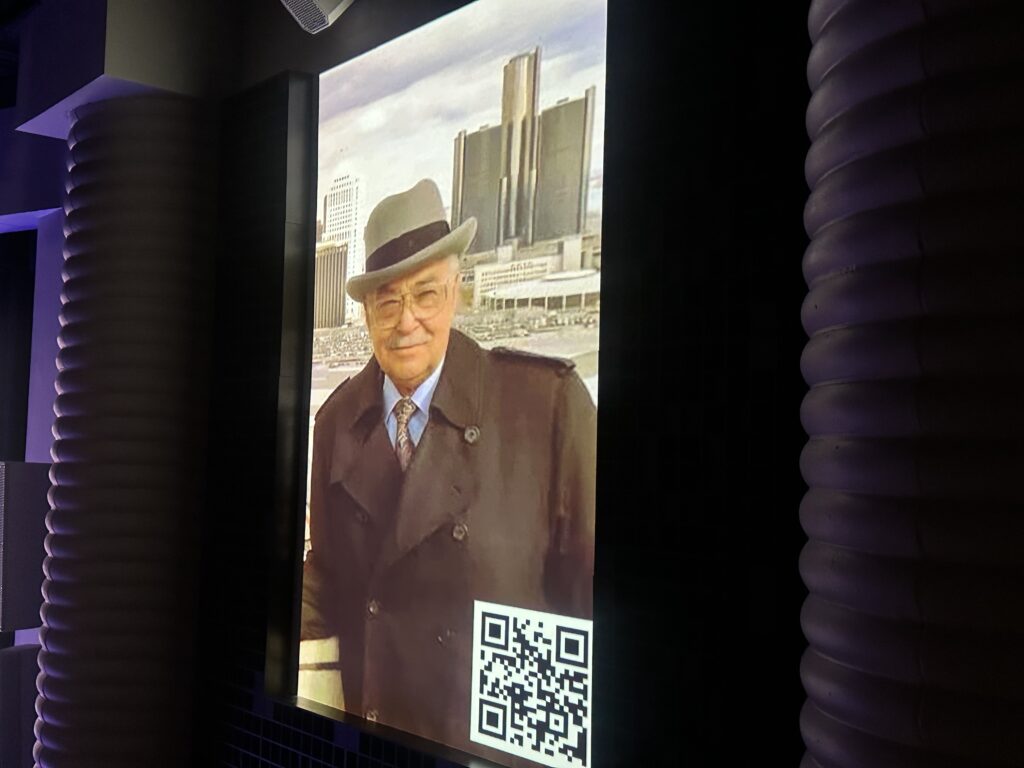
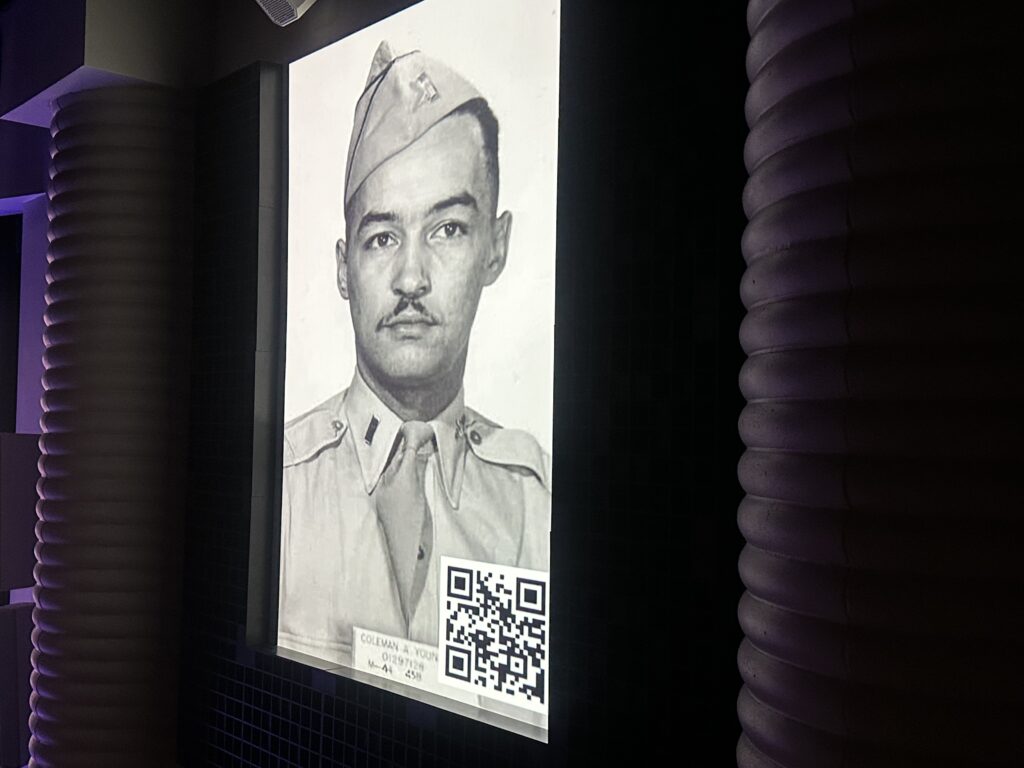
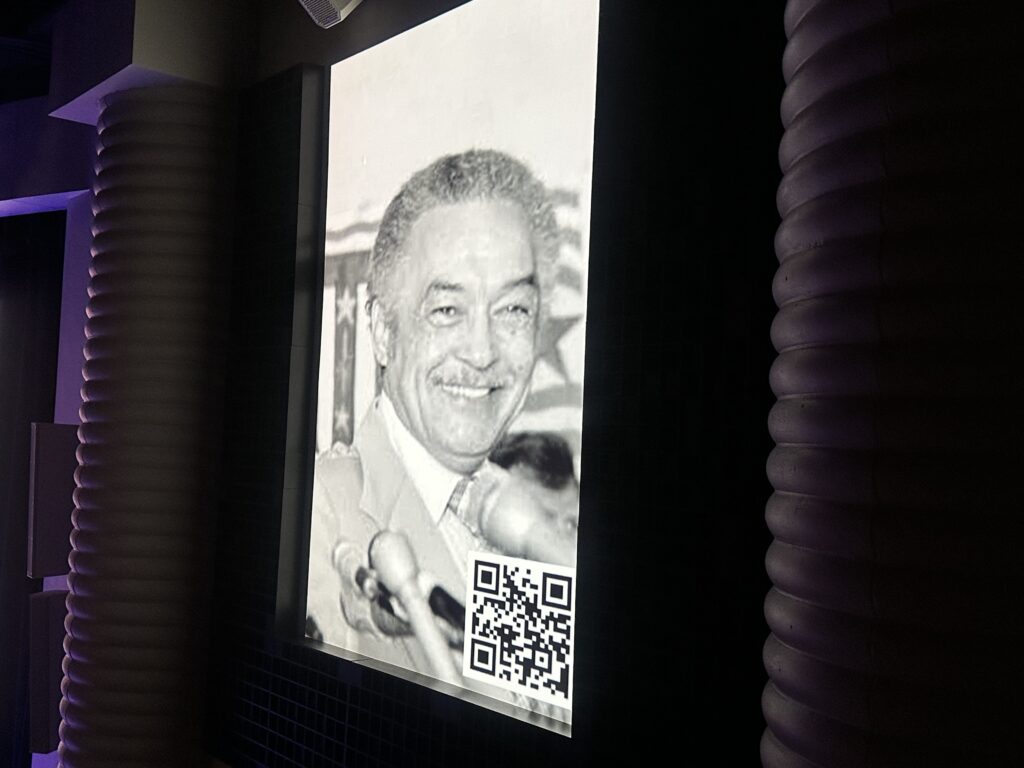
Young, Detroit’s first Black mayor and its longest-serving, led the city for five consecutive terms from 1974 to 1994. His public life encompassed military service as a Tuskegee Airman, labor and civil rights advocacy, and service in the Michigan Senate. The initiative seeks to bring that legacy to the U.S. Capitol’s National Statuary Hall Collection.
Six Successors, One Shared Tribute
Among the evening’s most striking expressions of Young’s enduring influence was the presence of every mayor who succeeded him: Dennis Archer, Kwame Kilpatrick, Kenneth Cockrel Jr., Dave Bing, Mike Duggan and current Mayor Mary Sheffield.
Together, the five former mayors and Sheffield represented more than three decades of Detroit leadership following Young’s tenure. Their attendance offered a powerful acknowledgment of the historic ground he broke.
Addressing the crowd, Sheffield spoke with pride about following in Young’s footsteps and the foundation his leadership created for those who came after him. Sheffield underscored that fact that ‘… his story belongs in our nation’s capital.”
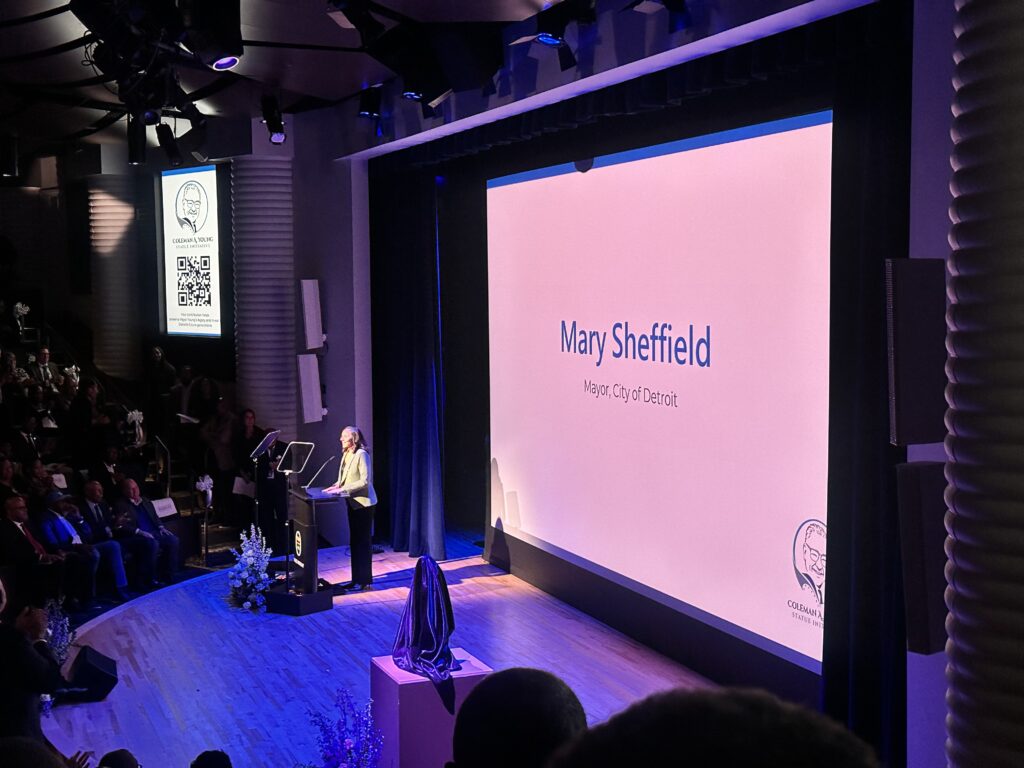
“Being Detroit’s first woman mayor in 324 years, I am proud to stand on his shoulders and I am proud to support this campaign to honor him in the National Statutory Hall Collection in the United States Capitol”, Sheffield began. “Nobody stood up for Detroit and fought for Detroit more than Mayor Young. He gave Detroiters a powerful sense of pride and belonging. He understood that our city’s future should be shaped by the people who call it home and he fought to assure that their voices were heard. His courage and audacity changed this city and what was possible for those who followed behind him,” she continued.
Her tribute connected Detroit’s first Black mayor to its first woman mayor, placing the evening’s celebration within a continuing story of possibility.
There was particular poignancy in hearing the city’s present leadership recognize how much of its opportunity had been shaped by the courage of an earlier generation.
A Son Carries the Torch
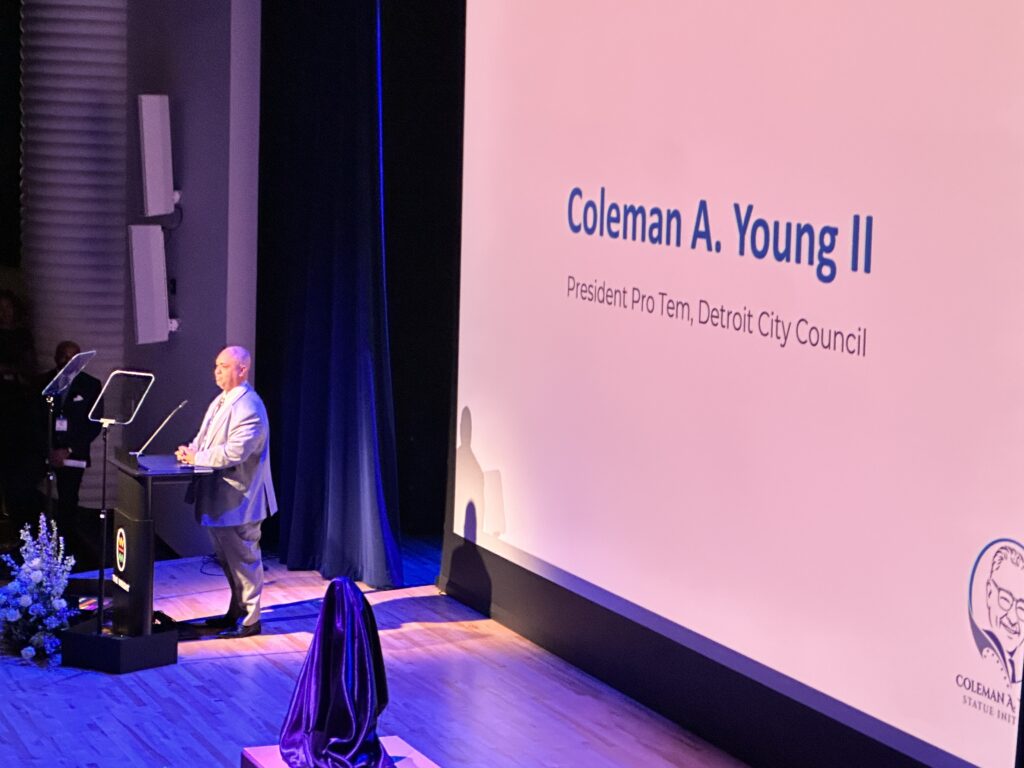
One of the evening’s most moving moments came as Coleman A. Young II recalled his father’s legacy.
The Detroit City Council president pro tem became emotional while reflecting on the man whose name he carries and the responsibility that accompanies it. His remarks brought a deeply personal dimension to a public celebration: behind the historic office and the forthcoming monuments was a father whose example continues to guide his son.
Young II spoke of carrying forward that torch through a commitment to righteousness, public service and the people of Detroit. His emotion underscored how closely family memory and civic history can be intertwined.
In that moment, the work of preserving Young’s legacy felt immediate. It lived in the choices of those still serving the city, as much as in the monuments being planned.
Two Statues, Two Places of Remembrance
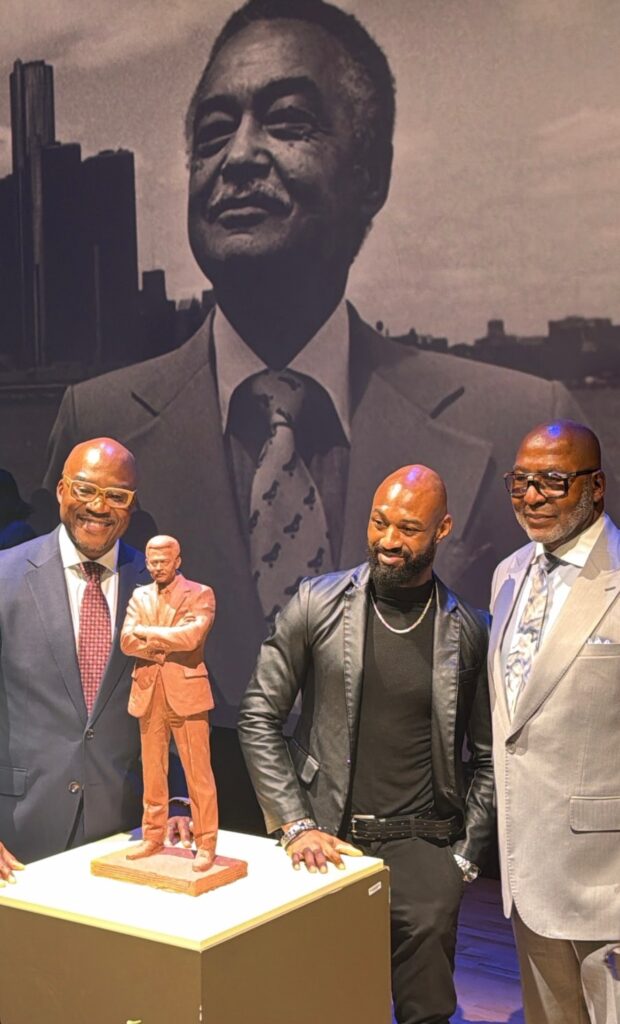
The evening also looked ahead to two distinct tributes: a statue intended for the U.S. Capitol’s National Statuary Hall Collection and a companion statue here in Detroit.
Detroit-based sculptor Austen Brantley unveiled a working model for the national monument. Michigan’s Legislature approved a resolution in 2022 selecting Young to replace Lewis Cass in the collection, advancing an effort to give Detroit’s pioneering mayor a permanent place in the nation’s telling of its history.
The local announcement ensured that Detroiters would have a place to encounter that legacy at home.
Bedrock CEO Jared Fleisher announced plans for a companion statue as part of the proposed riverfront civic space associated with the Renaissance Center redevelopment. Bedrock is commissioning that second monument.
Attendees also heard plans for a Coleman A. Young Park in Detroit, supported by Bedrock, where the local statue would stand. The prospect gave the evening a fitting sense of connection: one tribute would introduce Young to generations of visitors in Washington, while the other would keep his presence rooted in the city he served.
For Detroit, that connection matters. National recognition carries particular meaning when the community that shaped a leader, and was shaped by him, remains central to the remembrance.
A Legacy With Work Still to Do
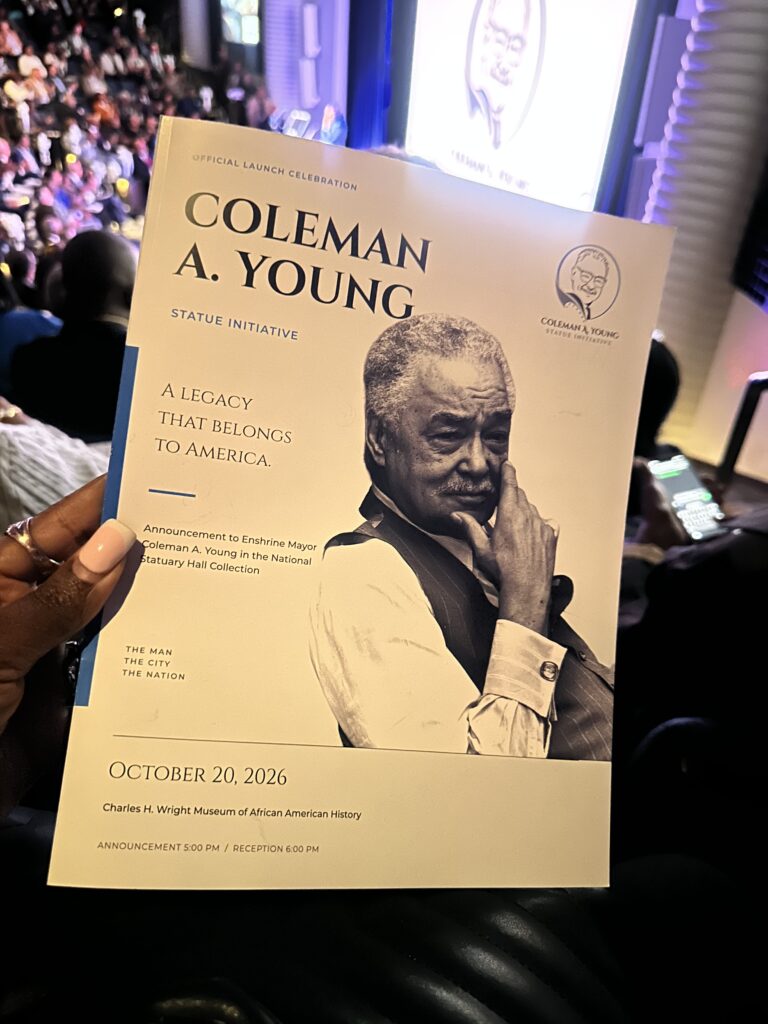
Throughout the program, Young’s story was presented as a continuing responsibility.
The Coleman A. Young Foundation’s event materials connected the statue initiative to its ongoing investment in young Detroiters through scholarships, leadership development and educational opportunities. This will also preserve his name by extending the opportunities he believed the city’s children deserved.
That connection gave the celebration its deeper purpose. A monument can preserve a likeness. The work of widening access, nurturing talent and preparing future leaders gives that likeness meaning.
Inside the packed Wright Museum theater, the evening moved between those two forms of remembrance: the enduring promise of bronze and the living responsibility of service.
Sheffield’s pride, Young II’s emotion and the gathering of all six successors made clear how far Coleman A. Young’s influence continues to reach.
Soon, his likeness is intended to stand in Washington and along Detroit’s riverfront. And on this historical evening, his legacy was already present, in the people who remembered, the leaders who followed and the city still carrying his story forward.
About the Author