A renewed warning from Donald Trump is drawing attention in Washington and beyond, as the White House signals a harder stance during a period of heightened global and domestic tension.
The latest development, highlighted in a political briefing by The Economist, points to an escalating tone in U.S. leadership as officials navigate ongoing geopolitical challenges and internal political pressures.
A new warning from the White House
President Trump delivered what observers describe as another ultimatum, reinforcing his administration’s readiness to act decisively. While specific policy details remain limited, the messaging reflects a pattern of firm, high-stakes communication aimed at both allies and adversaries.
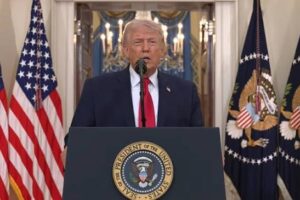
The announcement came during a press appearance at the White House, where Trump addressed reporters amid growing scrutiny over U.S. actions on the global stage.
Political pressure builds in Washington
The latest statement arrives at a time when political tensions in the United States are intensifying. Lawmakers across party lines are increasingly vocal about foreign policy decisions, particularly as conflicts abroad raise questions about long-term strategy.
Within Congress, some Republicans have reportedly expressed concern about the direction of U.S. involvement in overseas disputes, adding another layer of complexity to the administration’s position.
Global implications remain unclear
The ultimatum carries potential consequences beyond domestic politics. Analysts suggest that such rhetoric could influence diplomatic relationships and shape how other nations respond to U.S. policy moves.
With international tensions already running high, even subtle shifts in tone can have ripple effects across global markets and security dynamics.
A familiar strategy emerges
Observers note that the approach mirrors previous moments in Trump’s leadership style, where direct and forceful messaging has been used to assert leverage. This strategy often places pressure on counterparts while signaling resolve to domestic audiences.
While supporters view this as a sign of strength, critics argue it can increase uncertainty during already fragile situations.
What to watch next
Attention now turns to how other political leaders and global partners will respond. Whether the ultimatum leads to negotiation, escalation or a shift in policy remains uncertain.
As developments continue, the situation underscores the delicate balance between political messaging and real-world consequences in a rapidly evolving landscape.
Source: The Economist
About the Author

Praise Swint
Wpseo_editor
Praise Swint is a contributor at Revelence, covering stories across news, entertainment, and culture.