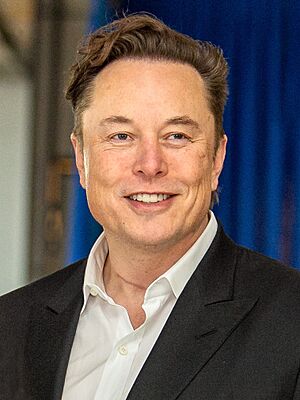
Courtesy:Elonmusk
Nvidia stock AI spending trends are accelerating and Elon Musk may have just added fresh fuel to the fire. During Tesla’s latest quarterly update, the company’s chief executive signaled a sharp increase in capital investment. The focus areas include AI training infrastructure, custom chip design, autonomous driving software, and robotics manufacturing. Taken together, those signals carry major implications well beyond Tesla itself.
Nvidia stock AI spending gets a boost from Tesla’s new direction
Tesla is no longer positioning itself purely as an electric vehicle company. Instead, it is evolving into an AI-driven technology platform. That shift, outlined clearly in Musk’s latest remarks, points directly toward rising demand for the kind of high-performance computing hardware that Nvidia dominates.
Importantly, Tesla is not looking to replace Nvidia entirely. The company uses a hybrid approach. It relies on in-house chips for efficiency and cost control, while continuing to use Nvidia GPUs for large-scale AI model training. That distinction matters. As Tesla scales its most ambitious projects, demand for Nvidia’s hardware is likely to grow alongside it.
2 major Tesla projects driving AI chip demand
Two products sit at the center of Tesla’s AI ambitions, and both have significant implications for the broader chip market.
- Optimus humanoid robot Tesla’s robot is designed to perform real-world tasks by learning from human behavior and video data. If it reaches scale, it could reshape industries including manufacturing, logistics, and home services.
- Robotaxi network Powered by Tesla’s Full Self-Driving software, this project aims to build a fully autonomous ride-hailing ecosystem from the ground up.
Training the AI systems behind both products requires enormous GPU computing power. That is precisely the segment where Nvidia holds its strongest competitive position.
The broader AI spending wave
Musk is far from alone in ramping up investment. Across the technology industry, companies are committing billions of dollars to AI infrastructure. Nvidia sits at the center of that trend. According to chief executive Jensen Huang, the company anticipates up to $1 trillion in AI-related demand through 2027. That projection is supported by Nvidia’s next-generation chip platforms, including its Blackwell architecture and the forthcoming Vera Rubin platform.
Those numbers reinforce what Musk’s comments implied: AI investment is not slowing down. Furthermore, they explain why analysts continue to hold bullish positions on Nvidia’s long-term outlook.
The risks investors should not overlook
Nevertheless, the picture is not without complications. Tesla’s strategy carries real execution risk. Regulatory approval for autonomous driving remains uncertain in many markets. Scaling robotics manufacturing is a formidable challenge. Competition in both AI and electric vehicles is intensifying. Additionally, Tesla’s current valuation already reflects high expectations, which means any delays in Musk’s plans could trigger sharp swings in the stock price.
Nvidia, meanwhile, continues to face questions about whether AI infrastructure spending is sustainable at its current pace. Even so, the company’s lead in AI training hardware gives it a durable advantage that few competitors are positioned to challenge in the near term.
What it means for investors
In practical terms, the two companies offer different risk profiles. Tesla represents high-reward potential tied directly to the success of breakthrough technology. Nvidia, by contrast, offers broader exposure to the AI boom with a more established market position across cloud computing, robotics, and automation.
Musk is building the infrastructure for an AI-driven future. Based on current momentum in Nvidia stock AI spending cycles, Nvidia appears to be supplying many of the tools that make it possible and neither story looks close to finished.
Source: NBSLA
About the Author