Courtesy:space
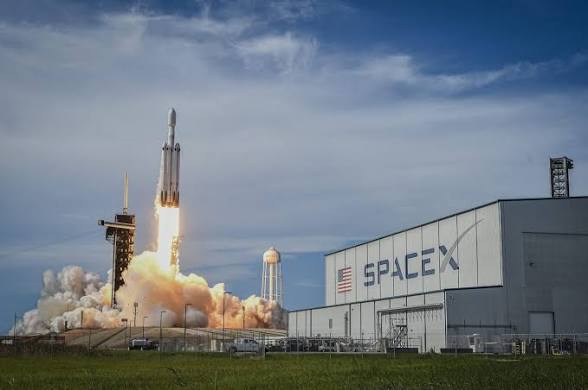
The SpaceX rocket launch is back on schedule after poor weather forced a last-minute delay earlier this week. SpaceX now plans to send its Falcon Heavy rocket into space following improved conditions at the launch site.
Originally set for Monday, the mission was scrubbed due to thick cloud cover. However, officials now say the outlook has significantly improved, clearing the way for a new attempt.
Why the SpaceX rocket launch was delayed
The SpaceX rocket launch was postponed unfavorable weather conditions near Kennedy Space Center. Specifically, thick clouds created safety concerns, leaving only a narrow window for liftoff.
Weather officials later raised the probability of favorable conditions to about 90%, giving the mission a strong chance of proceeding as planned.
What the Falcon Heavy mission will carry
This SpaceX rocket launch will deploy the ViaSat-3 F3 satellite into geosynchronous transfer orbit. The satellite is designed to expand high-speed internet access, particularly for airline passengers.
According to Viasat executives, the new satellite could significantly improve in-flight connectivity. In fact, future passengers may be able to stream high-quality content during flights, marking a major upgrade from earlier systems.
What makes this SpaceX rocket launch notable
The mission marks the 12th flight of SpaceX’s Falcon Heavy rocket, one of the most powerful launch vehicles currently in operation. The rocket first debuted in 2018 and continues to play a key role in heavy payload missions.
During this SpaceX rocket launch, the side boosters are expected to return to landing zones near the launch site. However, the central core booster will not be recovered and is expected to land in the Atlantic Ocean.
What happens after liftoff
Following the SpaceX rocket launch, the satellite is expected to deploy nearly five hours after liftoff. It will then begin a gradual journey to its final orbital position along the equator.
The process of reaching its operational orbit and completing system checks could take several months before the satellite becomes fully active.
Why the SpaceX rocket launch matters
The highlights continued advancements in satellite technology and global connectivity. As demand for faster and more reliable internet grows, missions like this play a critical role in expanding coverage worldwide.
For both the aerospace industry and everyday consumers, the launch represents another step toward more seamless communication — even at 30,000 feet.
Source: El-Balad
About the Author