Courtesy:Spaceflight Now
In the spring of 2019, SpaceX launched its first batch of Starlink satellites into low Earth orbit, an ambitious opening move in what was then a largely untested grand experiment. Less than seven years later, the company is on the verge of a milestone that would have seemed almost fictional at the time — placing more than 10,000 satellites in low Earth orbit simultaneously. The launch that pushes SpaceX past that threshold is scheduled for this week, and the timing carries a historical resonance that even the most seasoned space watchers are pausing to appreciate.
The launch that makes history
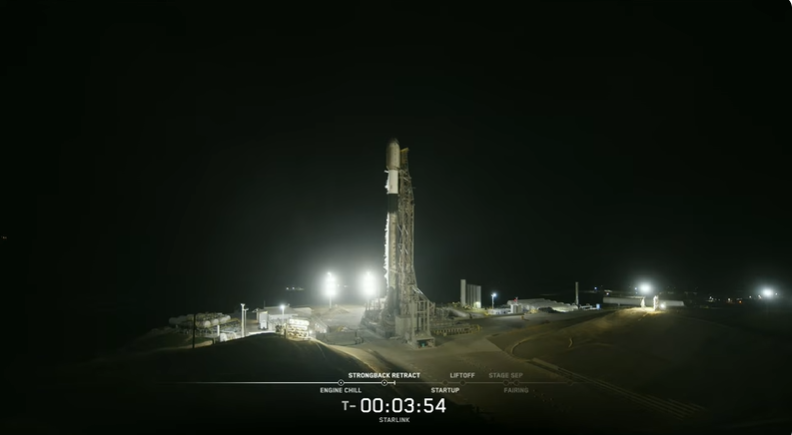
The mission, designated Starlink Group 17-24, is scheduled to lift off at 10:19 p.m. PDT from Space Launch Complex 4 East at Vandenberg Space Force Base in California. It will be the 17th orbital launch from Vandenberg so far in 2026 and the 615th flight of SpaceX’s Falcon 9 rocket — a workhorse of the modern space age that has redefined what reliable, reusable access to orbit looks like.
The 25 Starlink satellites aboard this mission are the ones that will carry SpaceX’s constellation past the 10,000 mark, a number that represents not just a corporate achievement but a fundamental transformation of the space environment above our planet. The Starlink network, designed to provide global broadband internet access including to remote and underserved communities, has grown from a bold idea into the largest satellite constellation ever assembled in human history.
A date that connects a century of space history
Monday night’s launch carries a historical footnote that gives the milestone an even deeper resonance. The liftoff coincides with the 100th anniversary of Robert Goddard’s launch of the first liquid-propelled rocket in 1926, a gasoline-fueled device that flew for just 2.5 seconds and reached an altitude of 41 feet. A century later, SpaceX’s kerosene-fueled Falcon 9 will carry 25 satellites into orbit and land its first stage booster on a drone ship in the Pacific Ocean, completing a round trip to space that Goddard could only have imagined standing in that Massachusetts field a hundred years ago.
The arc from that first fragile flight to 10,000 satellites orbiting the Earth is one of the most extraordinary stories in the history of human achievement, compressed into a single century.
The rocket and the booster making it happen
SpaceX will fly the mission using Falcon 9 first stage booster B1088, which is making its 14th flight. The booster has previously supported missions including NASA’s SPHEREx telescope, the Transporter-12 rideshare mission, two classified missions for the National Reconnaissance Office, and nine previous Starlink deployments. Its reliability across those missions is a testament to SpaceX’s reusable rocket program, which has fundamentally changed the economics of reaching orbit.
Approximately eight minutes after liftoff, B1088 will attempt to land on the drone ship named Of Course I Still Love You, stationed in the Pacific Ocean. If successful, it will mark the 184th landing on that vessel and SpaceX’s 586th booster landing overall — a number that still manages to feel remarkable no matter how routine these recoveries have become.
What 10,000 satellites actually means
The scale of what SpaceX has built above our heads in less than a decade is genuinely difficult to absorb. The Federal Communications Commission has already given SpaceX the green light to expand the Starlink constellation to 15,000 satellites, meaning Monday night’s historic threshold is not a ceiling but a waypoint on a trajectory that continues climbing. For the billions of people the network is designed to connect, that expansion represents the difference between having reliable internet access and being left behind in an increasingly digital world.
For the rest of us looking up at a clear night sky, it means the stars now share their space with something humanity built and put there on purpose 10,000 times over.
Liftoff is scheduled for 10:19 p.m. PDT Monday night from Vandenberg Space Force Base.
Source: Spaceflight Now
About the Author