Courtesy:Oscars Awards
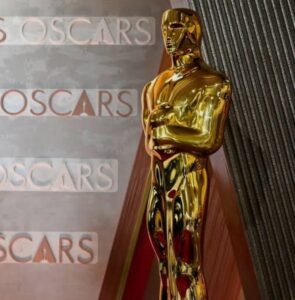
The Oscars new AI rule arrived on May 1, 2026, and it immediately changed the conversation across Hollywood. The Academy of Motion Picture Arts and Sciences updated its eligibility rules for the 99th Oscars, set for March 2027, with language that directly addresses the growing use of artificial intelligence in filmmaking. In the acting categories, only roles credited in a film’s legal billing and performed by humans with their consent can now compete for a nomination. In the writing categories, only human-authored screenplays qualify. Furthermore, the Academy reserved the right to request additional information about AI use and human authorship on any submitted film. The rules mark the strongest pushback the Academy has made against AI since the technology began reshaping Hollywood.
What the Oscars new AI rule actually covers and what it does not
The language in the new rules is specific. Acting awards now require that a performance be performed by a human with their consent. Writing awards require that a screenplay be human-authored. However, the Academy stopped short of banning AI from filmmaking altogether. Outside of acting and writing, AI tools used in other parts of production such as visual effects, sound design, or editing neither help nor harm a film’s chances of earning a nomination. Moreover, the Academy added that it will judge each film by taking into account the degree to which a human was at the heart of the creative work.
That distinction matters. It signals that the Academy is not anti-technology. Instead, it is drawing a line specifically around the categories where human artistry is most directly at stake performance and authorship. Additionally, the Academy noted that if questions arise about AI use, it reserves the right to ask filmmakers for more information before proceeding with any nomination consideration.
Why the Val Kilmer AI situation made this rule urgent
The timing of the rule change is not coincidental. Just days before the announcement, an AI recreation of the late Val Kilmer who died in 2025 appeared before an audience of cinema owners as a lead role in an upcoming film. The project raised immediate questions about whether an AI-generated performance could theoretically compete for an award. The new rules answer that question directly. The answer is no.
Furthermore, this follows a growing pattern of AI use in Hollywood that has alarmed actors, writers, and directors alike. A London-based actor named Eline van der Velden previously created a fully AI-generated fake actor and attempted to market the character as a real performer. When Hollywood writers went on strike 2 years ago, AI-generated scripts were a central issue in the dispute with studios. Additionally, numerous lawsuits from actors and authors against AI companies claiming copyright infringement over the use of their work to train large language models are still working through the courts.
The other major rule changes that arrived alongside the AI update
The AI rules were not the only significant changes the Academy announced for the 99th Oscars. In fact, 3 other updates are drawing nearly as much attention from the industry.
- Actors can now receive multiple nominations in the same category. If 2 performances by the same actor place in the top 5 votes, both can appear on the ballot. This aligns acting with other categories and could reduce the strategic category placement that campaign teams use to avoid vote-splitting.
- The International Feature Film category no longer requires a film to be the sole official submission from its country. Films can now also qualify by winning a top prize at one of 6 major international festivals — Berlin, Busan, Cannes, Sundance, Toronto, and Venice. That change opens the door to acclaimed films that home countries previously overlooked in the selection process.
- The casting category will now award up to 3 statuettes instead of the previous maximum of 2. That recognizes the growing scale of casting work on major productions. Moreover, the cinematography branch will now produce a fixed shortlist of 20 films in preliminary voting, replacing the previous range of 10 to 20.
How Hollywood is reacting to the new rules
The initial reaction from the industry has been largely supportive of the AI-specific rules, though some observers note the Academy’s language stops short of an outright ban. The rules do not use the word “ban” anywhere. Instead, they use eligibility language — which means AI-generated work is not prohibited from appearing in films, only from winning awards in the acting and writing categories.
For writers and actors who have spent years fighting to protect their work from AI encroachment, the rules represent progress. Furthermore, they arrive at a moment when studios are investing heavily in AI tools for production and when the question of what counts as human creative work has become one of the defining arguments in the entertainment industry.
Source: BBC/AOL
About the Author