Courtesy:NASA
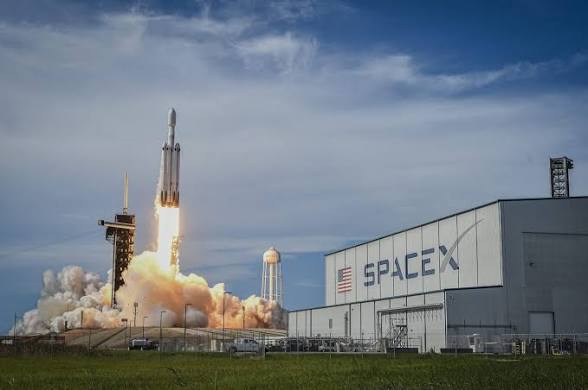
More than half a century after humans last traveled to the Moon, NASA has taken its most significant step yet toward returning there. The Artemis II mission lifted off from Kennedy Space Center in Florida, carrying four astronauts into Earth orbit aboard the Orion spacecraft in what has quickly become one of the most celebrated space launches in a generation.
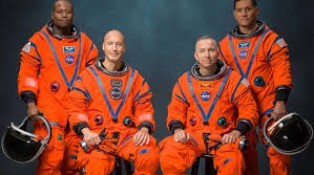
The crew NASA astronauts Reid Wiseman, Christina Koch, Victor Glover, and Canadian Space Agency astronaut Jeremy Hansen — are now orbiting the Earth and running through an extensive checklist of tests that will determine whether the mission gets the green light to press on toward the Moon. If all goes well over the next 24 hours, mission managers plan to authorize the burn that will send the crew into deep space, committing them to a journey no human crew has attempted since the Apollo era.
A launch that nearly wasn’t
The road to liftoff was not without its nerve-wracking moments. In the hours leading up to launch, two separate technical issues threatened to push the timeline back. One involved the flight termination system the safety mechanism designed to destroy the rocket if it veers dangerously off course while the other concerned a battery in the Launch Abort System, which exists to pull the crew capsule away from danger in an emergency.
NASA engineers worked quickly under pressure, ultimately resolving both issues before the launch window closed. One fix relied on hardware carried over from the retired Space Shuttle program, a detail that underscored just how much institutional knowledge went into getting this mission off the ground.
When the rocket finally roared into the sky, the reaction at Kennedy Space Center was immediate and electric. Spectators said they could physically feel the force of the engines passing through their bodies. The crowd erupted as the boosters separated and confirmation came that the crew had crossed the Kármán line, officially entering space.
4 astronauts, a full spacecraft, and a few surprises
Once in orbit, the crew wasted no time getting to work. Their tasks in the first 24 hours are extensive and critical. Among the most important is manually piloting the Orion capsule for the first time, practicing the precision maneuvers that will be essential for future docking operations with a lunar lander. Engineers on the ground are also monitoring every system aboard the spacecraft, intentionally pushing components to their limits to identify any weaknesses before the crew ventures too far from home.
Not everything went perfectly smoothly, but nothing rose to the level of a genuine threat. A valve connecting two sets of water tanks was found in the wrong position after launch, likely shifted by the force of liftoff, and was reset remotely. A minor electronics glitch one that had also appeared during the uncrewed Artemis I mission resolved itself automatically. And perhaps most memorably, sensors in the spacecraft’s waste management system produced unexpected readings early in the mission, sending mission specialist Christina Koch into troubleshooting mode. Mission control eventually confirmed the toilet was back in working order.
What the next 10 days could mean for space exploration
The Artemis II mission is not a Moon landing the crew will loop around the Moon rather than touch down on its surface. But if successful, it could take the four astronauts further from Earth than any humans have ever traveled, a milestone that carries enormous weight for NASA and for the future of deep space exploration.
President Donald Trump acknowledged the launch during a national address, congratulating the crew and NASA on the achievement.
Back on Earth, watch parties drew crowds from Toronto to Ciudad Juárez as people around the world stopped to share the moment.
Source: BBC News
About the Author