Robb Miller on Unsplash

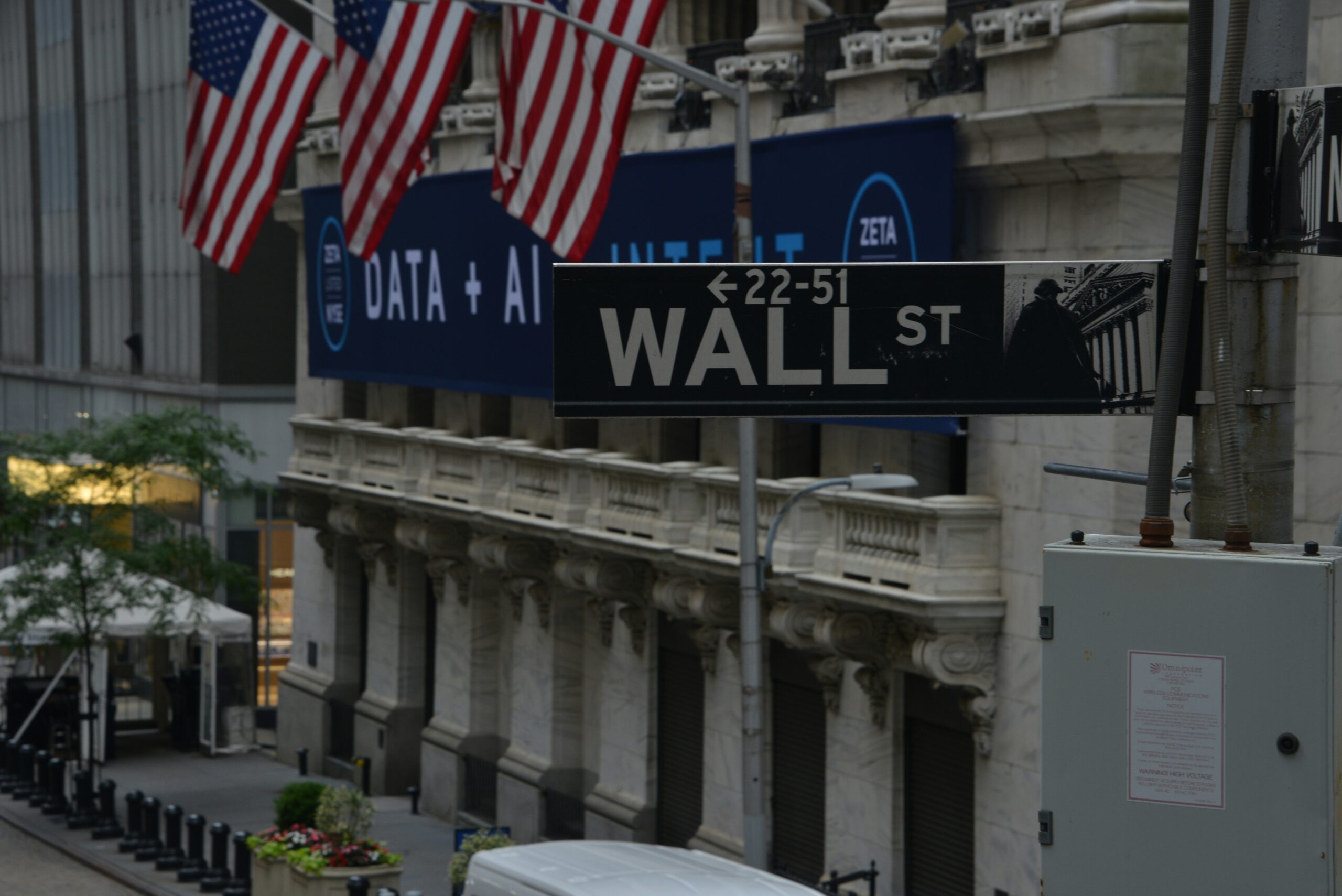
Wall Street is feeling bold about the stock market. Analysts are forecasting the S&P 500 will return 14.7% over the next 12 months. That figure stands well above the index’s long-term annual average of 9.3% over the last 20 years. The S&P 500 Wall Street forecast 2026 is drawing serious attention from investors. However, a growing set of risks means the picture is not entirely rosy. Here is what the numbers say and what investors should be watching closely right now.
What the S&P 500 has delivered historically
The S&P 500 was created in March 1957. Today, it is widely regarded as the best single measure of the overall U.S. stock market. It tracks 500 of the largest American companies, which together account for more than 80% of all domestic equities by market value. To be included, a company must meet several requirements. It must show profitability over the prior four quarters under standard accounting rules. Its stock must be sufficiently liquid. In addition, it must carry a minimum market capitalization of $22.7 billion.
Over the last 20 years, the index returned 492% in price gains alone, or 9.3% annually. When dividends are included, that figure rises to a total return of 768%, or 11.4% per year. Those are the long-term benchmarks that Wall Street is now saying the next 12 months will comfortably beat.
Why analysts are so optimistic right now
The bull case rests on 2 primary drivers. First, earnings growth is accelerating. Wall Street analysts expect S&P 500 companies to grow earnings by 25% in 2026, up significantly from 14% growth in 2025, according to data from LSEG. That acceleration is being fueled largely by surging corporate investment in artificial intelligence infrastructure. Second, corporate tax breaks included in recent legislation are expected to provide further tailwind for company profits. Together, those factors have pushed the median 12-month price target for the S&P 500 to 8,698, according to FactSet Research. That implies roughly 14.7% upside from the index’s current level of 7,580.
The index is currently most heavily weighted toward technology. The 5 largest positions by weight are as follows: 1. Nvidia at 8%; 2. Apple at 7.1%; 3. Alphabet at 6.2%; 4. Microsoft at 4.9%; and 5. Amazon at 4.1%. As a result, the performance of those 5 companies will have a disproportionate impact on how the broader index moves over the next year.
The risks that could derail the rally
Despite the optimism, several serious risks are worth paying close attention to. First, inflation is accelerating again. The ongoing Iran conflict has pushed oil prices to a multiyear high. That upward pressure on energy costs is filtering through to broader price levels across the economy. As a result, the Federal Reserve may be forced to raise interest rates to bring inflation under control. Rate hikes have historically been damaging for stock prices.
Furthermore, rising rate expectations have already pushed government bond yields sharply higher. The 30-year U.S. Treasury reached 5.18% at one point in May — the highest level in nearly two decades. Elevated bond yields are generally bad news for equities because they make bonds more attractive by comparison. Notably, the last time the 30-year Treasury touched 5.18%, the S&P 500 fell 20% over the following year. That historical parallel is worth keeping in mind even as earnings forecasts remain strong.
What investors should do with this information
The bottom line is straightforward. Wall Street expects strong earnings growth to carry the S&P 500 meaningfully higher over the next 12 months. At the same time, the Iran conflict represents a source of genuine economic uncertainty that could disrupt that outcome quickly. Inflation, rising yields and the possibility of Fed rate hikes all add layers of risk that the bullish forecasts do not fully account for.
Investors should take the optimistic projections seriously without treating them as a guarantee. History shows that Wall Street’s 12-month forecasts are often directionally useful but rarely precise. In the current environment specifically, conditions can shift rapidly. As a result, now is not the time to take outsized risks in pursuit of short-term gains. Staying diversified, maintaining a long-term perspective and keeping a close eye on inflation and rate developments is the most sensible approach for most investors heading into the second half of 2026.
Source: The Motley Fool
About the Author