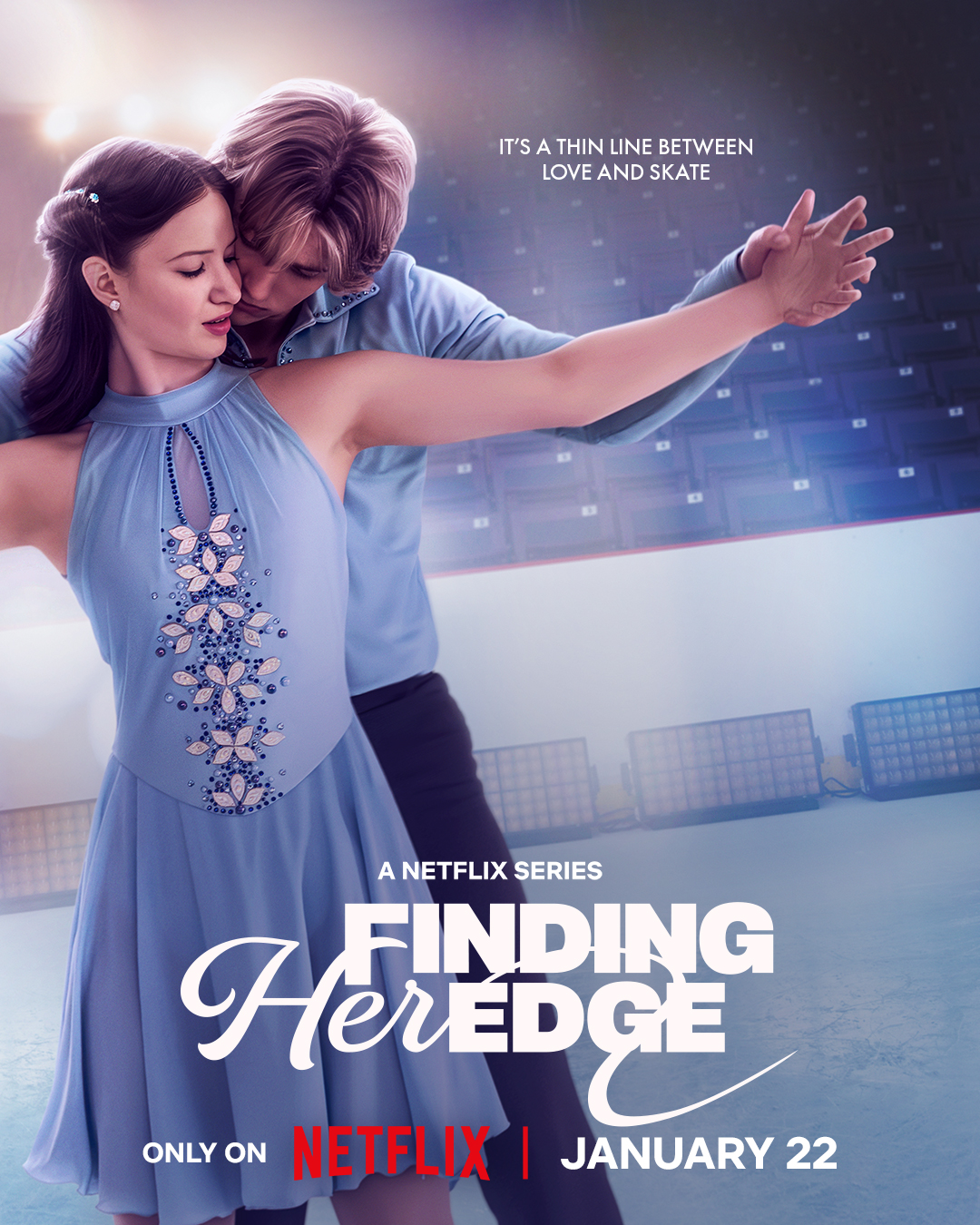
Madelyn Keys is no stranger to pressure. The Ottawa-based actress, who began her career after landing an open-call audition as a child, has spent over a decade navigating film and television—including a lead role in Lifetime’s A Mother’s Lie and work with major studios like 20th Century Fox and Prime Video. Now, she’s taking on her most demanding role yet: Adriana Russo, the driven teenage figure skater at the heart of Netflix’s new series Finding Her Edge. Alongside co-stars Olly Atkins and Cale Ambrozic, Keys explores the high-stakes world of elite competition, where ambition collides with identity, love, and the weight of family legacy.
At its core, Finding Her Edge is about more than figure skating. What emotional journey did you most want audiences, especially young viewers, to connect with?
Madelyn Keys: I think for Adriana, her biggest journey is learning to trust herself and her abilities. At the beginning, she feels like she has to become someone else to succeed. She doesn’t really allow herself to feel anything with all the stress going on in her world. For her, the journey is learning from both Freddie and Brayden, as well as from her sisters, how to have a sort of well-balanced, healthy relationship with all the various stressors in her life.
Olly Atkins: Freddie’s story is a love story, to be honest. He starts out in love with Adriana, continues to be in love with Adriana, and ends in love with Adriana. But beyond that, there’s a really big emotional arc that Freddie goes through in terms of how he handles that and his expectations for himself and for other people—learning to express himself and let go a little bit so he can make room for the love he has in his heart.
Cale Ambrozic: I wish Brayden’s story was that simple. He’s battling a lot. Right off the bat, he’s very cocky and brash and understands he’s great. But it’s really nice when he drops that facade and starts to let people in. With his family and his parents, he’s kind of been kicked to the curb. So it was fun to explore the different sides of him, things he probably hasn’t felt in a really long time. To see Brayden in love and to see how bad he is actually at it—he doesn’t understand love whatsoever. And when he ultimately gets kicked to the side, it hurt him much more than I was expecting. But the way they wrote it was really beautiful.
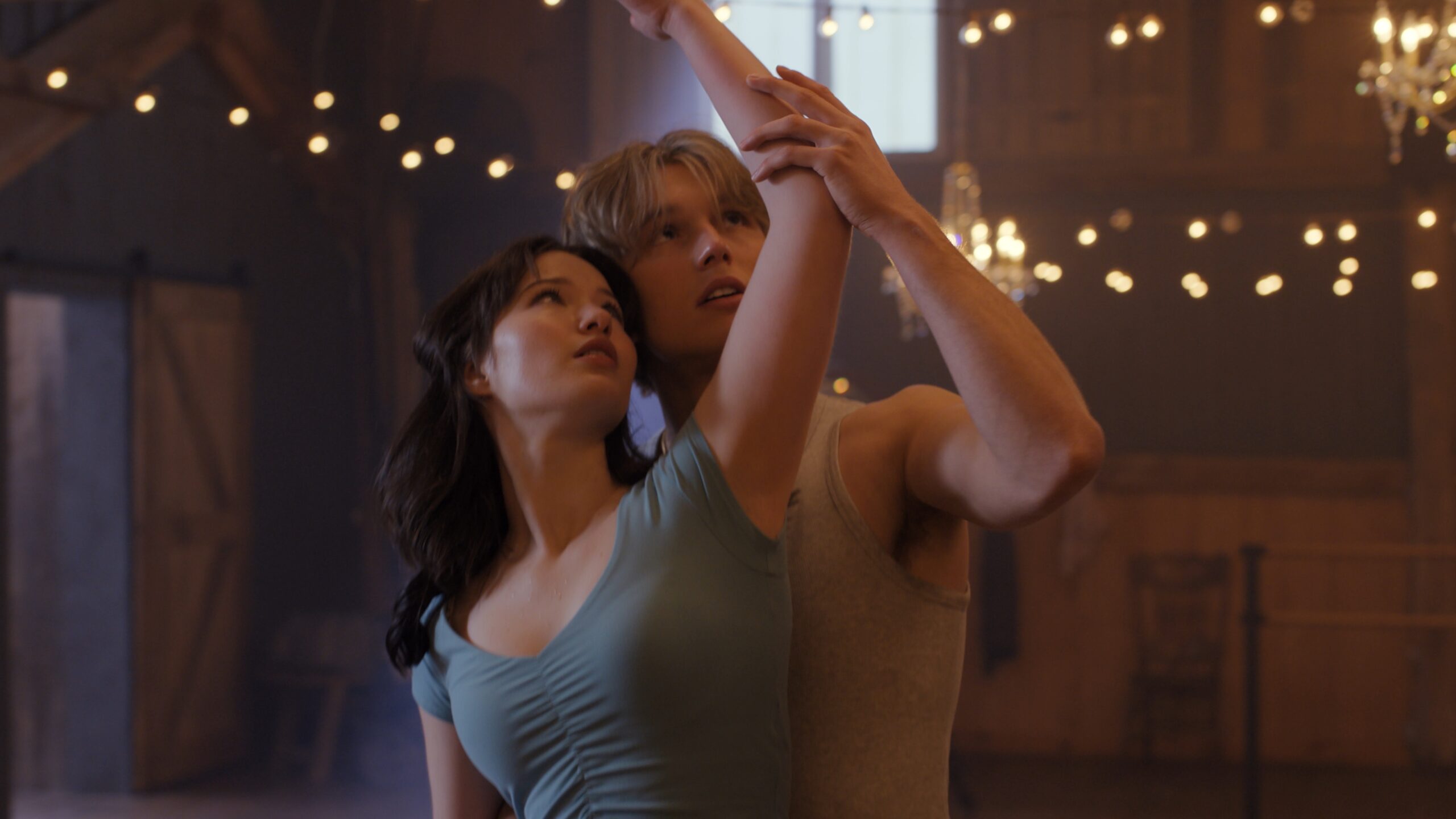
Madelyn, Adriana is navigating pressure, first love, family responsibility, and identity all at once. How does her story reflect the reality of growing up before you’re ready?
Keys: Adriana’s story with having to grow up early really starts when her mother passes away two years before the show begins. I think for her, that’s the first moment when she realizes that bad things will happen. Before that, she was living this very privileged life—they live in this beautiful house, the rink is right there, and she can do this incredibly expensive sport at a very high level with people she loves. Once that happens, and seeing the way people in her family react to it—which is kind of “everything is fine and we don’t have to address this”—she takes on the mentality of, if nobody else is going to worry about this, I have to. She takes on the pressures, and after she doesn’t see Freddie as frequently when she’s not skating, she doesn’t have anyone to talk to about it aside from her coach Camille. For a lot of the story, it’s Adriana learning how to open up and address these things in a healthy way, or as much as you can at a teenage age.
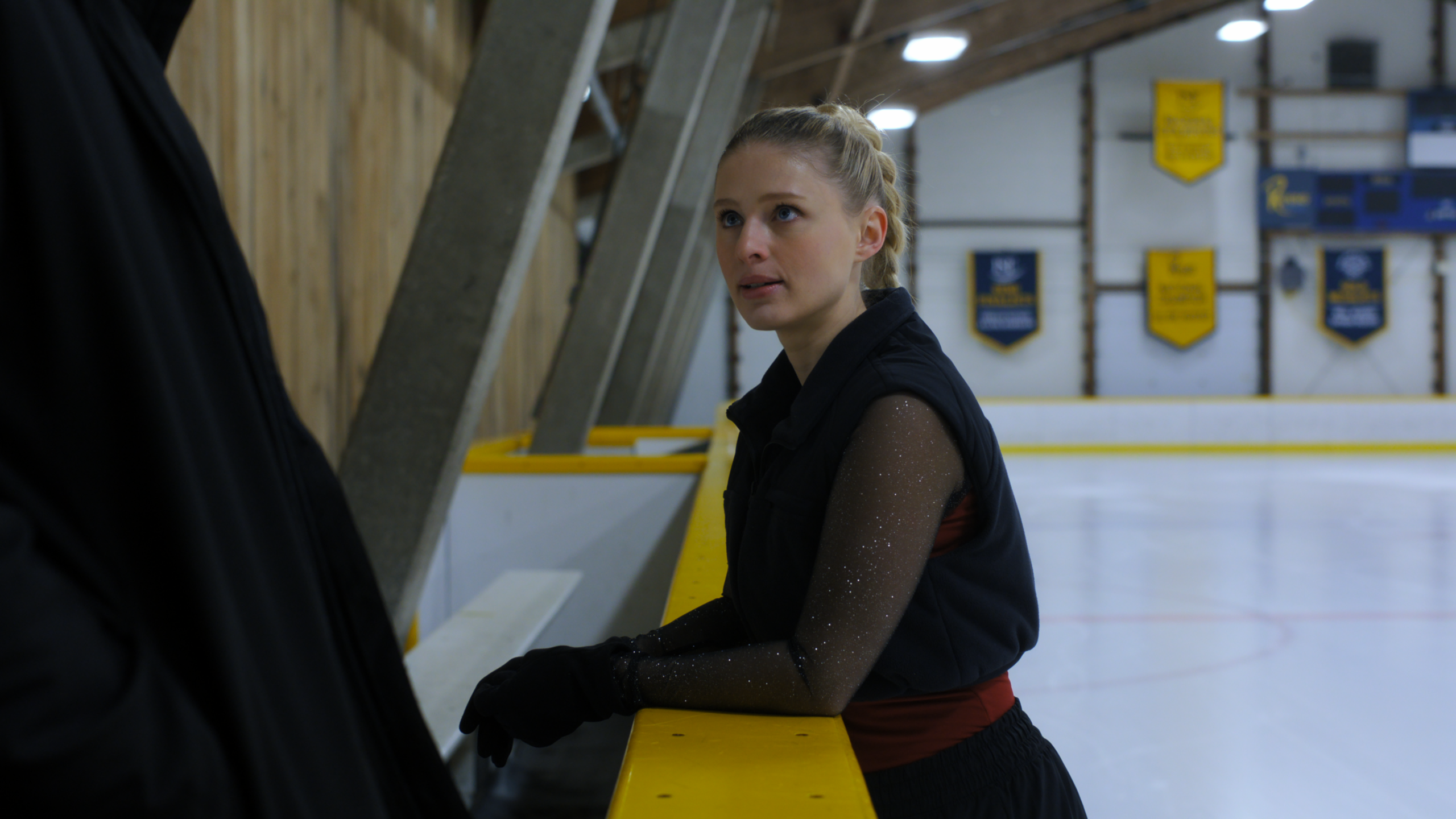
The fake relationship storyline with Brayden adds both romance and strategy. What does this plotline reveal about how young people sometimes perform versions of themselves to survive or succeed?
Ambrozic: It’s a lot of pressure with who you’re expected to be and who you want to be. Adriana is really battling with that. She’s trying to live up to a dynasty, and Brayden knows that. He sees what’s going on—he’s not dumb. But he also loves his image, and that’s very apparent. He sees this as a real opportunity to not only win gold but to bring attention to himself, and that doesn’t hurt. A lot of kids are dealing with that. But this also shows that you’re not alone in that fact. You don’t have to struggle alone. You don’t have to deal with all the demons in your mind by yourself. You can reach out and talk to people. Brayden doesn’t understand that, but Adriana’s pretty good at it.
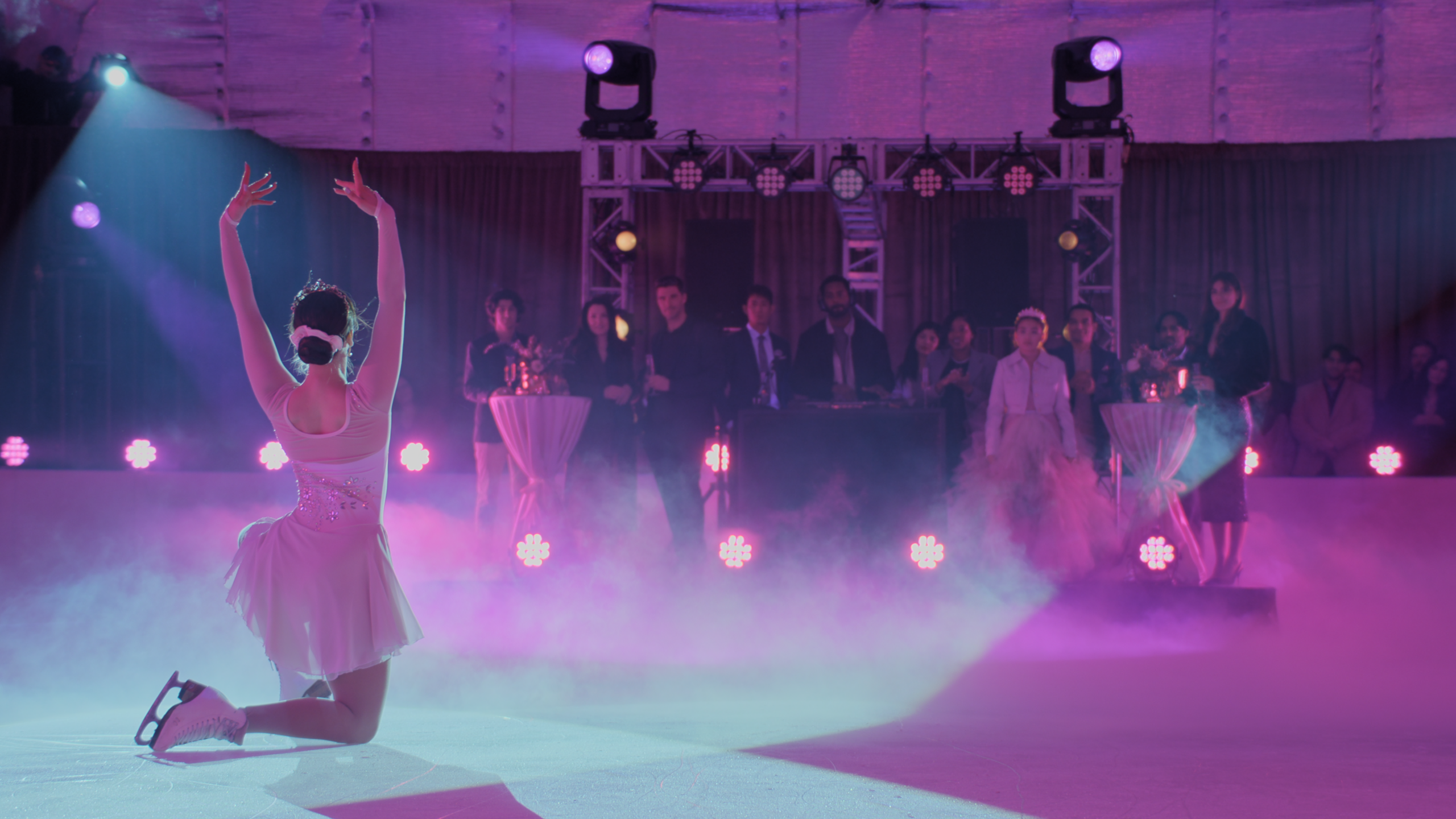
Figure skating is beautiful but unforgiving. How does the series portray the mental, emotional, and financial toll of elite competition, especially on teens?
Keys: Any elite athlete at a young age is facing an immense amount of pressure. Figure skating is particularly difficult because it isn’t just graded technically—it’s also graded on that artistic component, which can mean how beautiful your costumes are. But there have been instances where figure skaters have felt that judges are judging them poorly because of the kind of person they are, the things they say to the press, or what their bodies look like. We touch on all of those in a very tasteful way, without making the show darker than it needs to be, to still be a feel-good show, which is what we’re really aiming for.
Atkins: The competitive aspect is really interesting. Freddie feels it pretty acutely, particularly on the monetary side, because he gets kicked out of the Russo house and doesn’t have anywhere to go. When you get this high up in a lot of competitive sports, it’s pay to play in the sense that if you don’t win, you don’t get to do it anymore. For Freddie, he loses his spot at the Russo house and goes off to train with Riley, and he has to perform to be able to not only have a place to live, but also to continue pursuing the thing he loves to do. Anybody who pursues any kind of sport at a high level, but especially these more financially challenging sports, can identify with that level of hardship and expectation.
Ambrozic: They hit the nail on the head. There are so many factors that come into skating, and the show touches on those points very tastefully. We’re trying to make a show that people feel good watching, not something that dwells on the negatives as long as some shows do. It’s refreshing. It hits the point but always moves on.
What does finding your edge truly mean in the world of this series?
Keys: For Adriana, it’s finding her own confidence. It’s being able to trust in herself and that she doesn’t have to pretend to be someone else to be successful. The things she has maybe hidden about herself previously are actually her greatest strengths—not to say she doesn’t have a lot she still needs to work on.
Atkins: For Freddie, it’s really about learning to advocate for himself to pursue his dream and pursue the girl he wants, of course, but really to voice what he wants in the world, not only to the world itself, but to himself, and then to pursue it.
Ambrozic: Brayden is a very complicated guy, and he’s dealing with a lot. I hope people can see that he’s not just one-toned, that he actually has a lot of stuff going on. I think it will be really important for people to see that sometimes the surface isn’t the whole story.
About the Author