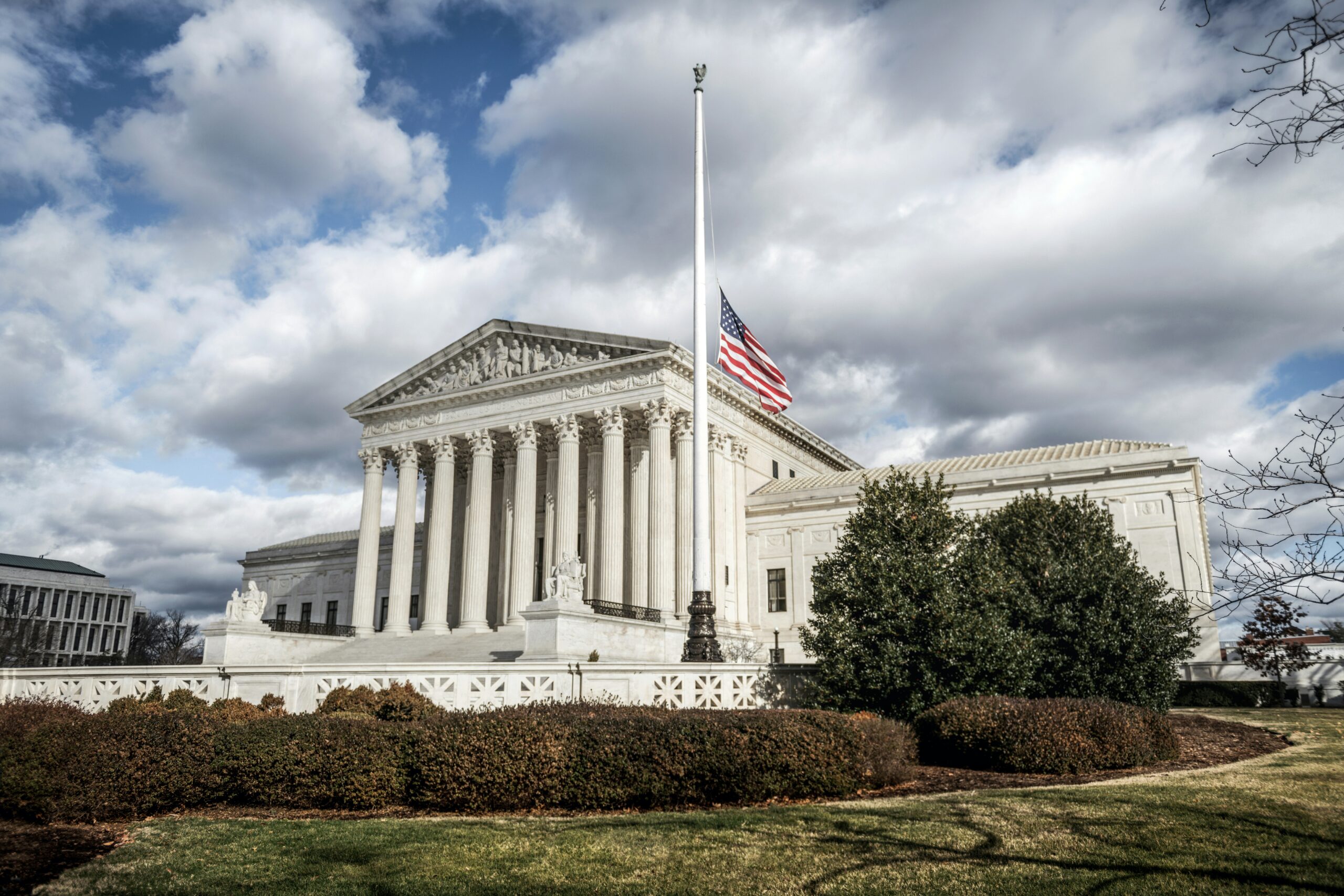
Courtesy:tim-mossholder from unsplash
The Supreme Court is considering a major case that could dramatically affect how mail-in ballots are handled in 18 states and territories. At the center of the debate is Mississippi’s law allowing ballots postmarked by Election Day to be counted if received within five business days after the election.
During Monday’s arguments, the court’s six conservative justices expressed serious doubts about the state law. They repeatedly questioned how election officials can determine when a vote is officially cast, particularly since Mississippi counts ballots arriving late by courier services such as FedEx.
Three liberal justices defended the law, arguing that states have the authority to set their own election rules. They highlighted that invalidating Mississippi’s statute could disrupt military and overseas voting, which relies on mail-in ballots reaching election offices days after Election Day.
A ruling against Mississippi could have sweeping consequences. Beyond the state itself, more than a dozen others currently allow postmarked ballots to be counted after Election Day. This includes military and overseas ballots, which have historically relied on flexible deadlines to ensure participation.
Alaska highlights logistical challenges
One state that would face particular hurdles if late-arriving ballots are banned is Alaska. With more than 80 percent of its communities off the road system, the state depends on planes, boats, and other nontraditional mail delivery methods. Extreme weather can delay deliveries, sometimes leaving communities without basic supplies or timely election results.
In 2024, for example, poll workers in remote villages had to rely on teachers and secure mailings to ensure votes were counted. Such logistical hurdles underline the challenge of imposing strict ballot-receipt deadlines in geographically isolated states.
Historical context of mail voting
Mail-in voting has deep roots in the U.S. military. Soldiers in Pennsylvania were casting absentee ballots as far back as the War of 1812. The practice expanded during the Civil War, with President Abraham Lincoln encouraging absentee voting to ensure soldiers could participate in elections. By the war’s end, 19 Union states had formalized absentee voting for military members, setting a precedent that continues today.
Currently, the Uniformed and Overseas Citizens Absentee Voting Act (UOCAVA) guarantees mail-in voting for military personnel and citizens abroad. Over 900,000 voters cast ballots overseas in 2024. A Supreme Court ruling overturning late ballot deadlines could significantly disrupt this process.
Political and partisan dynamics
The Mississippi law is drawing sharp partisan lines. While Democrats have increasingly relied on mail-in voting in recent years, Republicans, particularly in rural areas and military communities, could face challenges if the law is struck down. In 2020, Democrats represented 58 percent of mail voters, compared with 29 percent of Republicans. By 2024, efforts by Republican campaigns in states like Pennsylvania increased participation, narrowing the gap.
The legal challenge has also created unusual divisions within Mississippi Republicans. The state’s attorney general, a conservative figure known for defending high-profile laws, supports the law, warning that a ruling against it could destabilize elections nationwide. Meanwhile, the Republican National Committee and Mississippi GOP argue that ballots must be counted only if received by Election Day, citing concerns about clarity and electoral integrity.
What comes next
The Supreme Court is expected to issue a decision by late June or early July, ahead of the November midterms. The case is part of a broader examination of election rules this term, including disputes over congressional redistricting, campaign finance, and the role of race in voting maps.
As the nation watches, the court’s ruling could reshape the landscape of mail-in voting, military ballots, and election administration in nearly 20 states, setting a precedent for how America defines the moment a vote officially counts.
Source: New York Times
About the Author