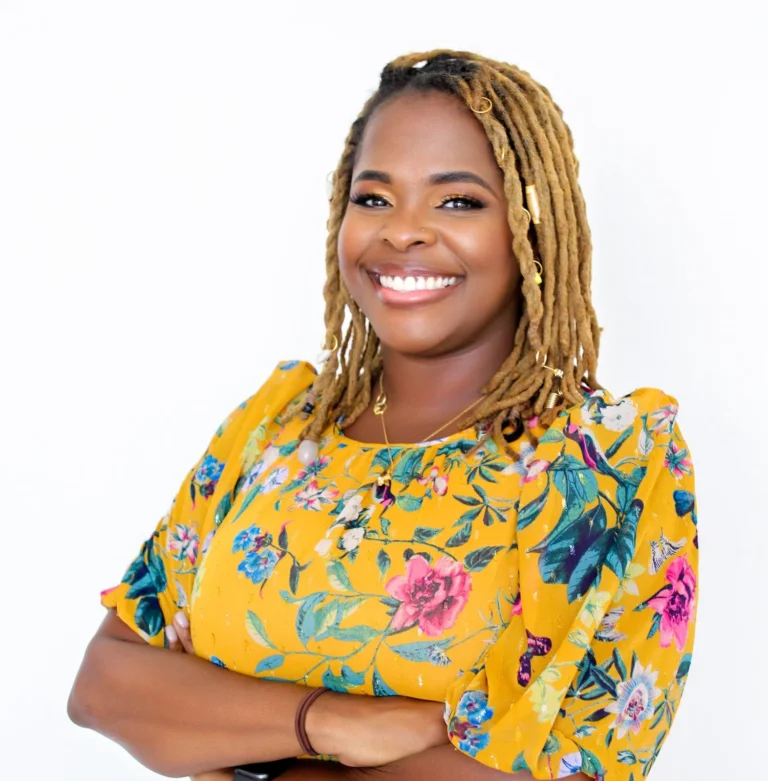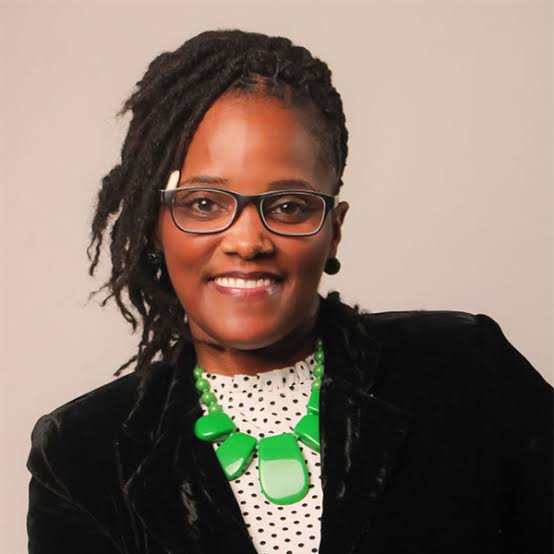
As a respiratory therapist with years of medical experience, Moore spent two years visiting doctors, describing irregular bleeding and changes in her cycle, only to be told it was probably menopause, hormonal shifts, or her history of ovarian cysts. It wasn’t until 2016 that she finally heard the words: endometrial cancer, stage 3.
Now 10 years cancer-free, Moore serves as president of ECANA the Endometrial Cancer Action Network for African Americans and has made it her life’s mission to ensure that no Black woman has to face this disease without the language, the knowledge, or the community to fight back. She sat down to share her story, the symptoms too many women are being told to ignore, and the three questions every woman should ask her doctor right now.
Take us back to when your journey with endometrial cancer began. What were the signs, and what led to your diagnosis?
Around 2014, I was working as a ventilator patient manager and, because of the way the Affordable Care Act rolled out for someone in my situation, I was paying $600 a month in premiums after taxes as a single person with no dependents. So during 2014 and 2015, I went without insurance.
It was during that time I started to notice changes in my period changes in the amount of blood, in the consistency, in how often I was getting my period, missed periods, heavy spotting. I was spending money out of pocket to go to doctors to ask what was going on. Because I had a previous history of ovarian cancer, they would attribute those symptoms to that experience saying maybe I was approaching menopause quicker than expected, or having problems with ovarian cysts or fibroids.
I appreciated those answers, because none of them led back to the fact that I might have another cancer. I got my pap smears every year, and I thought, if there was something else wrong with me, my providers would tell me. But that’s not something that happened for me.
I was finally diagnosed two years after my symptoms began in 2016. And it was the first time any provider had ever spoken to me about having a biopsy.
What is endometrial cancer, and how is it different from ovarian cancer?
In layman’s terms, endometrial cancer is a cancer of the lining of the uterus, where cancer cells form in that area. Ovarian cancer is a cancer of the ovary, which is also part of our reproductive system. With my ovarian cancer, I had a tumor attached to my ovary and had to have my ovary removed. With endometrial cancer, I had to have my uterus removed.
The symptoms I now know were early signs of my endometrial cancer were the abnormal bleeding around the time I should have been having my period or wasn’t and the consistency and changes in my cycle over those two years. At the time, I was thinking it was associated with getting older, with my reproductive history, and that was being reinforced by the providers I was seeing. I didn’t have the language to know there was another cancer that could be involved. I didn’t know to ask, “Could this be uterine or endometrial cancer?”
That’s what we want women to know: it mimics the normal behavior of getting older, of moving through perimenopause. And any postmenopausal bleeding could be associated with endometrial cancer. You have to pay attention to what’s happening with your body.
What symptoms should women be paying attention to?
The biggest factor the thing that should make you call your doctor is abnormal bleeding. Abnormal discharge. Something that isn’t normal to you. If you know you get your cycle every 28 days and suddenly it’s coming every 21 days, or every 30 days, and each time the consistency is different that’s a change in your body worth discussing with a doctor.
From there, you’re putting your provider on notice. And that might spark them to ask about other symptoms: pelvic pain, pain with intercourse, unusual swelling, any other changes happening in your body at the same time. All of those things tied together could mean you’re at risk for endometrial cancer.
There is no standard screening tool for endometrial cancer. An endometrial biopsy is the only way it can be diagnosed, and that is a very traumatic and painful experience. A pelvic ultrasound can sometimes show thickening of the uterine lining but until you know enough to raise the question with your doctor, you won’t know to ask for it.
You survived ovarian cancer first, then endometrial cancer. How did that second diagnosis shift your relationship with your body?
The first time, my ovarian cancer was caught very early and I didn’t need aggressive treatment. It was something that was happening to me, but I was mostly disconnected from it because I just had to do a little bit to overcome it and move on.
When I learned about the endometrial cancer that was different. I thought, why is my body betraying me? These parts of me are supposed to help support life. First one in my ovary I wasn’t able to bring a child to full term because of that cancer. And now here’s a second cancer, caught so late that it could take my life.
I really felt that cancer was coming for me no matter what. It took away my first child, then it took away my ability to have children altogether. So I did feel a betrayal of my body. I had a totally different outlook the second time around. What’s going to be next?
There’s a well-documented pattern of Black women not being believed in medical spaces. What does that look like in real time?
What that dismissal looks like is: dismissal, then delay and denial. And when there’s delay and denial, you get late-stage, more aggressive disease that’s harder to cure. That leads to death.
How do we challenge it? We have to get ahead of it. Until we find a reliable screening tool, the best thing we can arm ourselves with is information. But you have to believe yourself first in order for anyone else to believe you. That means walking into your provider’s office fully armed with what you’ve been tracking the changes over the past six months, the clots, the irregularities. When a provider says, “Come back in three months, let’s see,” you push back. There is no wait-and-see in that conversation. It’s: what’s next?
I don’t know how many three-to-six-month intervals I had left in me before my stage 3 cancer became a stage 4 cancer and I wouldn’t be here at all.
A recent survey found that 70% of patients felt chemotherapy was almost as burdensome as the cancer itself. What does that statistic miss?
What it fails to capture are the psychosocial effects the changes in identity, in your ability to be who you are as a sexual being, as a whole human who can run or walk the way you used to. Chemotherapy, though life-saving, can often be debilitating and halting in so many ways because you have to navigate your entire life around treatment.
We want to talk about how we can include patients’ lived experiences in the conversation about their treatment — so that women can get the best quality of life during the process. That’s important for a lot of people.
Why do so many patients feel excluded from their care decisions?
It’s intimidating to talk about a disease you know very little about that you’re just learning about. And I think why people feel excluded is because care is very generalized, as opposed to individualized. What my care looked like is different from what the next person’s care looks like. It requires doctors sitting down and asking: what’s most important to you and your quality of life? How is this going to affect you emotionally, financially? Where can we find support to fill in the gaps?
I think about something as simple as nutrition during chemotherapy. They tell you to stay hydrated, eat the right foods, get your proteins. But not everyone has access to those things at home. What if all you have access to is instant noodles? Where’s the support in making sure women have the right food, reliable transportation to their infusion appointments, and income support when they’re missing work for a five-hour treatment session?
What are the first three questions a woman should ask her doctor?
First: what exactly is endometrial cancer, and what does my specific stage and grade mean for me? Because I’m sure you don’t know and you need it explained in terms that make sense for your life.
Second: what are all of my treatment options? Give me everything, so I can see how they best fit into my life. Do I have the agency to help determine what my treatment should look like?
And third: how much access am I going to have to support when I need it? Every person diagnosed with cancer will need support of some kind. To assume that support is automatically available to everyone is doing a real disservice.
You’re marking 10 years as a survivor. What does life after cancer actually look like?
Life after cancer looks like me supporting the women of ECANA other Black endometrial cancer survivors through their journey. Helping them get to the right kind of care, connecting them with opportunities like the EC survey we participated in, helping them feel more informed about their treatment options.
Because yes, we finished cancer treatment. That doesn’t mean our cancer experience is finished with us. Many of us live with long-term side effects that need to be addressed through physical support, psychosocial support, mental health support. We rang a bell but that doesn’t mean our bodies immediately went back to who they were before the diagnosis.
What survivorship should really include is a treatment plan for your post-cancer life. Connecting you with a nutritionist, a physical therapist, a mental health therapist, a community of people who have experienced the same things. We’re still in surveillance for five years after treatment still getting pelvic exams, still sharing information with our doctors. It’s never really over. When you become an advocate, you invest the rest of your life into sharing this knowledge. And that’s what I’m going to keep doing.
What do you hope a woman does after watching this?
First, I hope she learns more about what endometrial cancer is and sees if it aligns with anything she might be experiencing. Then I hope she looks for support in how to bring that information to her provider early enough to get intervention early enough. Because we know from the EC survey that 71% of women said they would prefer not to go through chemotherapy again. If we can catch this cancer earlier, when it’s more treatable, we change that story entirely.
We want to be as forward-focused as possible when it comes to arming women with the right information. And the only way we get there is through shared experiences. That’s why this survey mattered it talks about what mattered most to women going through endometrial cancer treatment, and where they felt they weren’t heard.
In 2026, I still have women coming to me saying they have never heard of endometrial cancer. And the only thing that says to me is: I’m not talking loud enough.
Learn more about ECANA and find endometrial cancer support resources here. For information on the EC survey and its findings, please find the most recent press release here.
About the Author