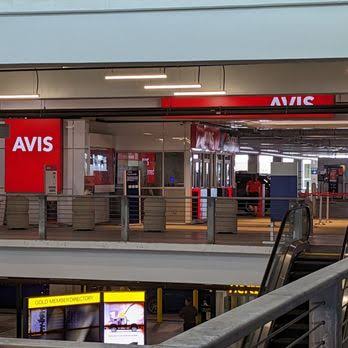
Courtesy:Avis

When a stock jumps 33.1% in a single move, the instinct is to pay attention. When the reason behind that jump is a short squeeze triggered by geopolitical fear rather than any meaningful improvement in the underlying business, the instinct should be a far more cautious one. That is precisely the situation Avis Budget Group finds itself in following its latest dramatic surge, and investors who mistake the momentum for a genuine turning point may find themselves on the wrong side of a very quick reversal.
The immediate trigger was straightforward. Bearish investors who had positioned against the stock were forced to buy back shares as Middle East tensions escalated and crude oil prices spiked a combination of macro pressures that created a volatile environment where positioning and fear temporarily overwhelmed fundamentals. The result was a sharp, fast move that had little to do with anything the company actually did or achieved.
The business results tell a different story
Beneath the excitement of the rally sits a set of 2025 financial results that are far less inspiring. Avis recorded slightly declining revenue and posted a net loss for the second consecutive year a pattern that does not simply disappear because the share price had a good week. These are the numbers that will ultimately determine whether the current valuation can hold once the short squeeze pressure fades and the market refocuses on what the company is actually producing.
The core business remains a cyclical rental operation facing real headwinds. The company’s longer-term investment case rests on premium service offerings, technology upgrades and autonomous vehicle partnerships the kind of strategic narrative that sounds compelling but requires consistent execution to translate into actual results. That execution has not yet materialized in the financial statements in a way that justifies sustained optimism.
The balance sheet carries serious risk
The second concern is the company’s financial position itself. Weaker cash reserves have raised the possibility that Avis may need to pursue additional capital in the near future, and that capital could come in a form that is directly painful for existing shareholders dilutive equity financing. Dilution is a material risk because it limits upside even when operating trends begin to improve. A shareholder who buys into the rally and then faces a capital raise may find that the stock’s gains get quietly eroded by the mechanics of the fundraising itself.
This is not a theoretical concern. The company’s own narrative acknowledges the risk explicitly, and it remains unresolved. Until Avis can demonstrate that its cash position is strengthening rather than deteriorating, this risk will continue to hang over any price recovery.
Analyst projections reveal deep uncertainty
The third signal comes from the significant gap between different analyst projections for the company’s future performance. One set of forward estimates points to $12.2 billion in revenue and $1 billion in earnings by 2028, suggesting a meaningful recovery is achievable. A more conservative view places 2029 revenue at a similar $12.2 billion but sees earnings at only $285.9 million a fraction of the optimistic scenario.
That range is not a minor difference of opinion. It reflects genuine, unresolved uncertainty about how Avis will navigate electrification costs, growing competition from alternative mobility platforms and its own ability to improve profitability in a challenging operating environment. When two credible sets of projections diverge that sharply, it is a signal that the investment case is far from settled.
What the rally is really telling investors
Short squeezes are a well-understood market phenomenon, and their mechanics are consistent. Bearish positioning, a sudden catalyst, forced buying and a sharp price spike the pattern repeats across industries and across cycles. What they do not do is solve revenue softness, eliminate consecutive losses or strengthen a balance sheet. They create price action, and price action without fundamental support has a predictable shelf life.
The broader lesson here extends well beyond one rental car company. When geopolitical tension and commodity price spikes collide, market positioning can produce dramatic moves in cyclically exposed businesses that have nothing to do with actual operational progress. Those moves can create short-term opportunity for traders who understand the mechanics, but they can create false confidence for investors who mistake a forced buying event for evidence of a genuine turnaround.
For Avis, the next several quarters will be the real test. If revenue stabilizes, losses narrow and the balance sheet begins to strengthen, the rally may eventually find fundamental justification. If those improvements fail to materialize, the distance between where the stock traded on the strength of a squeeze and where the business can actually support it will close and not in a direction that rewards the buyers who chased the move.
Source: El-Balad.com
About the Author