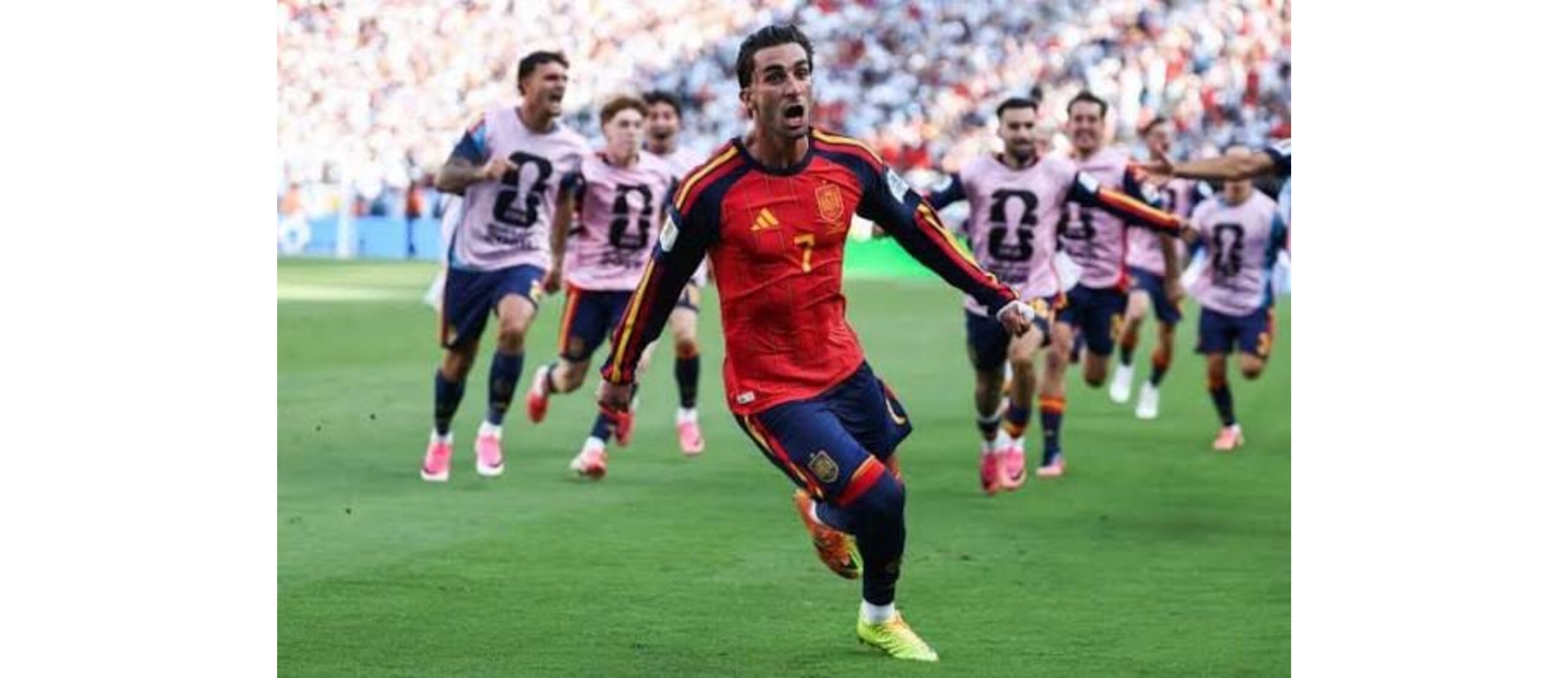
Photo credit: ESPN
New York New Jersey Stadium in East Rutherford buzzed with anticipation on Sunday, July 19, as the two most decorated nations in the history of the 2026 FIFA World Cup prepared to decide the championship. Spain entered the final riding the momentum of a dominant tournament run. Argentina arrived as reigning world champions, the target on their back as large as the trophy they had defended since their 2022 victory over France in Qatar.
Celebrities, heads of state and over 80,000 fans inside the stadium created an atmosphere unlike anything in club football. The stakes could not have been higher. Only one team would leave as world champions.
First half: Spain control possession, Argentina defend deep
Spain set the tone immediately. From the opening whistle, coach Luis de la Fuente’s side dominated possession and moved the ball with the quick, incisive passing that has characterized Spanish football at its best. Nineteen-year-old Lamine Yamal caused problems down the right flank from the very first minutes, using his pace and close control to draw fouls and create half-chances.
Argentina responded by sitting deep and compact. Coach Lionel Scaloni set his team up to frustrate Spain and hit on the counter, relying on the quality of Lionel Messi and Julián Álvarez to punish any lapse in concentration. The tactic kept the score level but required the Argentinians to absorb wave after wave of Spanish pressure.
Mikel Oyarzabal, who entered the final with five tournament goals, tested Emiliano Martínez on two occasions in the first half. Both times, the Argentine goalkeeper produced strong saves to maintain parity. Martínez, one of the best goalkeepers in the world, was clearly determined to be the difference again as he had been throughout Argentina’s title defense.
By halftime, the scoreboard read 0-0. Spain had controlled the half statistically and territorially, but Martínez and Argentina’s defensive structure had held firm. Everything remained to play for.
Second half: chances, tension and a goalless finish
The second half opened with Argentina showing more attacking intent. Messi dropped deep to orchestrate play and briefly shifted momentum toward the South American champions. His vision and passing ability created two moments of genuine danger for Spain, with one low shot from Álvarez forcing Spanish goalkeeper Unai Simón into a sharp save low to his right.
However, Spain reasserted themselves as the half progressed. Yamal continued to be a menace on the right, and Oyarzabal worked tirelessly across the front line to stretch Argentina’s defensive shape. Spain put 12 shots on goal across the full match. Argentina managed zero, a statistic that reflected how thoroughly Spain controlled the overall flow of the game despite being unable to break the deadlock.
The final whistle came with the scoreboard still reading 0-0. Both teams had their moments. Neither had found the decisive touch in regulation. For the second consecutive World Cup final, the championship would be decided in extra time.
Extra time: Torres breaks the deadlock in the 106th minute
The first 15 minutes of extra time produced breathless football from both sides. Argentina sensed that their defensive resolve had earned them a genuine chance. Spain pressed relentlessly, knowing that their physical and tactical preparation had been built for exactly this kind of sustained pressure.
Then came the moment that will define the 2026 World Cup forever.
In the 106th minute, Ferran Torres received the ball in a dangerous area and drove at the Argentine defense with purpose. He shifted the ball onto his stronger foot and unleashed a shot that gave Martínez no chance, finding the bottom corner of the net with clinical precision. The stadium erupted. Spanish players sprinted toward Torres in celebration. Argentina’s players stood in disbelief.
The goal broke one of the most stubborn defensive performances the World Cup final had seen in years. Martínez had been exceptional, but Torres had found the answer at the most critical moment of the tournament.
The final whistle and Spain’s celebration
Spain held their 1-0 lead through the remaining minutes of extra time. Argentina pushed forward desperately in search of an equalizer, throwing bodies forward and testing Simón on two late occasions. Neither attempt found the net. When the final whistle sounded, Spanish players collapsed onto the pitch in tears and celebration simultaneously.
Captain Álvaro Morata lifted the FIFA World Cup trophy aloft at New York New Jersey Stadium, becoming the first Spanish captain to do so since Iker Casillas raised the trophy in South Africa in 2010. De la Fuente embraced his staff on the touchline. Yamal, at 19 years old, stood on a World Cup winners’ podium in his debut tournament. Torres, whose goal had decided everything, was mobbed by teammates.
For Argentina, the loss brought the end of a remarkable two-year reign as world champions. Messi, widely regarded as the greatest player in the history of the sport, had hoped to add a second World Cup title to his legacy. It was not to be on this occasion. He walked slowly toward the tunnel, the weight of the moment visible on his face.
The standout performers
Ferran Torres was the match-winner. His goal in the 106th minute required composure and technical quality under the most intense pressure imaginable. That single moment will define his career in football forever.
Lamine Yamal was arguably the most exciting player on the pitch throughout the 120 minutes. At 19 years old, competing in his first World Cup, he showed pace, creativity and maturity beyond his years. His performances across the entire tournament confirmed that Spanish football has found its next generational star.
Mikel Oyarzabal finished the tournament as Spain’s leading scorer with five goals. His work rate in the final kept Argentina’s defense under constant pressure even when the goal would not come.
Emiliano Martínez was outstanding in defeat. He made multiple crucial saves across the 90 minutes of regulation and kept Argentina competitive in a match where Spain’s statistical dominance should have produced goals far earlier. His performance was a reminder of his world-class quality even in a losing effort.
Unai Simón kept a clean sheet in the World Cup final in his own composed and authoritative performance behind a well-organized Spanish defensive line.
Key stats from the final
Spain: 12 shots on goal, 18 fouls committed, 1 goal scored.
Argentina: 0 shots on goal, 24 fouls committed, 0 goals scored.
Decisive goal: Ferran Torres, 106th minute.
Attendance: Over 80,000 at New York New Jersey Stadium.
Result: Spain 1-0 Argentina (after extra time).
Spain’s road to glory
Spain’s path to the 2026 World Cup title was built on defensive solidity and collective brilliance. Their semifinal win over France, 2-0, was one of the performances of the tournament. Oyarzabal opened the scoring with a penalty in the 22nd minute. Pedro Porro sealed it late. France, one of the most talented squads in world football, were completely shut out.
Coach Luis de la Fuente consistently described his squad as a family and built a culture of togetherness that showed in every match. He told his players before the semifinal that the tournament represented a once-in-a-lifetime stage and urged them to embrace rather than fear it. His leadership created the environment that allowed moments like Torres’s goal to happen.
Spain previously won the World Cup in 1934, 1950 and 2010. The 2026 triumph brings their total to four titles, cementing their status as one of the sport’s all-time great nations. For a generation of Spanish players who grew up watching Iker Casillas lift the trophy in Johannesburg in 2010, winning it themselves in New York in 2026 carries a meaning that goes beyond football.
Source: PEOPLE / FIFA
About the Author