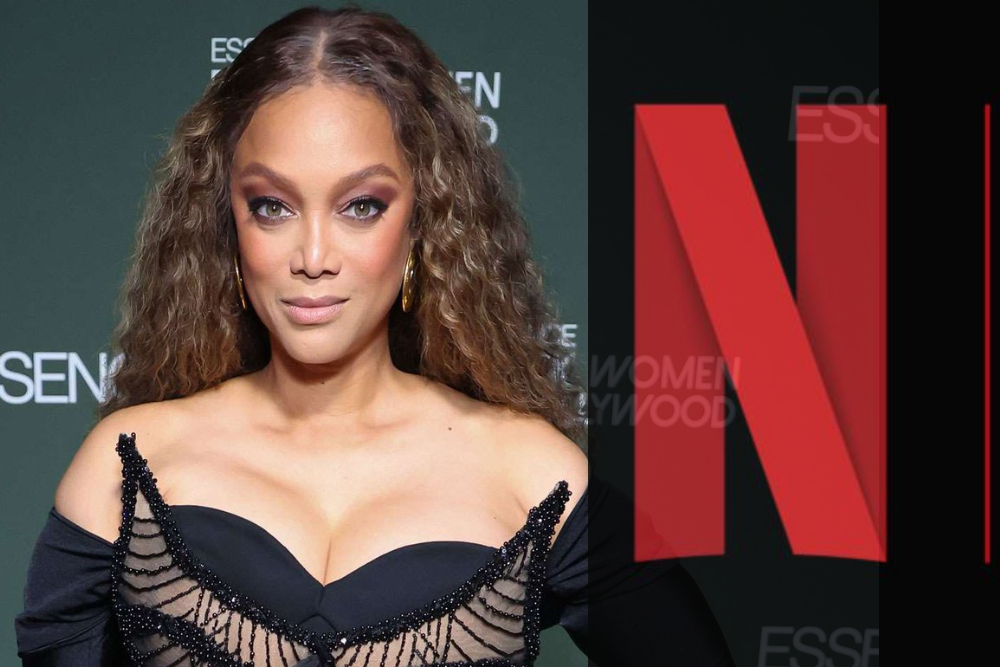
Photo credit: Netflix, Tyra Banks (X)
Netflix is not backing down from Tyra Banks. On Friday, the streamer asked a Los Angeles court to throw out the defamation lawsuit Banks filed in June over Reality Check, Inside America’s Next Top Model. Its central argument is pointed. The woman suing over how she was edited spent 24 seasons doing the exact same kind of editing herself.
Netflix turns ANTM against Banks
Banks sued Netflix and directors Mor Loushy and Daniel Sivan. She alleges the three part documentary used surgical editing to paint her as insensitive toward a contestant who says she was sexually assaulted during the show’s run. However, Netflix’s motion, filed by the firm Gibson Dunn, reframes that complaint as something courts generally do not touch, a disagreement over editorial judgment.
The filing’s sharpest line doubles as its overall strategy. It states that Banks understands editorial discretion. As creator, host and executive producer of America’s Next Top Model across 24 seasons, she constantly decided what footage to include, what to cut and how to frame competing stories. Therefore, Netflix argues, the documentary simply turned that same editorial lens back on her. According to the motion, once you strip away language like manipulation and surgical editing, Banks is really asking for more airtime and a friendlier edit, which is not something defamation law protects. Overall, it is an unusually direct argument, using the plaintiff’s own résumé as the rebuttal.
The two receipts Netflix is leaning on
Beyond the irony, Netflix also points to specific evidence. Banks’s suit centers on a moment where she is asked whether she remembers the contestant, Shandi Sullivan. She responds with a pause before the first episode cuts away, which she says made her look forgetful. In response, Netflix counters that her fuller answer, stating she does remember the contestant’s story, opens the very next episode. As a result, the filing argues that a documentary expressly showing Banks remembering does not imply that she forgot.
The streamer’s second piece of evidence involves paperwork. Netflix says Banks signed a standard release. That release gave the filmmakers broad editorial control and no obligation to deliver her preferred cut. Together, those two points, the sequencing of the footage and the signed release, form the concrete backbone under the larger argument.
What happens next
This dispute is far from over, and both sides still have room to maneuver. Netflix filed its response as an anti SLAPP motion, a California legal tool designed to quickly dismiss suits that target protected speech. Now, a judge has to weigh the motion, and a calendar is already in place. Banks must file her opposition by Sept. 21. Netflix must file its reply by Oct. 12. Meanwhile, both sides are seeking a hearing date of Oct. 30.
For her part, Banks has maintained that she joined the project in good faith to speak candidly about the show’s legacy and the accountability she was willing to take, only to see that context left out of the final cut. Still, none of the underlying claims have been decided yet, and a motion to dismiss is an opening argument rather than a verdict. Nevertheless, Netflix has signaled it plans to fight the case aggressively, and it is doing so by holding up a mirror to Banks’s own career.
About the Author