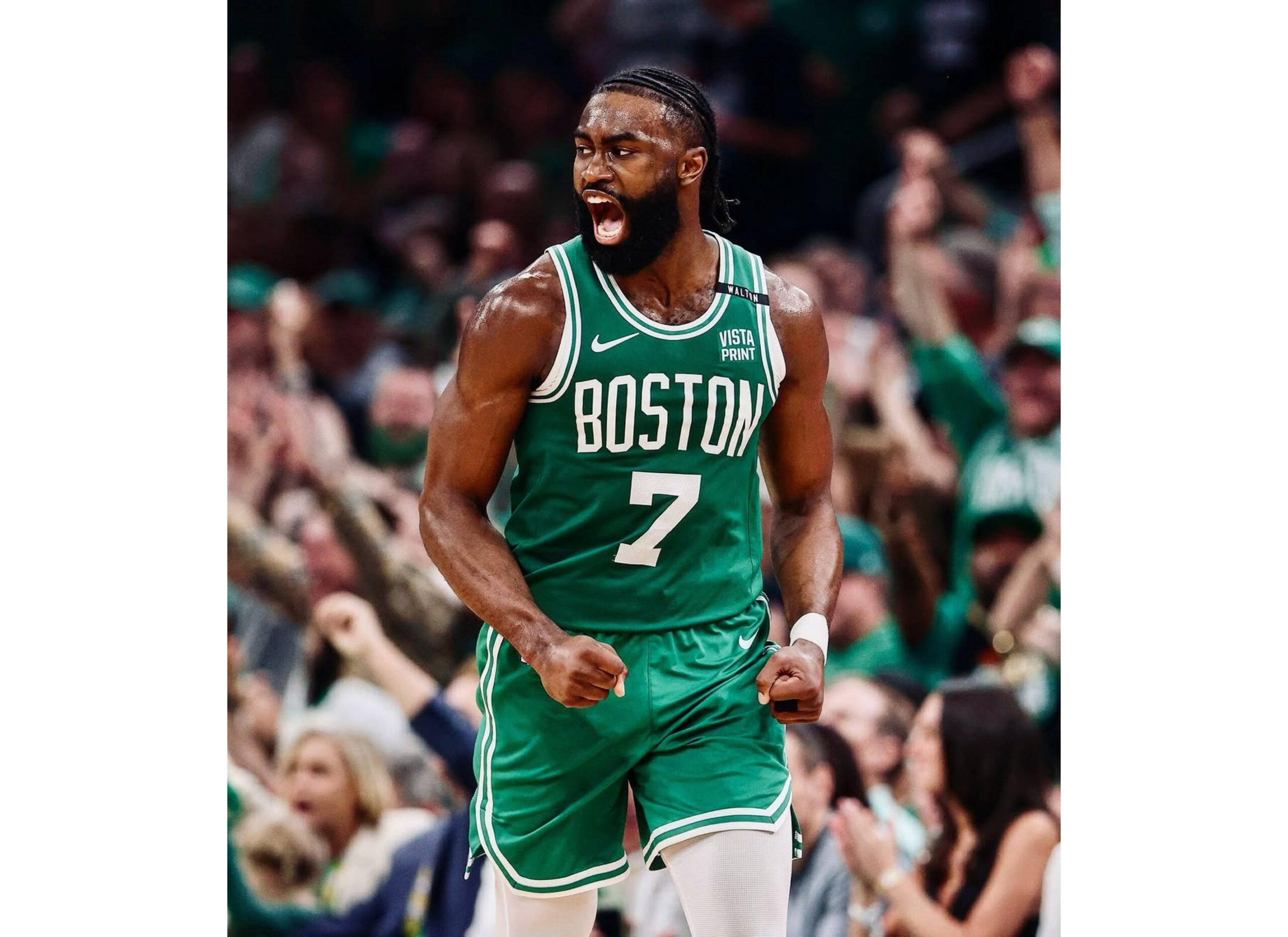
Courtesy: Jaylen brown(Instagram)
The Boston Celtics have officially traded Jaylen Brown to the Philadelphia 76ers, a move that had been building through several rounds of serious trade discussions before finally becoming reality. In return, Boston received veteran forward Paul George along with two first round picks and two second round picks. The deal reshapes one of the Eastern Conference’s most talent rich rosters while simultaneously creating significant fantasy basketball implications for every key player involved.
Brown arrives as a proven high volume scorer
Brown joins Philadelphia coming off a season in which he averaged 28.8 points per game, the highest scoring average of his career. He also earned All-NBA Second Team honors. Beyond his scoring, he demonstrated a new dimension to his game by averaging a career high 5.1 assists per game, showing a genuine ability to initiate offensive sets. That combination of volume scoring and playmaking ability makes his impact on the rest of the roster nearly impossible to ignore.
Embiid’s fantasy ceiling takes a hit
Joel Embiid remains one of the most dominant big men in basketball when healthy, averaging 26.9 points, 7.7 rebounds and 3.9 assists per game last season. However, his fantasy value was already complicated before the Brown trade arrived. Over the past three seasons combined, Embiid has appeared in only 96 games total, including just 38 games during the most recent campaign. Availability concerns alone created question marks around his fantasy ceiling. Brown’s addition makes those concerns more pronounced.
Shot volume tells the real story
Last season, Brown attempted 21.7 shots per game, ranking second in the entire NBA behind only Luka Doncic. While his usage rate is expected to decline somewhat in Philadelphia given the presence of additional star talent, it will still remain high. That means fewer shot attempts will be available for Embiid, which directly translates to a lower points per game average and a reduced ceiling for fantasy purposes heading into next season.
Maxey and Edgecombe also feel the impact
The ripple effect of Brown’s arrival extends beyond Embiid. Both Tyrese Maxey and VJ Edgecombe will likely see their offensive roles shrink as well. Maxey averaged 6.6 assists per game last season while Edgecombe averaged 4.2. With Brown now capable of initiating the offense himself, both guards are expected to play off the ball more frequently in the coming season, which should reduce their assist totals and overall fantasy production.
A rookie adds another layer of uncertainty
There is one more variable worth tracking in Philadelphia. The 76ers selected Labaron Philon Jr. with their first round pick in the 2026 NBA Draft. The University of Alabama product averaged 22.0 points, 5.0 assists and shot nearly 40 percent from three point range in his final college season. If Philon Jr. earns a meaningful rotation role as a rookie, he could further compress the usage available for both Maxey and Edgecombe in ways that are difficult to predict at this stage.
A talented but crowded roster
Philadelphia now enters next season with one of the deeper offensive rosters in the league. Brown, Embiid, Maxey, Edgecombe and potentially Philon Jr. all represent legitimate scoring options. However, that depth creates a genuinely crowded usage situation that will complicate fantasy decisions at every position. For managers rostering any 76ers player, monitoring early season rotations and usage trends will be essential before committing to projections.
What fantasy managers should watch
Embiid remains a high upside option if healthy, but his injury history and reduced usage make him a riskier selection than his raw talent would otherwise suggest. Maxey and Edgecombe still carry value given their floor, though both face a ceiling reduction with Brown now in the fold. The situation in Philadelphia is one of the more complex and compelling storylines heading into the 2026-27 fantasy basketball season.
Source: Sports Illustrated.
About the Author