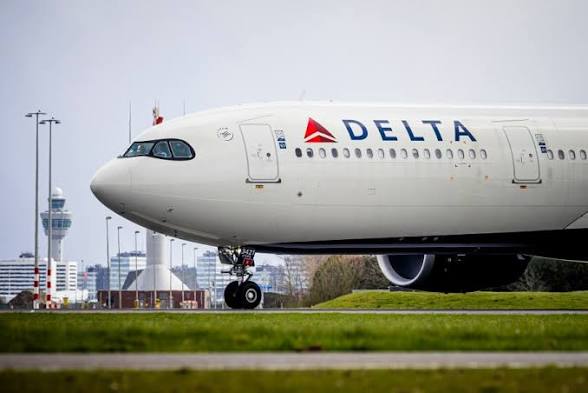
Courtesy:Delta airlines

The Delta Flight 1323 delay was not caused by weather or a mechanical issue. It started with a phone call that one passenger simply would not end. The incident, which occurred during pre-departure procedures, escalated into a cabin disruption that pushed back the flight’s departure and left other travelers waiting. While such situations are rare, this one serves as a pointed reminder of how quickly a single act of non-compliance can affect an entire aircraft.
How the Delta Flight 1323 delay unfolded
The trouble began during the boarding phase, when cabin crew asked all passengers to follow standard pre-flight procedures. That includes switching mobile phones to airplane mode and ending any active calls before departure.
One passenger allegedly refused. Despite repeated requests from flight attendants, the individual continued the phone conversation. The standoff created visible tension in the cabin. As a result, normal boarding procedures were paused while the crew worked to resolve the situation. Eventually, the disruption contributed to a delay in the flight’s departure rather than an immediate removal of the passenger, though outcomes in such cases typically depend on airline discretion and airport authority involvement.
Why airlines enforce phone rules so firmly
Delta Air Lines, like all major carriers, enforces strict mobile phone policies during critical phases of flight. Those phases include boarding, taxiing, takeoff, and landing. The rules exist for several practical reasons. First, they ensure passengers can clearly hear and respond to safety instructions. Second, they protect the clarity of communication between crew members. Third, they minimize distractions during operationally sensitive moments. Fourth, they help maintain a calm and controlled cabin environment overall.
Modern aircraft are largely built to withstand electronic interference. Even so, the broader safety framework depends on passengers being attentive and compliant from the moment they board. Ignoring those rules does not just affect one seat it can affect every person on the plane.
The 4-step process crews follow when passengers refuse
When a passenger declines to follow instructions, airline staff work through a structured escalation process. 1. A crew member politely asks the passenger to comply. 2. If the behavior continues, the instruction is repeated with greater firmness. 3. The situation is escalated to supervisors or the flight captain. 4. In unresolved cases, the passenger may be removed from the aircraft or the flight may be held until the matter is settled.
In the case of this incident, the situation reached a point where departure was delayed. Whether the passenger remained on board or was ultimately removed has not been confirmed publicly.
The ripple effect on other travelers
Even a brief delay carries consequences that spread well beyond the gate. Passengers on Delta Flight 1323 faced extended waiting times before the aircraft could depart. For those with connecting flights, that wait translated into real scheduling disruptions. Others faced rescheduled arrivals and the logistical stress that comes with altered travel plans. Meanwhile, the airline itself had to make operational adjustments to account for the lost time.
It is a pattern that plays out whenever a single passenger’s behavior overrides the normal flow of departure. The inconvenience is rarely limited to one seat.
A lesson air travel keeps having to repeat
Aviation safety culture is built on cooperation. Crew instructions during boarding are not suggestions they are part of a carefully designed safety framework that protects everyone on board. Incidents like this one are uncommon, but they do happen, and they consistently highlight the same point. Compliance with pre-flight procedures is not optional, and the cost of ignoring them is rarely paid by just one person.
Airlines continue to reinforce these expectations through boarding announcements and safety briefings. Still, as this incident shows, awareness alone is not always enough.
Source: NBSLA
About the Author